
Lightning Network Tipping Platforms: Instant Bitcoin Tips For Content Creators
Lightning Network tipping lets creators receive instant bitcoin payments worldwide with near-zero fees, making micropayments finally practical.
Buy Bitcoin with Zero Fees with Rhino
The most secure way to stack sats. Simple, fast, and zero trading fees.
Lightning Network tipping platforms enable creators, streamers, and content producers to receive instant bitcoin payments from supporters worldwide with minimal fees. These platforms leverage the Lightning Network's Layer 2 infrastructure to make micropayments practical, allowing tips as small as a few cents to be sent economically.
Key Summary: Lightning Network tipping platforms allow content creators to receive instant bitcoin payments from audiences globally, with fees often under one cent, making micropayments viable for the first time.
Key Takeaways:
- Lightning tips settle in seconds with sub-penny fees compared to traditional payment processors
- Creators maintain control over funds without intermediaries taking large cuts
- Tipping works globally without currency conversion or banking restrictions
- Platforms integrate with streaming services, websites, and social media
What Is a Lightning Network Tipping Platform?
A Lightning Network tipping platform is a service that enables content creators to receive bitcoin donations through the Lightning Network's instant payment infrastructure. These platforms provide the technical infrastructure for accepting Lightning payments without requiring creators to understand complex Bitcoin technology.
Unlike traditional payment processors like PayPal or Patreon that charge 3–5% fees plus processing costs, Lightning tipping platforms typically charge minimal fees (often under 1%) or operate on a freemium model. The Lightning Network itself processes payments for fractions of a penny, making it economically viable to send tips as small as a few satoshis.
Lightning Network: A Layer 2 payment protocol built on Bitcoin that enables instant transactions with extremely low fees by processing payments off-chain through payment channels. Learn more at Lightning.network
These platforms solve a critical problem in the creator economy. Traditional payment systems make micropayments impractical because a $1 tip might incur 30 cents in fees. Lightning Network infrastructure makes every payment size economically viable, opening new monetization possibilities for creators.
For comprehensive context on how Lightning Network functions within the broader Bitcoin ecosystem, see our complete guide to Lightning Network banking.
How Do Lightning Tipping Platforms Work?
Lightning tipping platforms work by generating unique Lightning invoices that supporters scan with their Lightning wallets to send instant bitcoin payments. The platform maintains Lightning channels on behalf of creators, handling the technical complexity of channel management and liquidity.
The typical workflow involves three simple steps. First, the creator registers with a tipping platform and receives a unique identifier (often a Lightning address or QR code). Second, supporters who want to tip scan the code or enter the Lightning address in their wallet app. Third, the payment routes through the Lightning Network in seconds, arriving in the creator's account.
Behind the scenes, the platform manages several technical components:
- Lightning node operation: Platforms run nodes that maintain connections to the broader Lightning Network
- Channel liquidity: Services ensure sufficient inbound capacity to receive payments on creators' behalf
- Invoice generation: Systems create unique payment requests for each transaction
- Wallet integration: Platforms provide custodial or non-custodial wallet options for storing received tips
- Withdrawal processing: Creators can withdraw funds to their personal wallets or convert to fiat currency
Most platforms offer both custodial solutions (where the platform holds bitcoin temporarily) and non-custodial options (where creators maintain control of their private keys). The choice depends on the creator's technical expertise and preference for control versus convenience.
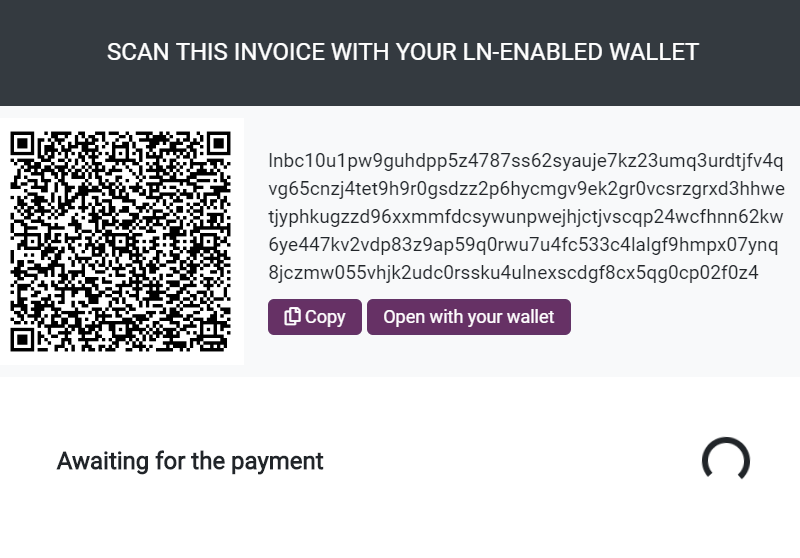
Lightning Invoice: A payment request in the Lightning Network containing amount, recipient information, and payment hash, encoded as a scannable QR code or text string (BOLT11 format). Learn more about Lightning invoices
Lightning Invoices Look Like a Long String of Characters Often Represented by a QR Code
Why Use Lightning for Tipping Instead of Traditional Methods?
Lightning Network tipping offers distinct advantages over traditional payment methods in three critical areas: cost efficiency, global accessibility, and settlement speed. For creators building international audiences, these benefits compound significantly.
Cost Comparison:
Traditional Payment Processors:
- Fees: PayPal charges 2.9% plus 30 cents per transaction; Stripe similar rates
- Small payment problem: A $1 tip incurs 33% fees ($0.30 + 2.9 cents)
- International fees: Cross-border transactions add 1–3% currency conversion fees
- Best for: Larger transactions above $10 where percentage fees matter less
Lightning Network Tipping:
- Fees: Typically under 0.5% platform fee plus 1–10 satoshi network routing fee
- Small payment advantage: A $1 tip might cost 1–2 cents total in fees
- International advantage: Same low fee regardless of sender/receiver location
- Best for: Micropayments, international audiences, high-frequency small tips
Settlement speed creates another major distinction. Traditional processors hold funds for 2–7 days before releasing to creators, while Lightning payments arrive instantly and can be withdrawn immediately (subject to platform policies). This improved cash flow helps creators, especially those in developing economies where quick access to funds matters.
Global accessibility removes barriers that exclude billions of potential supporters. Anyone with internet access and a Lightning wallet can send tips, regardless of whether they have a bank account or credit card. This particularly benefits creators in regions with limited banking infrastructure and supporters in countries with restrictive payment systems.
Popular Lightning Tipping Platforms and Services
The Lightning tipping ecosystem has grown to include platforms serving different creator types and use cases. Each platform offers unique features tailored to specific content distribution channels.
Streaming and Live Content Platforms:
- Strike: User-friendly app with tipping features integrated for both senders and receivers, supporting fiat-to-Lightning conversion
- Fountain: Podcast platform with built-in Lightning tipping, allowing listeners to stream sats to podcasters in real-time
- Zap.stream: Live streaming service built specifically for Lightning monetization and viewer interaction
Website and Blog Integration Tools:
- BTCPay Server: Self-hosted payment processor supporting Lightning with customizable tipping buttons for websites
- LNbits: Open-source Lightning wallet and accounts system with tipping extensions for embedding on sites
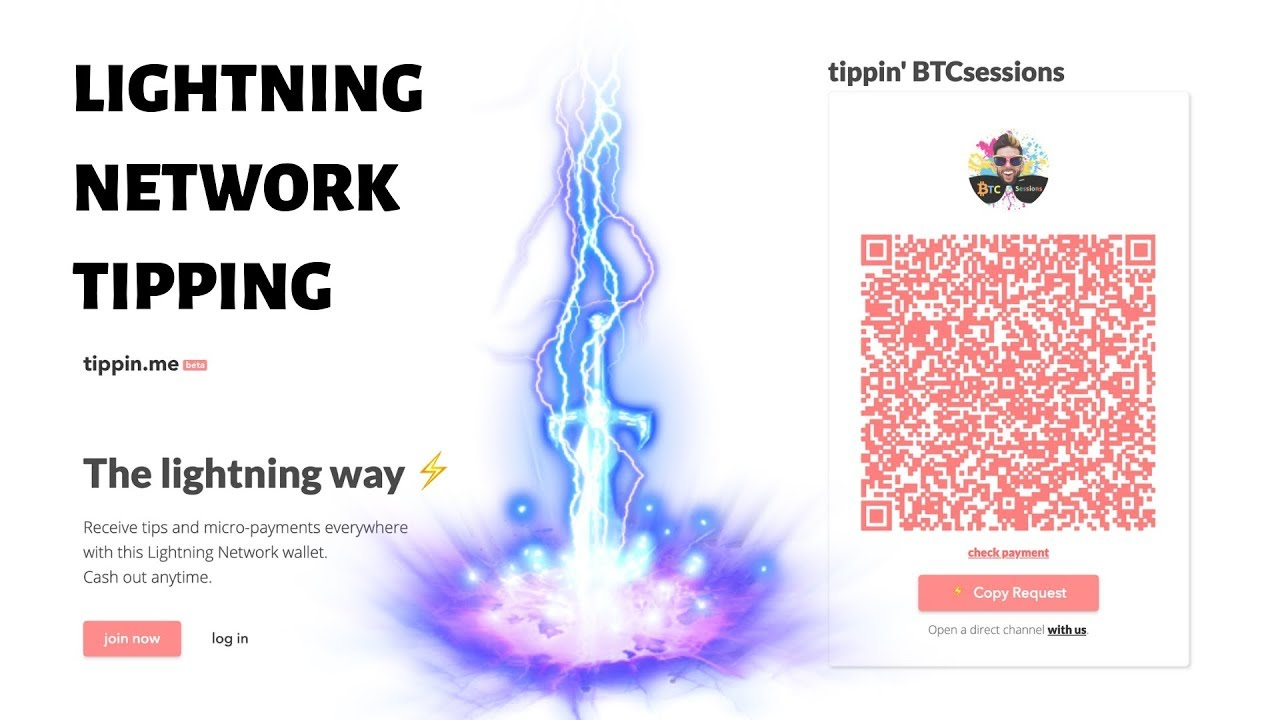
- Tippin.me: Simple browser extension for Twitter/X integration, allowing social media tipping
Content Creators Often Accept Donations Through Lightning Network
Social Media and Community Platforms:
- Nostr integration: Decentralized social protocol with native Lightning tipping through various clients
- Stacker News: Reddit-like platform where upvotes are Lightning payments, creating a sats-based reward system
- Podcasting 2.0 apps: Multiple podcast players supporting value-for-value Lightning streaming payments
Platform selection depends on where creators distribute content and their technical comfort level. Creators using multiple channels often employ several platforms simultaneously, each optimized for different distribution points.
Setting Up Lightning Tipping as a Creator
Setting up Lightning tipping requires choosing between custodial platforms (easier but less control) or self-hosted solutions (more control but technical). Most creators start with custodial options and migrate to self-hosted infrastructure as their audience grows.
Custodial Setup Process (Beginner-Friendly):
- Choose a platform: Select a service matching your content distribution channel
- Create account: Register with email or Lightning address, complete any required verification
- Generate tipping link: Platform provides unique Lightning address or QR code for receiving payments
- Integrate with content: Add tipping link to video descriptions, website, or social profiles
- Withdraw periodically: Move accumulated bitcoin to personal wallet for long-term storage
Self-Hosted Setup Process (Advanced):
- Run Lightning node: Set up Bitcoin full node plus Lightning implementation like LND or Core Lightning
- Open channels: Establish payment channels with well-connected nodes for receiving capacity
- Install BTCPay Server: Deploy payment processor on your infrastructure or VPS
- Configure tipping: Create Lightning address and embeddable payment widgets
- Monitor channels: Maintain adequate inbound liquidity and channel health
The technical requirements for self-hosting include a server or dedicated hardware, basic command-line skills, and time for ongoing maintenance. For most creators, custodial platforms offer the best balance of convenience and functionality.
Understanding the differences between Bitcoin wallets and Lightning wallets helps creators make informed choices about receiving and storing tips.
Security and Custody Considerations
Security in Lightning tipping involves balancing convenience against control, with different risks depending on whether creators use custodial or self-custody solutions. Understanding these trade-offs helps creators protect their earnings while maintaining usable workflows.
Custodial platforms hold the private keys to Lightning channels on behalf of creators. This simplifies setup and eliminates technical management but introduces counterparty risk. If the platform experiences security breaches, regulatory issues, or business failure, creators may lose access to accumulated tips.
Self-Custody: A security model where users control their own private keys and bitcoin, eliminating reliance on third parties but requiring greater technical responsibility. Platforms like Rhino Bitcoin offer self-custody options with multi-signature security
Risk Management Strategies:
- Regular withdrawals: Move accumulated bitcoin from custodial platforms to personal wallets weekly or monthly
- Diversify platforms: Use multiple tipping services to avoid single points of failure
- Cold storage: Transfer significant amounts to hardware wallets for long-term holding
- Test small amounts: Verify withdrawal processes work before accumulating large balances
- Monitor platform health: Stay informed about security incidents or operational issues at custodial services
For creators managing significant tip income, graduating to self-hosted infrastructure provides maximum security and control. This requires learning to operate a Lightning node and manage channel liquidity, but eliminates dependence on third-party custodians.
The security considerations extend beyond just protecting funds. Creators should also consider privacy implications of different platforms, as some require identity verification while others operate pseudonymously.
Comparing Lightning Tipping to Other Crypto Tip Systems
Lightning tipping differs fundamentally from cryptocurrency tipping on other networks in terms of cost structure, finality speed, and technical approach. These differences make Lightning particularly suitable for high-frequency micropayments.
Lightning Network Bitcoin Tipping:
- Transaction cost: 1–10 satoshis (typically under $0.01) regardless of amount
- Settlement speed: Instant (1–3 seconds average)
- Finality: Immediate with low risk of reversal
- Environmental impact: Minimal additional energy use beyond base Bitcoin layer
- Best for: Frequent small tips, streaming micropayments, global audiences
On-Chain Bitcoin Tipping:
- Transaction cost: Variable, typically $1–5 depending on network congestion
- Settlement speed: 10–60 minutes for first confirmation
- Finality: Very high after 6 confirmations
- Environmental impact: Higher per transaction due to mining
- Best for: Large one-time tips where security matters most
Understanding Bitcoin transaction fees helps creators decide when to use Lightning versus on-chain payments.
Ethereum and Altcoin Tipping:
- Transaction cost: Highly variable, from cents to dollars depending on network
- Settlement speed: 15 seconds to several minutes
- Finality: Varies by network consensus mechanism
- Token variety: Multiple tokens possible but adds complexity
- Best for: Audiences already holding specific tokens
Lightning's cost advantage becomes most apparent at small payment sizes. A $0.50 tip on Lightning costs less than 2% in fees, while the same payment on Ethereum might cost $0.20–2.00 in gas fees depending on network congestion, potentially exceeding the tip amount itself.
Tax and Regulatory Considerations for Creators
Bitcoin received as tips constitutes taxable income in most jurisdictions, with creators responsible for tracking and reporting these payments accurately. The tax treatment varies by country but generally follows rules similar to cash tips or freelance income.
In the United States, the IRS treats bitcoin as property for tax purposes. This means each tip creates a taxable event at the fair market value when received. According to IRS Notice 2014-21, taxpayers must report bitcoin income in U.S. dollar terms on their tax returns, with tips treated as ordinary income subject to self-employment tax for independent creators.
Record-Keeping Requirements:
- Transaction logs: Maintain records of each tip including date, amount in satoshis, and USD value at receipt
- Platform statements: Download monthly reports from tipping platforms showing all receipts
- Cost basis tracking: Record the value when received for calculating capital gains when spent or sold
- Wallet addresses: Document which addresses belong to you for proving ownership if audited
Most Lightning tipping platforms provide some transaction history, but creators bear ultimate responsibility for accurate record-keeping. Third-party cryptocurrency tax software can import transaction data and calculate tax obligations, though Lightning support varies by provider.
International creators face additional complexity as tax treatment differs significantly across jurisdictions. Some countries treat bitcoin as currency (subject to income tax but not capital gains), while others apply value-added tax to bitcoin transactions. Creators should consult tax professionals familiar with cryptocurrency in their specific jurisdiction.
Future Developments in Lightning Tipping
Lightning Network tipping continues evolving with protocol improvements and new platform features that enhance creator monetization options. Several developments in progress promise to expand functionality and ease of use.
Protocol-level improvements include better routing algorithms that increase payment success rates, especially for larger amounts. The Lightning Network's capacity has grown significantly, with total network capacity exceeding 5,000 BTC as of late 2024, improving reliability for creators receiving tips worldwide.
Platform innovation focuses on reducing friction for both creators and supporters. Lightning addresses (similar to email addresses) simplify the payment process by eliminating QR codes and complex invoice strings. Supporters can send to [email protected] style addresses, making Lightning tipping as intuitive as traditional payment methods.
Emerging Features and Capabilities:
- Streaming payments: Real-time micropayment streams allowing supporters to pay per second of content consumed
- Automated splits: Protocols enabling automatic payment distribution among multiple collaborators
- Subscription integration: Recurring Lightning payments for membership and subscription models
- Cross-platform identity: Unified creator identities working across multiple platforms and services
- Fiat integration: Seamless conversion allowing supporters to tip in local currency via Lightning infrastructure
Integration with emerging protocols like Nostr creates new possibilities for censorship-resistant content monetization. These decentralized social networks with native Lightning support enable creators to build audiences without platform dependency, receiving tips directly through open protocols.
As cross-border Lightning payments become more mainstream, the technology may fundamentally reshape the creator economy by enabling truly global, permissionless monetization.
Frequently Asked Questions
What is a Lightning Network tipping platform?
A Lightning Network tipping platform is a service that enables content creators to receive instant bitcoin payments from supporters using the Lightning Network's low-fee payment infrastructure. These platforms handle the technical complexity of Lightning channels and invoice generation.
How much do Lightning tips cost compared to traditional payment methods?
Lightning tips typically cost 1–10 satoshis (under $0.01) per transaction, compared to traditional processors like PayPal that charge 2.9% plus $0.30 per transaction. For small payments under $5, Lightning saves 80–90% in fees.
Do I need technical knowledge to accept Lightning tips?
No, custodial Lightning tipping platforms handle all technical aspects for creators. You simply create an account, receive a Lightning address or QR code, and share it with your audience—similar to setting up a PayPal account.
Are Lightning tips taxable income?
Yes, in most jurisdictions including the United States, bitcoin received as tips constitutes taxable income at the fair market value when received. Creators must track and report these payments on tax returns as ordinary income.
Can supporters tip without owning bitcoin?
Some Lightning tipping platforms like Strike allow supporters to send tips using fiat currency, which the platform converts to bitcoin and sends via Lightning Network. This removes the barrier of needing to own bitcoin first.
What happens if a Lightning tipping platform shuts down?
With custodial platforms, funds may be at risk if the service closes unexpectedly. Creators should withdraw accumulated tips regularly to personal wallets and avoid storing large amounts on custodial platforms long-term.
How do Lightning tips compare to Patreon or Ko-fi?
Lightning tips offer lower fees (under 1% vs. 5–12%) and instant settlement, but require audience comfort with bitcoin. Traditional platforms like Patreon work better for creators with audiences unfamiliar with cryptocurrency.
Can I accept both Lightning tips and traditional payments?
Yes, most creators use multiple monetization methods simultaneously. Adding Lightning tipping complements rather than replaces traditional payment options, giving supporters more ways to contribute.
What's the minimum tip amount possible with Lightning?
Lightning Network supports payments as small as 1 satoshi (approximately $0.0003 as of late 2024), though most platforms set minimum tips around 10–100 satoshis for practical reasons.
Do I need a Lightning wallet to receive tips?
Custodial tipping platforms provide built-in wallets managed on your behalf. For self-hosted solutions, you need a Lightning wallet capable of receiving payments, such as Phoenix, Breez, or a full Lightning node.
Conclusion
Lightning Network tipping platforms provide content creators with a powerful new monetization tool that combines instant settlement, minimal fees, and global accessibility. By leveraging Bitcoin's Layer 2 infrastructure, these platforms make micropayments economically viable for the first time, opening possibilities for creator compensation that traditional payment processors cannot match.
Key considerations when evaluating Lightning tipping include cost structure, custody preferences, technical complexity, and audience readiness. Creators should consider these factors:
- Start with custodial platforms to minimize technical barriers and test audience response
- Withdraw accumulated tips regularly to personal wallets to reduce counterparty risk
- Track all bitcoin receipts for accurate tax reporting in your jurisdiction
- Consider using multiple tipping methods to accommodate different audience preferences
For creators ready to integrate Lightning Network tipping with comprehensive Bitcoin banking features, explore Rhino Bitcoin's all-in-one platform that combines Lightning payments, self-custody options, and instant bitcoin transactions for everyday financial needs.
References
- Internal Revenue Service. “Notice 2014-21: IRS Virtual Currency Guidance.” https://www.irs.gov/pub/irs-drop/n-14-21.pdf
- Lightning Network. “Lightning Network Protocol Documentation.” https://lightning.network
- Bitcoin.org. “Lightning Network Overview.” https://bitcoin.org/en/lightning
- Mempool.space. “Lightning Network Statistics and Capacity Data.” https://mempool.space/lightning
- GitHub Lightning Network Specifications. “BOLT11: Invoice Protocol for Lightning Payments.” https://github.com/lightning/bolts/blob/master/11-payment-encoding.md
Important Disclaimers
Disclaimer: Educational information only. Not financial, legal, medical, or tax advice.
Risk Warnings: All investments carry risk, including loss of principal. Past performance is not indicative of future results. Bitcoin is a volatile asset and may not be suitable for all investors.
Conflicts of Interest: Rhino Bitcoin provides Bitcoin financial services. This content is educational and may reference our products.
.png)
.png)