
Bitcoin Timelock Security Features For Banking & Custody Protection
Bitcoin timelocks add time-based spending restrictions, enhancing security, inheritance planning, and multi-signature custody control.
.png)
Buy Bitcoin with Zero Fees with Rhino
The most secure way to stack sats. Simple, fast, and zero trading fees.
Bitcoin timelock security features restrict when bitcoin can be spent by embedding time-based conditions into transactions. These cryptographic mechanisms prevent funds from being moved until a specific future date or block height, adding a programmable security layer that protects against theft, enables sophisticated custody arrangements, and supports complex financial applications like inheritance planning and escrow services.
Key Summary: Bitcoin timelocks use cryptographic time restrictions to prevent spending until specific conditions are met, creating advanced security controls for custody, inheritance, and multi-party agreements.
Key Takeaways:
- Timelocks prevent bitcoin spending until a future date or block height
- Two main types exist: absolute timelocks and relative timelocks
- Applications include inheritance planning, escrow, and theft protection
- Timelocks integrate with multi-signature wallets for enhanced security
What Are Bitcoin Timelocks?
Bitcoin timelocks are protocol-level features that impose temporal restrictions on when bitcoin transactions can be confirmed and spent. They function as programmable locks embedded directly into Bitcoin transactions or scripts, making funds inaccessible until predetermined conditions are satisfied.
These mechanisms operate at the consensus layer, meaning the Bitcoin network itself enforces the restrictions. No centralized authority controls timelock execution. Once a timelock is set, neither the sender, receiver, nor any third party can override it until the specified time passes.
Timelock: A Bitcoin protocol feature that prevents transaction outputs from being spent until a specified future time or block height is reached, enforced by network consensus rules. Learn more from Bitcoin.org
A Timelocked Transaction Makes Sure a Specific UTXO is Only Spendable at a Specific Block Height
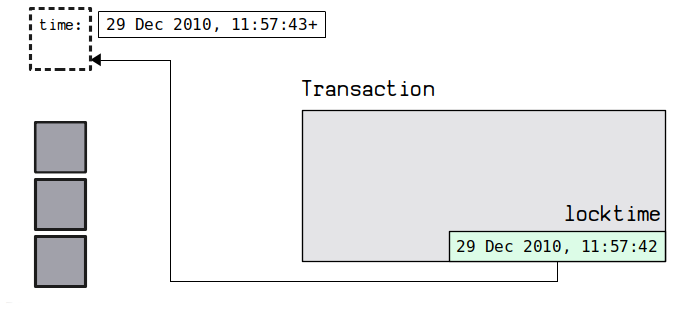
Timelocks serve multiple security purposes within the broader Bitcoin security framework. They create cooling-off periods that thwart immediate theft attempts, enable sophisticated inheritance mechanisms, and support complex multi-party agreements where timing matters.
How Do Bitcoin Timelocks Work?
Bitcoin implements timelocks through specific transaction fields and script opcodes that nodes validate before accepting transactions into blocks. The protocol recognizes two fundamental timelock mechanisms, each serving distinct use cases.
When a transaction includes timelock parameters, Bitcoin nodes check whether the specified conditions are met. If the timelock hasn't expired, nodes reject the transaction as invalid regardless of valid signatures or sufficient fees. This consensus-level enforcement ensures timelocks cannot be circumvented.
Absolute Timelocks: nLockTime and CLTV
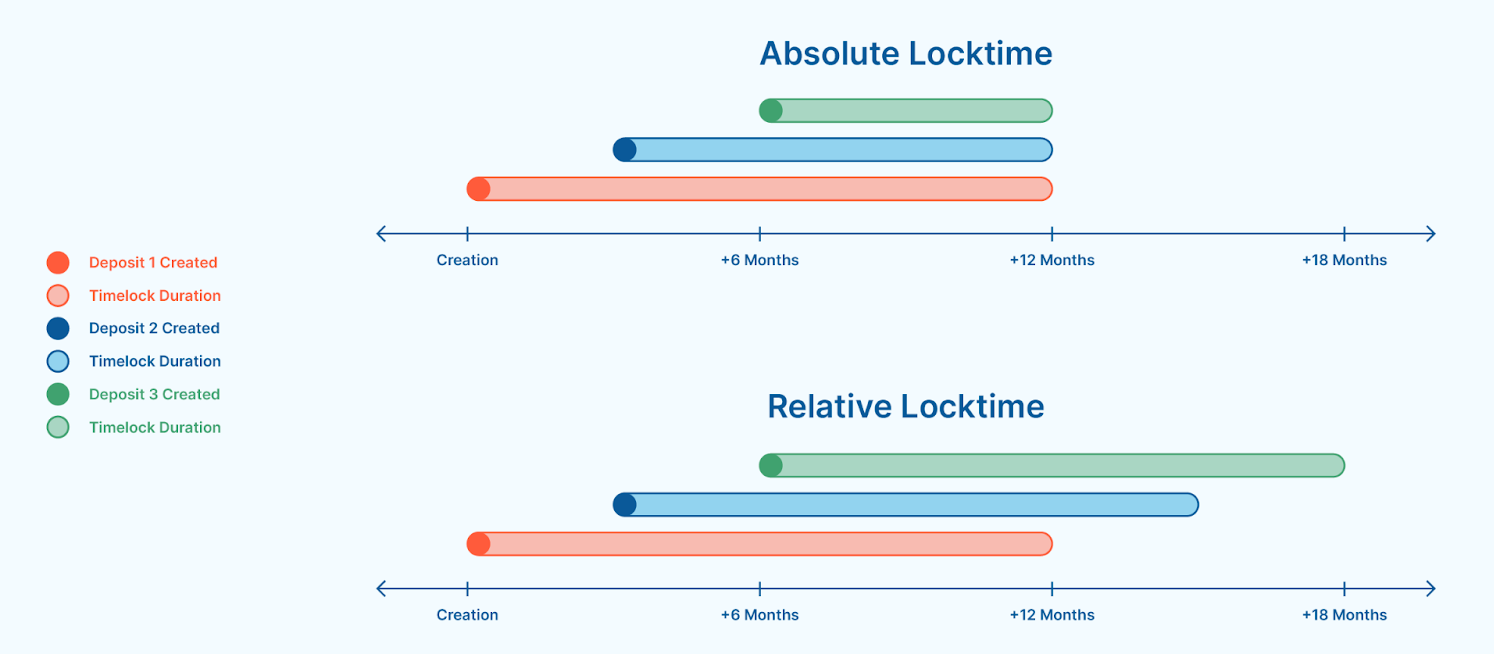
Absolute timelocks specify an exact point in the future when funds become spendable. Bitcoin provides two methods for implementing absolute timelocks, each with specific technical characteristics.
nLockTime operates at the transaction level, setting a minimum block height or Unix timestamp before miners can include a transaction in a block. This field appears in every Bitcoin transaction, with a value of zero indicating no timelock restriction.
CheckLockTimeVerify (CLTV) functions at the script level, enabling individual transaction outputs to carry timelock conditions. CLTV allows more granular control, as a single transaction can contain multiple outputs with different timelock values.
- Block height specification: Values under 500 million represent block numbers (e.g., 750000 means funds unlock at block 750,000)
- Unix timestamp specification: Values above 500 million represent seconds since January 1, 1970
- Network enforcement: Bitcoin nodes automatically reject transactions attempting to spend timelocked outputs prematurely
- Irreversibility: Once broadcast with a timelock, the restriction cannot be removed by any party
Relative Timelocks: nSequence and CSV
Relative timelocks specify a waiting period that begins when the funding transaction confirms, rather than an absolute future point. These mechanisms measure time relative to when specific outputs were created.
nSequence enables transaction-level relative timelocks through a repurposed field originally intended for transaction replacement. Modern Bitcoin uses nSequence to specify how many blocks or seconds must pass after the input's creation before spending becomes valid.
CheckSequenceVerify (CSV) provides script-level relative timelocks, functioning as the relative counterpart to CLTV. CSV enables outputs to remain locked for a specified duration after their parent transaction confirms.
- Block-based delays: Specified in increments of approximately 10 minutes per block
- Time-based delays: Measured in 512-second increments for sub-block precision
- Lightning Network dependency: CSV is essential for Lightning Network security mechanisms
- Flexible waiting periods: Useful for escrow arrangements and dispute resolution windows
Absolute Timelocks vs Relative Timelocks Visualized
Why Use Timelock Security Features?
Timelocks address specific security vulnerabilities and enable sophisticated financial arrangements impossible with simple signature-based controls. They add a temporal dimension to Bitcoin custody that complements cryptographic security.
The primary security benefit comes from creating mandatory cooling-off periods. If an attacker compromises a wallet or extracts private keys, timelocks prevent immediate fund extraction, providing time for legitimate owners to detect the breach and take countermeasures.
Theft Protection and Emergency Response
Timelocks create valuable reaction windows when combined with proper monitoring. A wallet configured to require 24-hour delays before large transfers gives owners time to notice unauthorized activity and activate emergency protocols.
- Detection window: Mandatory delays provide hours or days to identify suspicious transactions
- Counteraction opportunity: Victims can broadcast competing transactions or activate multi-sig veto mechanisms
- Social recovery integration: Friends or family can intervene during timelock periods if the owner is compromised
- Reduced instant loss risk: Eliminates the threat of immediate, irreversible theft
Inheritance and Estate Planning
Timelocks enable sophisticated inheritance mechanisms that activate automatically without requiring third-party custodians or legal intermediaries. These arrangements can transfer bitcoin to designated heirs after predetermined periods of inactivity.
A common implementation uses relative timelocks to create "dead man's switches." If the owner fails to move funds or broadcast proof-of-life transactions within a specified period, heirs can spend outputs using backup keys combined with expired timelocks.
- Trustless inheritance: No lawyers or executors needed to enforce distribution
- Periodic reset capability: Owners can reset timelock counters by moving funds
- Multiple heir support: Different outputs can have different timelock values for staged distribution
- Privacy preservation: Inheritance mechanisms remain on-chain without revealing identities
How Do Timelocks Integrate with Multi-Signature Wallets?
Combining timelocks with multi-signature requirements creates sophisticated security models that require both multiple keys and time passage. This integration produces custody arrangements stronger than either mechanism alone.
A typical implementation might require two of three signatures for immediate spending, but allow a single designated key to spend after a 30-day timelock expires. This arrangement balances convenience with security, preventing any single compromised key from causing immediate loss.
Degrading Multi-Sig Security Models
Timelocks enable "degrading" security models where signature requirements decrease over time. A wallet might require three of five signatures initially, two of five after six months, and one of five after one year.
This approach addresses a critical weakness in standard multi-sig arrangements: the risk that multiple keyholders become unavailable. Business partnerships dissolve, family members become estranged, or individuals simply lose access to keys. Degrading security ensures funds remain accessible even as circumstances change.
- Initial high security: Multiple signatures prevent impulsive or unauthorized spending
- Gradual accessibility increase: Reduces risk of permanent fund loss due to keyholder unavailability
- Customizable thresholds: Organizations can design security degradation matching their risk profiles
- Emergency recovery option: Provides ultimate fallback without compromising short-term security
What Are Common Timelock Implementation Challenges?
While timelocks provide powerful security capabilities, they introduce complexity that requires careful planning. Implementation mistakes can lock funds permanently or create unintended vulnerabilities.
The most significant challenge involves irreversibility. Once a timelock transaction broadcasts, no mechanism exists to cancel or modify the time restriction. Users who set excessively long timelocks may render funds inaccessible for extended periods with no override option.
Technical Complexity and User Experience
Timelock implementations require understanding Bitcoin scripting, transaction structure, and wallet compatibility. Most consumer Bitcoin wallets don't support timelock creation, limiting this functionality to advanced users with technical expertise or access to specialized tools.
- Limited wallet support: Few consumer wallets offer timelock interfaces
- Script complexity: Creating custom timelock scripts requires programming knowledge
- Testing difficulty: Verifying timelock behavior without risking real funds is challenging
- Recovery complications: Heirs or beneficiaries need technical knowledge to claim timelocked funds
Block Time Variability
Bitcoin blocks arrive approximately every 10 minutes on average, but actual intervals vary significantly. This variability affects block-based timelock precision, potentially causing funds to unlock hours before or after expected times.
Time-based timelocks (using Unix timestamps) face different challenges. Miners can manipulate block timestamps within certain bounds, potentially affecting when time-based timelocks expire. The Bitcoin protocol allows miner-reported timestamps to vary by up to two hours from actual time.
How Are Timelocks Used in Lightning Network Security?
The Lightning Network relies fundamentally on relative timelocks to secure off-chain payment channels. Without CSV functionality, Lightning's security model would be impossible to implement.
Lightning payment channels use timelocks to create enforceable claims on channel balances. When one party broadcasts an outdated channel state attempting to steal funds, the honest party has a timelock-defined window to submit proof of fraud and claim the entire channel balance as penalty.
Lightning Network: A Layer 2 Bitcoin protocol enabling instant, low-fee transactions by creating payment channels that settle periodically on-chain, secured by timelock-enforced penalty mechanisms. Learn more at Lightning.network
This timelock-based penalty mechanism makes cheating economically irrational. The dishonest party risks losing all channel funds in exchange for a temporary, easily detected advantage. Platforms like Rhino Bitcoin integrate Lightning Network functionality, enabling users to benefit from instant transactions secured by these timelock mechanisms.
- Fraud detection window: Timelocks provide time for honest parties to identify and punish fraud attempts
- Penalty enforcement: Cheaters forfeit entire channel balances if caught within the timelock period
- Adjustable security parameters: Channel participants can negotiate timelock durations matching their monitoring capabilities
- Watchtower compatibility: Third-party monitoring services can protect users during timelock periods
What Are Best Practices for Implementing Timelocks?
Successful timelock implementation requires careful planning, thorough testing, and clear documentation. Given their irreversible nature, timelock arrangements demand more caution than standard Bitcoin transactions.
Start with shorter timelock periods when first implementing these mechanisms. A 24-hour timelock provides meaningful security benefits while minimizing the risk of creating unintended long-term inaccessibility. As you gain experience and confidence, gradually extend timelock durations to match your security requirements.
Documentation and Recovery Planning
Create comprehensive documentation explaining your timelock arrangements, including specific block heights or timestamps, spending conditions, and recovery procedures. Store this information securely but separately from your private keys.
Beneficiaries and heirs need clear instructions for claiming timelocked funds. Technical documentation should explain the specific transaction structure, required signatures, and timing conditions. Consider providing step-by-step procedures or designating a technically knowledgeable executor.
- Record timelock parameters: Document exact block heights, timestamps, and conditions
- Test recovery procedures: Use testnet to verify heirs can successfully claim timelocked funds
- Periodic reviews: Update timelock arrangements as circumstances change
- Legal coordination: Ensure timelock inheritance aligns with legal estate planning documents
- Backup key management: Store timelock-related keys using appropriate Bitcoin security best practices
Combining Security Layers
Timelocks work best as one component of a comprehensive security strategy. Combine them with hardware wallets, multi-signature requirements, and proper operational security practices.
A robust custody model might use hardware wallets for key storage, require multiple signatures for high-value transactions, and implement timelocks for large transfers or inheritance planning. This layered approach ensures that no single failure point compromises your bitcoin holdings.
Frequently Asked Questions
Can I cancel a timelock after setting it?
No, timelocks are irreversible once the transaction broadcasts to the Bitcoin network. The network enforces timelock conditions at the consensus level, and no party can override them before expiration.
Do timelocks increase transaction fees?
Timelock transactions typically have similar fees to standard transactions. The timelock data adds minimal bytes to transaction size, resulting in negligible fee differences.
What happens if I lose my keys to timelocked bitcoin?
Lost keys to timelocked bitcoin result in permanent loss, just like any other Bitcoin. Timelocks don't provide key recovery mechanisms, which is why proper backup procedures remain essential.
Can exchanges or custodians hold timelocked bitcoin?
Most exchanges and custodians don't support receiving timelocked bitcoin, as their systems expect immediate spending capability. Timelocked funds typically require self-custody or specialized custody solutions.
How accurate are block-based timelocks?
Block-based timelocks are accurate to the block level but imprecise in real time. Bitcoin's average 10-minute block interval means timelock expiration can vary by hours from expected calendar times.
Are timelocks compatible with hardware wallets?
Hardware wallet support for timelocks varies by device and firmware. Some advanced hardware wallets support timelock signing, but many consumer devices lack this functionality. Verify compatibility before implementing timelocks.
Can timelocks protect against the five-dollar wrench attack?
Timelocks provide limited protection against physical coercion. They create reaction time but cannot prevent an attacker from forcing you to wait out the timelock period under duress.
What are typical timelock durations for inheritance planning?
Inheritance timelocks commonly range from six months to two years of inactivity. Shorter periods risk accidental triggering, while longer periods delay inheritance distribution unnecessarily.
Conclusion
Bitcoin timelock security features add a critical temporal dimension to cryptocurrency custody, enabling sophisticated arrangements that protect against theft, support inheritance planning, and facilitate complex financial agreements. By preventing spending until specific future conditions are met, timelocks create mandatory cooling-off periods that complement cryptographic security measures and multi-signature requirements.
Key implementation considerations:
- Start with shorter timelock periods to minimize risk while gaining experience
- Combine timelocks with multi-signature wallets for enhanced security
- Document all timelock arrangements thoroughly for beneficiaries and heirs
- Test recovery procedures using Bitcoin testnet before implementing with real funds
For those ready to explore advanced Bitcoin security features including multi-signature custody and self-custody options, discover how Rhino Bitcoin combines institutional-grade security with user-friendly access to protect your bitcoin holdings.
References
- Bitcoin.org Developer Documentation. "Transactions - Bitcoin Developer Guide." https://developer.bitcoin.org/devguide/transactions.html
- Lightning Network. "Lightning Network Protocol Specifications." https://lightning.network/
- Bitcoin Improvement Proposals. "BIP 65: OP_CHECKLOCKTIMEVERIFY." https://github.com/bitcoin/bips/blob/master/bip-0065.mediawiki
- Bitcoin Improvement Proposals. "BIP 112: CHECKSEQUENCEVERIFY." https://github.com/bitcoin/bips/blob/master/bip-0112.mediawiki
- Mempool.space. "Bitcoin Block Explorer and Network Statistics." https://mempool.space/
Important Disclaimers
Disclaimer: Educational information only. Not financial, legal, medical, or tax advice.
Risk Warnings: All investments carry risk, including loss of principal. Past performance is not indicative of future results. Bitcoin is a volatile asset and may not be suitable for all investors.
Conflicts of Interest: Rhino Bitcoin provides Bitcoin financial services. This content is educational and may reference our products.
.png)
.png)