
Bitcoin Lightning Network Custodial Vs Non Custodial Banking Guide
Should you trust a Lightning wallet or control your own keys? Learn the pros, cons, and risks of custodial vs non-custodial Lightning.

Buy Bitcoin with Zero Fees with Rhino
The most secure way to stack sats. Simple, fast, and zero trading fees.
When using the Lightning Network, one of your first decisions is choosing between custodial and non-custodial solutions.
Custodial Lightning wallets hold your private keys for you. Non-custodial wallets give you full control over your funds and keys. This single difference affects your security, privacy, convenience, and level of responsibility when making Lightning payments.
Key Summary: Custodial Lightning solutions offer simplicity and ease of use. However, they require trusting a third party with your bitcoin. Non-custodial options provide full control and sovereignty, but they come with greater responsibility and technical complexity.
Key Takeaways
- Custodial wallets manage keys and channels for you, which makes them convenient
- Non-custodial wallets give you full control but require you to manage your own security
- The right choice depends on your technical skills, how much bitcoin you hold, and your privacy needs
- Many users use both types for different situations
This article explores the custodial versus non-custodial decision within the broader context of Lightning Network banking. Understanding these options helps you make informed decisions about managing bitcoin on the Lightning Network.
What Does Custodial Mean in the Lightning Network?
A custodial Lightning solution means a third-party service provider holds your private keys. That provider also manages your Lightning channels on your behalf.
You can access your funds through the provider’s app or platform. However, the service provider controls the bitcoin itself.
This setup is similar to traditional banking. The provider handles the technical work, including opening channels, managing liquidity, and routing payments. You simply send and receive payments through their interface.
Custodial Lightning Wallet: A Lightning Network wallet where a third-party service controls the private keys and manages channel operations, similar to how traditional banks hold customer deposits.
Popular custodial Lightning services include mobile apps and exchange-based wallets. These platforms remove most technical details.
Custodial vs Non-Custodial Wallets
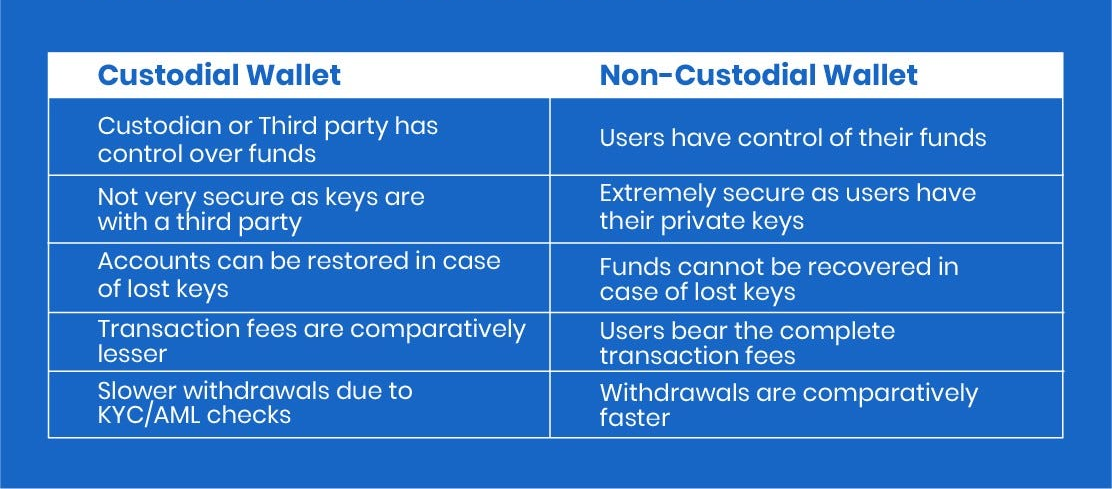
As a result, users can start sending and receiving Lightning payments within minutes of signing up.
How Custodial Services Manage Your Lightning Funds
Custodial providers run large Lightning nodes with many channels. When you deposit bitcoin, the provider credits your account and routes payments through its existing network.
The provider manages several technical tasks, including:
- Opening and closing channels: Connecting to the broader Lightning Network
- Managing liquidity: Making sure there is enough inbound and outbound capacity
- Routing optimization: Finding efficient payment paths across the network
- Fee management: Setting and adjusting routing fees
- Security measures: Protecting keys and monitoring suspicious activity
This centralized approach allows for fast onboarding and easy use. However, it also concentrates control with the service provider.
You are trusting that provider to protect your funds and process transactions correctly.
What Does Non-Custodial Mean for Lightning Users?
Non-custodial Lightning wallets give you full control over your private keys and Lightning channels.
You are responsible for channel management, security, and backups. No third party controls your funds.
This self-sovereign approach matches Bitcoin’s core principle: users should control their own money. No one can freeze your account, block transactions, or access your bitcoin without your permission.
Using non-custodial Lightning requires understanding key concepts. These include channel capacity, inbound liquidity, and payment routing.
You also decide which nodes to connect to and how much bitcoin to allocate to each channel.
Technical Requirements for Non-Custodial Lightning
Non-custodial Lightning setups require more technical knowledge than custodial options. You need a basic understanding of how Bitcoin works and how Lightning channels operate.
Key responsibilities include:
- Private key management: Securing and backing up your seed phrase
- Channel operations: Opening channels with well-connected nodes
- Liquidity management: Balancing inbound and outbound capacity
- Software maintenance: Keeping Lightning software up to date
- Channel monitoring: Watching for force closures and routing problems
Popular non-custodial options include Phoenix, Breez, and full Lightning node software like LND and Core Lightning. Each option offers a different balance between convenience and control.
Comparing Custodial and Non-Custodial Lightning Solutions
Choosing between custodial and non-custodial Lightning involves a tradeoff. You are balancing convenience against control.
Each approach serves different users and risk levels.
Below is a breakdown of the key differences.
Security and Control
Custodial Security
- Pros: Professional security teams, possible insurance, easier recovery
- Cons: Counterparty risk, exposure to hacks, possible account freezes
- Best For: Users who value convenience and hold smaller amounts
Non-Custodial Security
- Pros: Full sovereignty, no counterparty risk, strong censorship resistance
- Cons: Risk of user mistakes, full backup responsibility, no recovery support
- Best For: Technically confident users holding larger amounts
Privacy Considerations
Custodial Privacy
- Pros: Your node does not expose your IP address, provider manages network access
- Cons: Provider can see transactions, KYC is common, data may be stored
- Best For: Users comfortable with regulated, account-based services
Non-Custodial Privacy
- Pros: No third party monitors transactions, stronger financial privacy
- Cons: IP exposure without Tor, some information visible in the channel graph
- Best For: Privacy-focused users willing to add extra protections
Cost and Fee Structures
Custodial services usually charge percentage-based fees on Lightning transactions. These often range from 0.1% to 1% as of early 2025.
Some services also charge withdrawal fees for moving bitcoin on-chain.
Non-custodial users pay routing fees directly. These fees are usually small and measured in satoshis. However, users must manage channel liquidity themselves.
Opening and closing channels also requires paying on-chain Bitcoin transaction fees.
For frequent small payments, non-custodial solutions are often cheaper. For occasional use, custodial convenience may justify higher fees.
Use Cases: When to Choose Each Option
Many experienced Lightning users use both custodial and non-custodial wallets.
The best choice depends on how often you transact, how much bitcoin you use, and how much risk you are willing to accept.
Ideal Custodial Use Cases
Custodial Lightning wallets are useful for quick onboarding and everyday spending. They are especially helpful when you are still learning how Lightning works.
Custodial solutions are well suited for:
- Learning the Lightning Network: Testing small amounts while learning payment basics
- Daily spending: Holding modest amounts for everyday purchases
- Receiving tips: Accepting payments without managing channels
- International remittances: Sending money across borders with low friction
Platforms like Rhino Bitcoin combine Lightning with other Bitcoin banking services. This makes custodial Lightning easy to use for daily financial activity.
Ideal Non-Custodial Use Cases
Non-custodial Lightning is better when you hold larger amounts or value privacy and control.
Non-custodial solutions are ideal for:
- Significant holdings: Amounts you cannot afford to lose
- Merchant operations: Businesses receiving large Lightning payments
- Maximum privacy: Transactions you do not want monitored
- Long-term storage: Bitcoin held beyond short-term spending
Understanding the differences between Bitcoin wallets and Lightning wallets helps you select the right tool for each situation.
What Are the Main Risks of Custodial Lightning?
Custodial Lightning introduces counterparty risk. This risk does not exist with properly managed non-custodial setups.
You must trust the provider’s security, financial health, and business practices.
Major risks include hacking, business failure, and regulatory action. History shows that even large crypto platforms can fail.
Platform Failure and Insolvency
If a custodial provider shuts down or becomes insolvent, user funds may become inaccessible.
Unlike traditional banks, most custodial Lightning services do not offer deposit insurance or strong consumer protections.
Past exchange collapses showed how quickly access to custodied funds can disappear. Lightning’s instant payments do not remove custody risk.
Regulatory and Compliance Risks
Custodial providers may be required to freeze accounts, restrict access, or report user activity.
Government action can limit access to funds without notice.
According to FinCEN guidance, custodial cryptocurrency services in the United States must follow anti-money laundering rules. This includes customer identification and transaction monitoring.
What Are the Main Challenges of Non-Custodial Lightning?
Non-custodial Lightning removes counterparty risk. However, it adds technical and operational responsibility.
The learning curve is steeper than with custodial wallets. Mistakes in security or channel management can cause permanent losses.
Channel Management Complexity
Lightning channels need ongoing management.
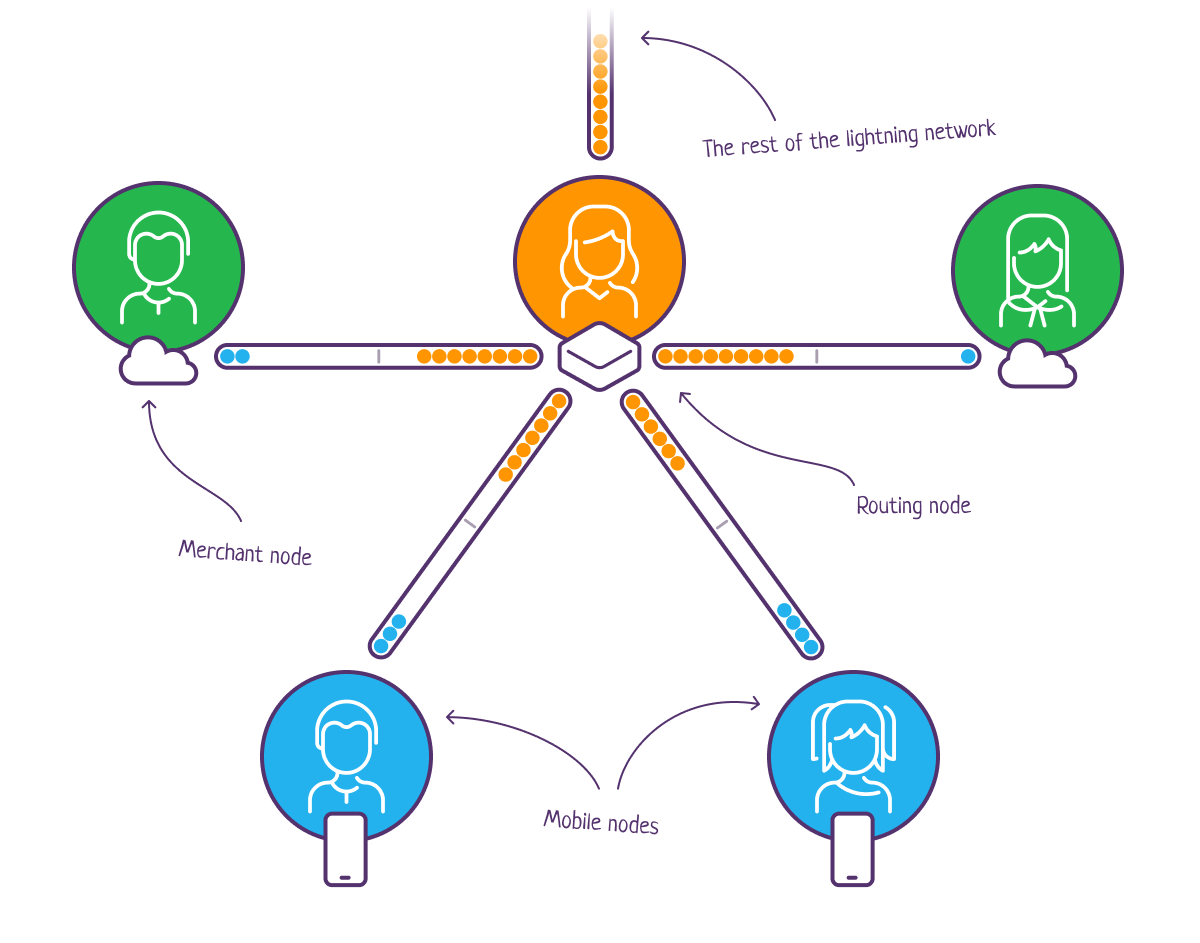
You must maintain enough inbound liquidity to receive payments and enough outbound liquidity to send them.
Common challenges include:
- Liquidity balancing: Channels become one-sided over time
- Force closures: Uncooperative peers can trigger costly on-chain closures
- Routing failures: Poor connections make payments harder to route
- Channel fees: Opening and closing channels costs on-chain fees
Some modern wallets, such as Phoenix, automate many of these tasks. They use tools like submarine swaps and automated channel management. Still, basic understanding is required.
Lightning Node Operators Should Constantly Manage Channel Liquidities
Backup and Recovery Responsibilities
Non-custodial users must back up both their seed phrase and channel state data.
Losing either can result in lost funds.
Unlike on-chain Bitcoin, Lightning requires additional backups because channel states change with every transaction. Some wallets use static channel backups, while others use more advanced recovery methods.
The responsibility is fully yours. There is no customer support to recover lost backups.
Hybrid Approaches: Combining Both Models
Many advanced Lightning users use a hybrid approach.
They keep small amounts in custodial wallets for convenience and larger amounts in non-custodial setups for security and privacy.
This approach avoids an all-or-nothing decision.
Practical Hybrid Strategy Example
A common hybrid setup looks like this:
- Custodial wallet: $100–500 in bitcoin for daily spending
- Non-custodial mobile wallet: $500–5,000 for larger transactions
- Full Lightning node: Self-hosted for large holdings or merchant use
This tiered setup allows flexibility. You keep convenience for small payments while maintaining control over larger amounts.
As experience grows, many users shift more funds toward non-custodial solutions.
Making Your Decision: Key Factors to Consider
There is no single correct choice between custodial and non-custodial Lightning.
Your decision should reflect your situation, skills, and priorities.
Start by evaluating your technical comfort and how much bitcoin is involved. Managing $50 is very different from managing thousands.
Key factors to consider:
- Technical expertise: Can you manage backups and troubleshoot issues?
- Amount at risk: How much bitcoin can you afford to lose?
- Usage frequency: Do you transact often or occasionally?
- Privacy needs: Is transaction privacy important to you?
- Time commitment: Can you invest time in learning Lightning mechanics?
Many users start with custodial wallets and move toward non-custodial solutions over time.
Frequently Asked Questions
Can I switch from custodial to non-custodial Lightning later?
Yes. You can withdraw funds from a custodial wallet and send them to a non-custodial wallet using an on-chain or Lightning transaction.
Do non-custodial Lightning wallets require running a full Bitcoin node?
No. Some wallets, such as Phoenix and Breez, provide self-custody without requiring a full node.
Are custodial Lightning services regulated like banks?
Custodial crypto services face regulatory requirements but usually lack deposit insurance and consumer protections. Regulations vary by region.
Can I lose funds in a Lightning channel with non-custodial wallets?
Yes. Losing both your seed phrase and channel backups, or being offline during a malicious channel closure, can lead to losses. Modern wallets use watchtowers and other safeguards to reduce this risk.
How much bitcoin should I keep in custodial Lightning wallets?
Most experts suggest keeping only what you would carry in cash. This often equals one to two weeks of spending and rarely exceeds $500–1,000.
Do custodial Lightning services report to tax authorities?
Many regulated custodial services report activity to tax authorities. IRS guidance indicates that Lightning payments may have tax reporting requirements.
What happens if a custodial Lightning service shuts down?
You may lose access to your funds unless withdrawals are allowed before shutdown. This risk is inherent to custodial services.
Can I receive Lightning payments without managing channels?
Yes. Custodial services and some automated non-custodial wallets handle channels for you. Platforms like Rhino Bitcoin support this functionality.
Conclusion
Choosing between custodial and non-custodial Lightning depends on how you balance convenience, control, and risk.
Custodial services offer ease of use and are well suited for beginners and small payments. Non-custodial options provide full control and remove counterparty risk, but they require more knowledge and responsibility.
Key points to remember:
- Match custody type to your risk level and technical ability
- Consider using both approaches for different purposes
- Start custodial, then move toward self-custody as you learn
- Never store more in custodial Lightning than you can afford to lose
For users ready to use Lightning payments with a platform focused on Bitcoin-first principles, explore Rhino Bitcoin's Lightning-enabled banking alternative for instant payments and bill pay features.
References
- Bitcoin.org. You Need to Know. Bitcoin.org, https://bitcoin.org/en/you-need-to-know
- Financial Crimes Enforcement Network (FinCEN). Application of FinCEN's Regulations to Certain Business Models Involving Convertible Virtual Currencies. U.S. Department of the Treasury, 2019.
- Internal Revenue Service. Notice 2014-21: IRS Virtual Currency Guidance. IRS.gov, 2014.
- Lightning Network. Lightning Network Protocol Documentation. Lightning.network, https://lightning.network
- Mempool.space. Bitcoin and Lightning Network Statistics. Mempool.space, https://mempool.space
Important Disclaimers
Disclaimer: Educational information only. Not financial, legal, medical, or tax advice.
Risk Warnings: All investments carry risk, including loss of principal. Past performance is not indicative of future results. Bitcoin is volatile and may not suit all investors.
Conflicts of Interest: Rhino Bitcoin provides Bitcoin financial services. This content is educational and may reference company products.
.png)
.png)