
Lightning Network BOLT11 Invoice Decoder Guide For Bitcoin Banking
Learn how BOLT11 Lightning invoices work, what information they contain, and why decoding invoices helps prevent errors and fraud.
Buy Bitcoin with Zero Fees with Rhino
The most secure way to stack sats. Simple, fast, and zero trading fees.
A BOLT11 invoice is a payment request format used on the Lightning Network for instant bitcoin transactions. When you receive a BOLT11 invoice (also called a Lightning invoice), it includes all the information needed to complete a payment.
This information includes the recipient’s node address, payment amount, and expiration time. Learning how to decode these invoices helps users verify payment details before sending bitcoin.
Key Summary: BOLT11 invoices are standardized payment requests on the Lightning Network. They contain encoded payment data that decoders translate into readable details such as amount, destination, and expiration time.
Key Takeaways:
- BOLT11 invoices store payment details in a compact, shareable format
- Decoders convert the encoded string into human-readable information
- Verifying decoded invoice data helps prevent payment errors and fraud
- Understanding invoice structure improves Lightning Network security
What Is a BOLT11 Invoice?
A BOLT11 invoice is the standard payment request format for Lightning Network transactions. It is defined in the Lightning Network specification known as BOLT #11.
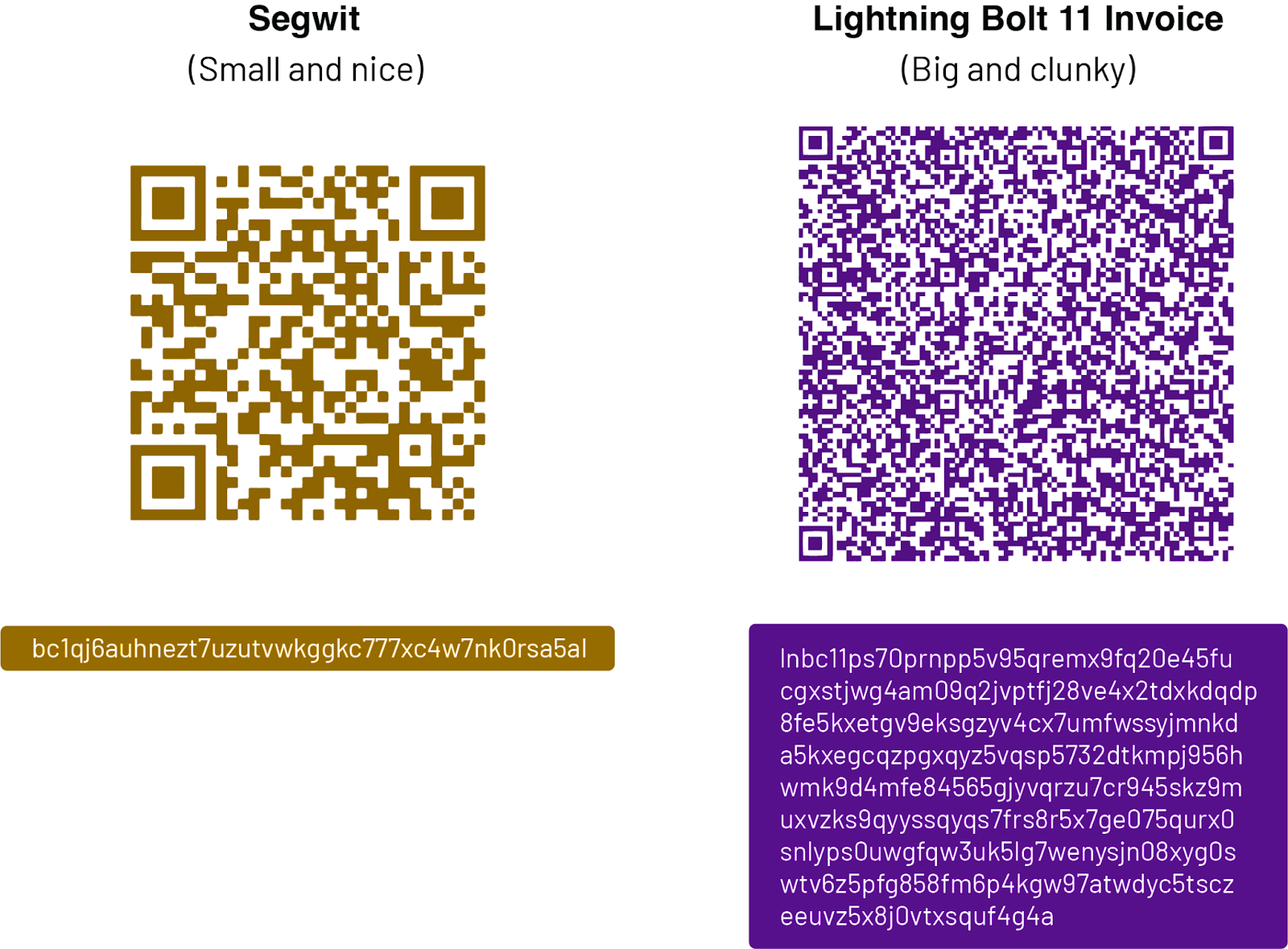
These invoices encode payment information into a long alphanumeric string. The string usually begins with “lnbc” for Bitcoin mainnet or “lntb” for testnet.
A BOLT11 invoice contains key payment data. This includes the recipient’s public key, payment amount (often in millisatoshis), payment hash, expiration time, and optional metadata such as descriptions.
This standardized format ensures compatibility across different Lightning wallets and implementations.
Lightning Network: A Layer 2 payment protocol built on Bitcoin. It enables instant, low-cost transactions by using payment channels between users.
Learn more about Lightning Network banking
For additional context, our complete guide to Lightning invoices explains invoice creation and management in detail.
Why BOLT11 Invoices Matter
BOLT11 invoices solve a key challenge in Lightning payments. They provide a standard way to request payments.
Without this format, users would need to manually share multiple pieces of information. This would increase the risk of mistakes and security issues.
The format also includes built-in error detection through checksums. It supports features like routing hints, which help payments reach their destination across complex channel networks.
Invoices also include expiration times. This prevents outdated payment requests from being paid accidentally, reducing confusion and potential loss of funds.
BOLT11 Invoices are Different from Regular Bitcoin Addresses
How Does a BOLT11 Invoice Decoder Work?
A BOLT11 decoder reads the encoded invoice string and extracts individual data fields into readable form.
The decoder processes the invoice from left to right. It identifies the human-readable prefix, the data section, and the cryptographic signature that confirms authenticity.
The decoding process typically includes the following steps:
- Prefix identification: Reads the network identifier (such as lnbc for mainnet) and the amount, if included
- Data extraction: Parses tagged fields containing the payment hash, description, expiration, and routing data
- Signature verification: Confirms the invoice was created by the claimed node
- Checksum validation: Checks data integrity and detects transmission errors
Key Components Revealed by Decoders
When you decode a BOLT11 invoice, several important fields appear in human-readable format.
The payment hash uniquely identifies the payment request. It prevents replay attacks, where the same invoice could otherwise be paid more than once.
The amount field shows how much bitcoin the recipient is requesting. This is usually displayed in satoshis or millisatoshis for smaller payments.
The expiration timestamp shows how long the invoice remains valid. Most invoices expire between one hour and 24 hours after creation.
Additional fields may include:
- A text description explaining the payment
- Routing hints that help wallets find a payment path
- Fallback on-chain Bitcoin addresses for non-Lightning wallets
What Information Does a Decoded Invoice Display?
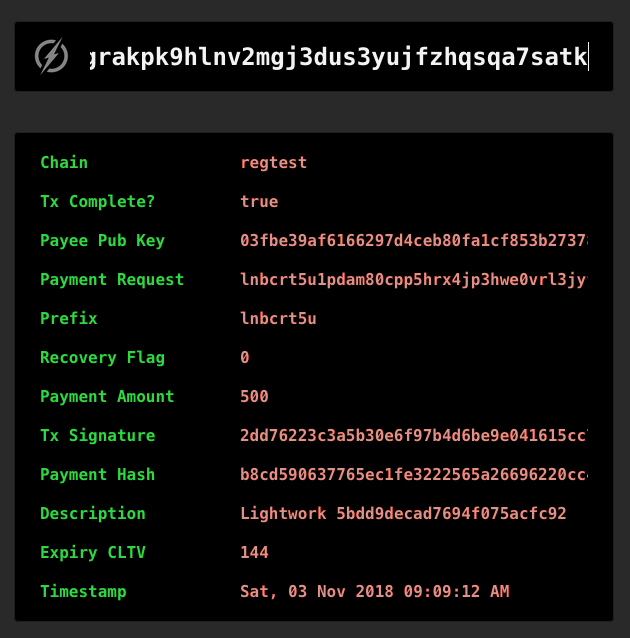
Decoded BOLT11 invoices display all payment details in clear text. This allows users to verify information before approving a payment.
The most important fields help confirm that you are sending the correct amount to the correct recipient.
Payment Hash: A unique 32-byte cryptographic identifier. It links the payment request to its preimage and ensures only the intended recipient can claim the funds.
A decoded invoice typically shows:
- Network: Bitcoin mainnet, testnet, or another supported network
- Amount: Payment value in satoshis or millisatoshis (1,000 millisatoshis = 1 satoshi)
- Timestamp: When the invoice was created (Unix timestamp)
- Expiry: How long the invoice remains valid (default is 3,600 seconds)
- Payment hash: Unique identifier for the payment
- Description: Optional text explaining the payment purpose
- Node public key: The recipient’s Lightning node identifier
Optional Invoice Features
Beyond basic payment data, BOLT11 invoices can include advanced features that decoders reveal.
Routing hints suggest payment paths when the recipient’s node is not well connected to the wider network. This improves the chance of successful payments.
Some invoices also include minimum final CLTV expiry values. These define timing requirements for the payment’s final hop and help prevent timing-related failures.
Fallback addresses may be included as well. These provide an on-chain Bitcoin address if the Lightning payment cannot be completed.
Why Should You Decode Invoices Before Paying?
Decoding Lightning invoices before paying helps protect against errors and fraud.
Most Lightning wallets automatically decode invoices and show the details. However, understanding what you are reviewing adds an extra layer of protection.
Verification helps catch common issues. You can confirm the amount matches what you agreed to pay. This is especially important because Lightning amounts are often shown in satoshis instead of fiat currency.
You can also confirm that the invoice has not expired, which would cause the payment to fail.
Security Benefits of Invoice Verification
Reviewing decoded invoice data helps identify fraudulent payment requests.
By checking the recipient’s node public key against known identifiers, you can detect substitution attacks. In these cases, scammers replace legitimate invoices with their own.
Verifying the description field ensures the payment purpose matches your intent. For example, an invoice labeled “Coffee payment” when buying electronics should raise concern.
Signature verification confirms the invoice was created by the claimed node. This helps prevent impersonation attacks.
For users managing Lightning Network wallets, regular invoice verification builds safer payment habits.
How Do You Decode a BOLT11 Invoice?
BOLT11 invoices can be decoded using several methods. These include built-in wallet tools, command-line utilities, and web-based decoders.
Most Lightning wallets automatically decode invoices when you paste them in. They display the key details before you approve the payment.
For learning or manual verification, web-based decoders offer detailed field-by-field breakdowns. These tools explain each invoice component and help troubleshoot issues.
Using Command-Line Decoders
Lightning implementations such as LND, Core Lightning, and Eclair include invoice decoding commands.
These tools are useful for developers, node operators, and users running their own Lightning infrastructure.
For LND, the command “lncli decodepayreq” followed by the invoice string returns a JSON-formatted breakdown. Core Lightning uses “lightning-cli decode” with similar output.
Command-line tools often show technical fields that wallet interfaces hide, making them ideal for advanced analysis.
Web-Based Decoder Tools
Several websites offer free BOLT11 invoice decoding without software installation.
You paste the invoice string into a text field, and the tool displays all extracted information in readable form.
When using web decoders, always confirm that the site is legitimate. While decoding an invoice does not directly compromise security, some sites may log data or attempt phishing.
Stick to trusted decoder tools from established Bitcoin resources.
There are Online Tools to Decode BOLT11 Invoices
What Are Common BOLT11 Invoice Errors?
Several issues can prevent invoices from decoding or being paid successfully.
Understanding these errors helps you troubleshoot problems and identify invalid or malicious invoices.
Checksum failures occur when the invoice string is copied incorrectly or becomes corrupted. Because BOLT11 includes error-detection codes, any change to the string will cause decoding to fail.
This protection prevents accidental payments caused by typos.
Expiration and Amount Issues
Expired invoices are one of the most common problems.
Lightning invoices usually expire after one hour by default, though creators can set different expiration times. Paying an expired invoice will fail, and the decoder will indicate that it is no longer valid.
Amount mismatches occur when the decoded amount does not match what you expected. This may result from sharing the wrong invoice, incorrect invoice creation, or a possible substitution attack.
Always verify the amount before paying.
Invalid Signatures and Network Mismatches
Signature verification failures mean the invoice was not created by the claimed node or has been altered.
Modern decoders automatically flag these invoices, protecting users from fraudulent payment requests.
Network mismatches happen when an invoice is created for the wrong Bitcoin network. A mainnet wallet cannot pay testnet invoices, and vice versa.
Decoded invoices clearly show the network to prevent this issue.
How Do BOLT11 Invoices Compare to Other Payment Methods?
BOLT11 invoices differ from traditional Bitcoin addresses and newer Lightning payment standards.
Understanding these differences helps you choose the right payment method for each use case.
BOLT11 vs On-Chain Bitcoin Addresses:
- Speed: BOLT11 payments settle in seconds; on-chain payments take 10+ minutes for confirmation
- Fees: Lightning enables sub-cent fees; on-chain fees can reach several dollars
- Amount flexibility: Lightning supports micropayments; on-chain transactions have practical minimums
- Expiration: BOLT11 invoices expire; Bitcoin addresses do not
- Privacy: Lightning payments are not public; on-chain transactions are permanently visible
BOLT11 vs LNURL and Newer Standards
LNURL is a newer Lightning payment approach with different tradeoffs.
BOLT11 invoices include all payment data in one string. LNURL provides a URL that wallets contact to fetch payment details dynamically.
LNURL supports features such as recurring payments, withdrawals initiated by the recipient, and automatic invoice generation. It also avoids revealing node identity in advance.
However, BOLT11 invoices work with all Lightning wallets. LNURL requires additional wallet support and relies on external servers.
Within broader Lightning Network banking infrastructure, both standards serve important but different purposes.
What Advanced Features Can Decoders Reveal?
BOLT11 invoices can encode advanced features beyond basic payment data.
Advanced decoders display these optional fields, enabling more complex payment scenarios and improving payment reliability.
Routing Hints: Optional data that suggests payment paths to the recipient’s node. These are especially useful when the recipient uses private channels.
Some invoices also support multi-part payments. These indicate whether a payment can be split across multiple routes.
This feature is known as Multi-Path Payments (MPP) or Atomic Multi-Path Payments (AMP). It allows wallets to combine liquidity from multiple channels to complete larger payments.
Privacy and Metadata Fields
Some invoices include purpose-of-payment codes. These categorize transactions for accounting without revealing sensitive details.
Businesses use these codes to track Lightning payments across products or departments while maintaining privacy.
Feature bits decoded from invoices show which Lightning features the recipient’s node supports. This helps sending wallets avoid incompatible payment types.
Modern decoders display these features in readable form instead of raw binary data.
For users exploring differences between Bitcoin and Lightning wallets, these features highlight Lightning’s advanced capabilities.
Frequently Asked Questions
What does the “lnbc” prefix mean in BOLT11 invoices?
The “lnbc” prefix identifies Lightning invoices for Bitcoin mainnet. It distinguishes them from testnet invoices such as lntb.
It also marks the start of the human-readable section, which may include the payment amount.
Can expired BOLT11 invoices be reused or extended?
No. Expired invoices cannot be paid or reused.
The recipient must create a new invoice with a fresh payment hash and expiration time.
How long is a typical BOLT11 invoice string?
Most BOLT11 invoices are between 200 and 400 characters long.
The exact length depends on optional fields such as routing hints and descriptions.
Do I need special software to decode BOLT11 invoices?
No. Most Lightning wallets decode invoices automatically.
For manual verification, web-based decoders and command-line tools also work without special software.
What’s the difference between payment hash and payment preimage?
The payment hash is a cryptographic hash of the payment preimage.
Only the recipient knows the preimage initially. Revealing it proves receipt of funds and enables atomic payments.
Can BOLT11 invoices contain multiple payment amounts?
No. Each BOLT11 invoice specifies a single amount.
If flexibility is needed, the invoice can omit the amount, allowing the payer to choose how much to send.
How do routing hints improve payment success?
Routing hints guide wallets toward possible payment paths.
They are especially useful when the recipient uses private channels that are not visible to the wider network.
Are BOLT11 invoices quantum-resistant?
Current BOLT11 invoices use ECDSA signatures, which are not quantum-resistant.
However, Lightning specifications allow future upgrades, and payments settle quickly enough that quantum attacks on individual invoices are impractical.
What happens if I pay a BOLT11 invoice twice?
Each invoice uses a unique payment hash.
Once the payment completes and the preimage is revealed, attempting to pay the same invoice again will fail.
Can BOLT11 invoices work with cross-border payments?
Yes. BOLT11 invoices work the same for domestic and international payments.
Lightning routes payments globally with the same speed and low fees.
Conclusion
BOLT11 invoice decoders convert Lightning payment requests into readable information. This allows users to verify details before sending bitcoin.
Understanding invoice structure and decoding improves payment security. It also helps avoid common issues such as expired invoices, amount mismatches, and fraudulent requests.
Key considerations when working with BOLT11 invoices:
- Verify the amount, expiration time, and recipient before paying
- Use trusted decoder tools from reputable Bitcoin sources
- Understand that invoice expiration protects both parties
- Recognize that payment hash verification ensures correct delivery
To experience instant bitcoin transactions with Lightning Network, explore Rhino Bitcoin’s Lightning-enabled platform for seamless invoice management and fast payments.
References
- Lightning Network Specifications. “BOLT #11: Invoice Protocol for Lightning Payments.”
https://github.com/lightning/bolts/blob/master/11-payment-encoding.md - Bitcoin.org. “Lightning Network.”
https://bitcoin.org/en/lightning-network - Poon, Joseph and Thaddeus Dryja. “The Bitcoin Lightning Network: Scalable Off-Chain Instant Payments.”
https://lightning.network/lightning-network-paper.pdf - Mempool.space. “Lightning Network Statistics and Explorer.”
https://mempool.space/lightning - Bitcoin Wiki. “Lightning Network Protocol.”
https://en.bitcoin.it/wiki/Lightning_Network
Important Disclaimers
Disclaimer: Educational information only. Not financial, legal, medical, or tax advice.
Risk Warnings: All investments carry risk, including loss of principal. Past performance is not indicative of future results. Bitcoin is volatile and may not be suitable for all investors.
Conflicts of Interest: Rhino Bitcoin provides Bitcoin financial services. This content is educational and may reference our products.
.png)
.png)