
Lightning Network Bitcoin Banking: Satoshi Streaming Payments Guide
Satoshi streaming payments use the Lightning Network to send real-time bitcoin micropayments, enabling pay-per-second access to content and services.
Buy Bitcoin with Zero Fees with Rhino
The most secure way to stack sats. Simple, fast, and zero trading fees.
Satoshi streaming payments are a powerful use of Lightning Network technology. They enable continuous, real-time value transfer using the smallest units of bitcoin.
Instead of sending one large payment, streaming payments flow continuously. They send tiny amounts over time, often measured in fractions of a satoshi per second or per minute.
A satoshi is the smallest unit of bitcoin. One satoshi equals 0.00000001 BTC.
This model changes how people pay for time-based services, digital content, and subscriptions. You pay only while you are actively using a service.
Key Summary:
Satoshi streaming payments use the Lightning Network to send continuous micro-transactions in real time. This enables pay-per-second models for video streaming, gaming, API access, and other services—without traditional subscriptions.
Key Takeaways
- Payments flow continuously instead of as lump sums
- Users pay only for actual usage
- Lightning Network enables very low transaction fees
- Micropayments become economically viable
- Common use cases include content streaming, professional services, and pay-as-you-go APIs
- Users stay in full control and can stop payments instantly
What Are Satoshi Streaming Payments?
Satoshi streaming payments are continuous Lightning Network transactions. They happen in real time and are usually measured in satoshis per second or per minute.
Unlike traditional payments, they do not settle as a single transaction. Instead, the balance between two parties updates continuously through an open Lightning channel.
This works because the Lightning Network processes transactions off-chain. That means payments happen quickly and with very little overhead.
For example, a streaming payment might send 10 satoshis per minute. At December 2025 rates, that equals about $0.0001. You might pay this rate to watch a video or access a service.
The payment continues automatically while you use the service. It stops immediately when you stop.
This technology relies on Lightning Network banking infrastructure. Lightning provides instant settlement and low fees, which are essential for micropayments.
Without Lightning, blockchain transaction fees would be much higher than the value being transferred.
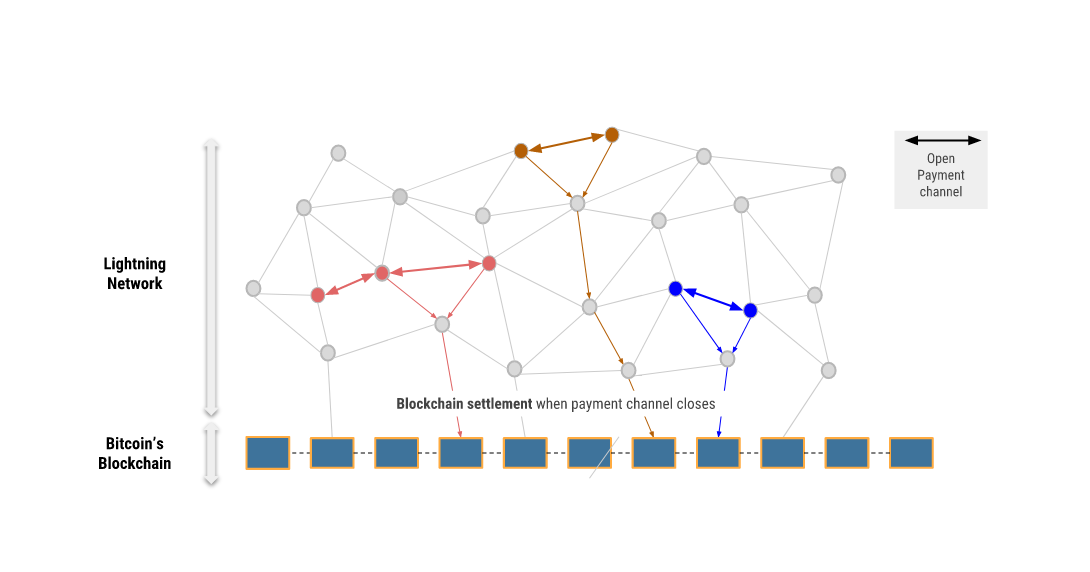
Payment Channel:
A payment channel is a two-way connection between Lightning Network users. It allows unlimited transactions without touching the Bitcoin blockchain until the channel closes.
Learn more about how Bitcoin works.
Payment Channels Connect Nodes in the Lightning Network
How Do Streaming Payments Work Technically?
Streaming payments run through Lightning Network payment channels. They use specialized protocols that allow value to flow continuously.
The technical process has three main parts:
- Channel establishment
- Continuous payment routing
- Automatic settlement
First, users open a Lightning channel with enough capacity. The capacity must cover the expected payment amount.
For example, if you stream 10 sats per minute for one hour, you need at least 600 satoshis. You also need a small amount for routing fees. Many Lightning wallets calculate this automatically.
How the Streaming Process Works
- Initial handshake:
The sender and receiver agree on a payment rate and establish a connection. - Continuous updates:
Small payments are sent at preset intervals through the Lightning Network. - Balance tracking:
Both sides track the total amount transferred in real time. - Instant termination:
Either party can stop the stream at any moment. No extra transactions are required. - Final settlement:
When the stream ends, the Lightning channel reflects the updated balances.
This system is very efficient. According to Lightning Network documentation, channels can handle thousands of updates per second.
Only opening and closing a channel requires an on-chain Bitcoin transaction.
Why Are Streaming Payments Revolutionary?
Satoshi streaming payments fix several problems found in traditional payment and subscription models.
They remove recurring billing friction. They also reduce long-term financial commitment. Most importantly, they align payment directly with actual usage.
With traditional subscriptions, users pay a flat monthly fee. This happens whether they use the service or not.
For example, you might pay $15 per month for a streaming service. You may only watch a few hours of content.
With satoshi streaming payments, you pay only while you are watching. Nothing more and nothing less.
Key Advantages Over Traditional Payment Models
- No subscription fatigue:
There are no monthly charges or forgotten subscriptions. - Accurate price discovery:
Creators can adjust rates easily. Users respond in real time. - No fraud or chargebacks:
Payments stop instantly when the service stops. - Global access:
Anyone with a Lightning wallet can participate. No credit card is required. - True micropayments:
Transaction costs are low enough that $0.001 payments make sense.
Streaming payments also unlock new business models.
For example:
- Paying a few satoshis per minute for cloud computing
- Paying writers per word read instead of per article
These ideas only work when transaction costs are close to zero.
What Are the Primary Use Cases?
Satoshi streaming payments work best when value is tied to time or usage.
Early adoption focuses on:
- Digital content
- Professional services
- API and cloud access
Content and Media Streaming
Video platforms, podcast apps, and music services are leading use cases.
Apps like Sphinx Chat and Breez already let listeners stream satoshis to creators while listening. Common rates range from 10 to 100 sats per minute.
This allows listeners to support creators based on real engagement.
Unlike traditional platforms, creators do not rely on ads or fixed subscriptions. They receive direct, immediate payments.
Listeners stay in control. They can increase or decrease their streaming rate based on content quality.
Professional Services and Consulting
Consultants, tutors, and remote professionals can charge by the minute.
Instead of billing in hourly blocks, payment flows continuously during a call.
For example:
- A video call might stream 1,000 sats per minute
- At December 2025 rates, this equals about $0.01 per minute
Payment stops the moment the call ends. This removes invoice disputes and delays.
For international work, Lightning Network cross-border payments avoid banking delays and currency conversion fees.
Both sides receive instant and final settlement.
API Access and Cloud Resources
Developers can pay for APIs or cloud services by usage.
This may include:
- Paying per API request
- Paying per second of compute time
There are no minimum commitments. Developers can experiment at very low cost.
For example, a developer might stream 1 sat per API call. This equals a fraction of a cent per request.
How Do You Set Up Streaming Payments?
Getting started with satoshi streaming payments is simple.
You need:
- A Lightning Network wallet
- Some bitcoin
- A service that supports streaming payments
For most users, setup takes only a few minutes.
Basic Setup Steps
- Choose a Lightning wallet:
Options include Phoenix, Breez, and Wallet of Satoshi. - Fund your wallet:
Add bitcoin and open Lightning channels. Many wallets do this automatically. - Connect to streaming services:
Link your wallet to supported podcast apps, video platforms, or APIs. - Set payment rates:
Choose your preferred rate, such as 10 sats per minute. - Monitor your balance:
Track usage and refill channels when needed.
If you are new to Lightning, it helps to understand the differences between Bitcoin wallets and Lightning wallets.
Lightning wallets require:
- Active channel management
- An online connection
Standard Bitcoin wallets do not.
Many modern Lightning wallets now automate channel management. Users only need to maintain a bitcoin balance. The wallet handles the technical details.
What Are the Costs and Limitations?
Satoshi streaming payments are efficient, but they still have costs and limits.
The technology is growing. Infrastructure continues to improve, but some constraints remain.
Fee Structure
Lightning Network routing fees are very low.
Typical fees:
- 0% to 0.5% of the payment amount
- Base fees of 0 to 10 satoshis
This data comes from mempool.space Lightning statistics.
For streaming payments, these fees are usually negligible. A 1,000-satoshi stream may cost only 1 to 5 sats in routing fees.
However, opening and closing Lightning channels requires on-chain Bitcoin transactions.
During periods of congestion:
- Fees can reach $5 to $20 per transaction
Because of this, users should open channels with enough capacity for longer sessions.
Technical Limitations
Current streaming payment systems face several challenges:
- Channel capacity:
Streams are limited by the capacity of open channels. - Online requirement:
Both sender and receiver must be online. - Routing complexity:
Large streams may struggle to find efficient routes. - Software maturity:
Many applications are still experimental. - Backup requirements:
Channel state backups are essential to prevent fund loss.
Bitcoin-focused platforms like Rhino Bitcoin combine Lightning and on-chain payments. This helps users balance speed, cost, and reliability.
How Do Streaming Payments Compare to Alternatives?
Different payment methods work best in different situations.
Comparing them helps identify where satoshi streaming payments make the most sense.
Satoshi Streaming Payments
Pros
- Pay only for actual usage
- Instant start and stop
- No subscription lock-in
- Global access without credit cards
Cons
- Requires a Lightning wallet
- Limited merchant adoption
- Technical complexity for some users
Best For
- Digital content
- Pay-per-minute services
- Micropayments under $1
Traditional Subscriptions
Pros
- Simple recurring billing
- Wide merchant acceptance
- Predictable monthly costs
Cons
- Pay whether you use the service or not
- Hard-to-cancel subscriptions
- Forgotten charges
Best For
- Services with consistent monthly usage
Credit Card Microtransactions
Pros
- Familiar payment method
- Consumer protections
- Dispute resolution
Cons
- Minimum fees of $0.30 or more
- Not suitable for true micropayments
- Requires personal information
Best For
- Purchases over $5
On-Chain Bitcoin Payments
Pros
- Maximum security
- No third-party risk
- Censorship resistance
Cons
- Higher fees during congestion
- Long confirmation times
- Not suitable for micropayments
Best For
- Large transfers
- Final settlement
What Does the Future Hold for Streaming Payments?
Satoshi streaming payments are still early, but development is moving fast.
The Lightning Network continues to scale.
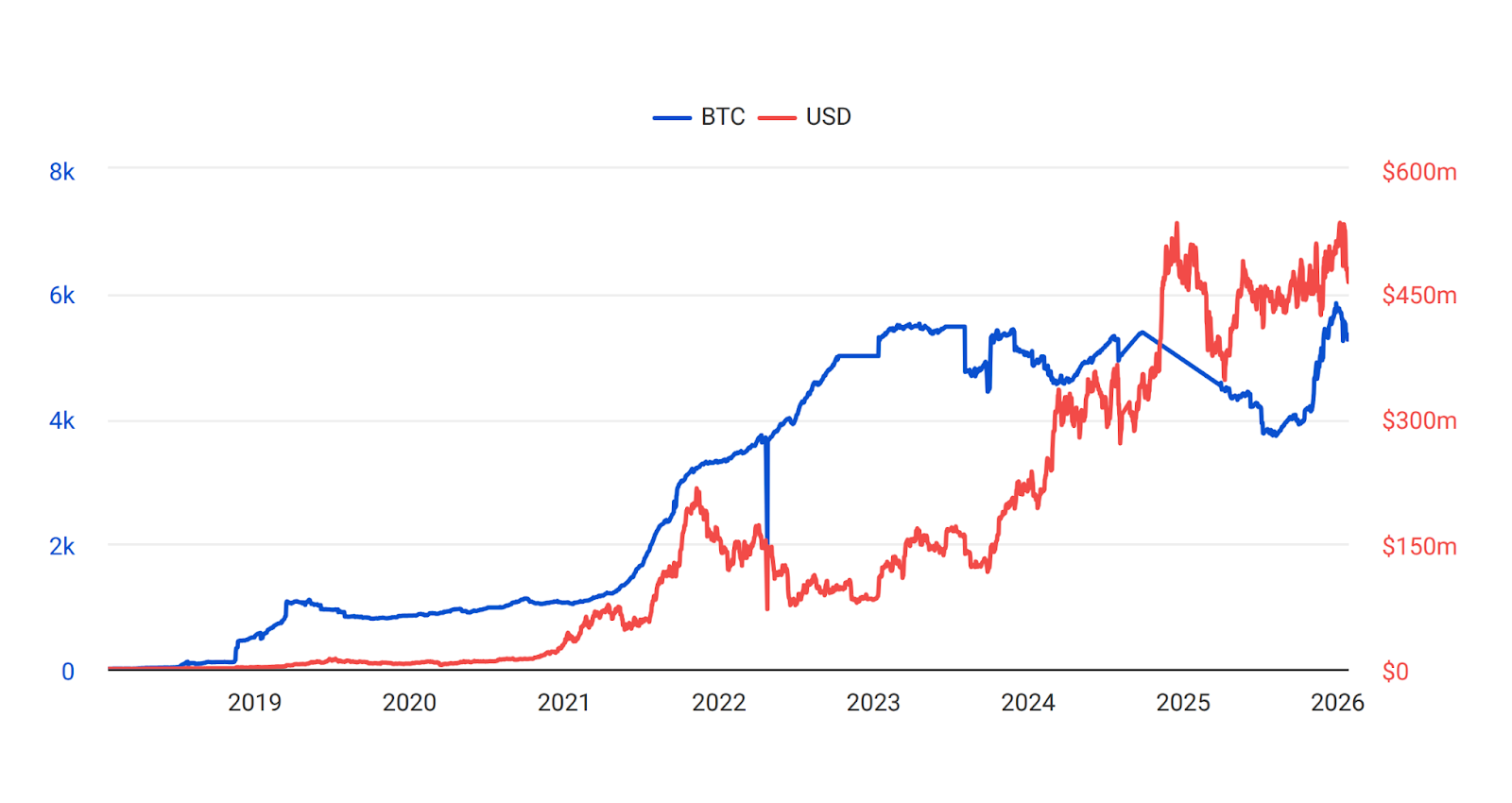
Network capacity grew:
- From about 3,000 BTC in early 2021
- To over 5,000 BTC by late 2023
This data comes from on-chain statistics.
As capacity grows:
- Larger streams become possible
- Routing reliability improves
Lightning Network’s Capacity Graph
Developments to Watch
- Protocol upgrades:
Proposals like BOLT 12 improve privacy and recurring payments. - Mainstream adoption:
Large platforms are exploring Lightning integration. - Automated streaming:
Conditional payments based on usage metrics. - Enterprise use cases:
API billing and cloud resource payments.
Streaming payments may also merge with broader Bitcoin financial services.
Future possibilities include:
- Streaming payments into savings accounts
- Paying bills continuously instead of monthly
- Earning interest on streamed funds in real time
These ideas become realistic as Lightning infrastructure matures.
Frequently Asked Questions
What is the smallest amount you can stream with satoshi payments?
The theoretical minimum is 1 millisatoshi (0.001 satoshi). In practice, limits depend on wallet design. Most services use rates between 1 and 100 satoshis per minute.
Do I need to keep my wallet open while streaming payments?
Yes. Both parties must be online. Mobile wallets handle this automatically while the app is open. Closing the wallet stops the stream.
Can streaming payments be reversed or refunded?
No. Lightning payments are instant and irreversible. This is why streams stop immediately instead of requiring refunds.
How much bitcoin do I need to start streaming payments?
You can start with about 10,000 satoshis, or roughly $1 as of December 2025. Larger balances allow longer sessions.
What happens if my Lightning channel runs out of funds mid-stream?
The stream stops automatically. Most services pause access until you add funds, similar to prepaid phone minutes.
Are streaming payments taxable?
Yes. The IRS treats bitcoin as property. Each streamed payment may be a taxable event. Rules for micropayments are still unclear. Consult a tax professional.
Can businesses accept streaming payments for services?
Yes. Any time-based or usage-based service can use streaming payments. This includes consulting, content platforms, cloud services, and APIs.
How do streaming payments work across different currencies?
Payments occur in bitcoin only. Fiat values are shown for reference. Exchange rates apply at the time of payment.
What security risks come with streaming payments?
Risks include failed backups, online wallet vulnerabilities, and routing failures. Using trusted wallets and backups reduces risk.
Do streaming payments work for physical goods?
Streaming payments work best for digital and time-based services. Physical goods usually require upfront payment.
Conclusion
Satoshi streaming payments change how people pay for time-based services and digital content.
By enabling continuous micropayments through the Lightning Network, this model matches payment directly to usage. It also removes subscription fatigue and payment friction.
Key Considerations
- Best for digital content and time-based services
- Requires a Lightning wallet and basic channel knowledge
- Offers full control with instant start and stop
- Works best for sessions under $10 due to routing limits
As Lightning infrastructure improves, streaming payments are likely to move into mainstream use.
Direct creator payments and frictionless micropayments solve long-standing problems in digital monetization.
For those ready to try instant bitcoin payments, explore Rhino Bitcoin's Lightning-enabled platform. It supports streaming payments, bill pay, and everyday bitcoin transactions.
References
- Bitcoin.org. How Bitcoin Works. https://bitcoin.org/en/how-it-works
- Lightning Network. Lightning Network Protocol Documentation. https://lightning.network/
- Mempool.space. Lightning Network Statistics. https://mempool.space/lightning
- Internal Revenue Service. Notice 2014-21: IRS Virtual Currency Guidance. https://www.irs.gov/pub/irs-drop/n-14-21.pdf
Important Disclaimers
Disclaimer: Educational information only. Not financial, legal, medical, or tax advice.
Risk Warnings: All investments carry risk, including loss of principal. Past performance does not guarantee future results. Bitcoin is volatile and may not be suitable for all investors.
Conflicts of Interest: Rhino Bitcoin provides Bitcoin financial services. This content is educational and may reference company products.
.png)
.png)