
Complete Guide to Bitcoin Loans & Crypto Lending in 2025
Get instant cash using Bitcoin as collateral without selling your crypto. No credit checks, competitive rates, same-day approval. Learn how Bitcoin loans work.
Buy Bitcoin with Zero Fees with Rhino
The most secure way to stack sats. Simple, fast, and zero trading fees.
Complete Guide to Bitcoin Loans & Crypto Lending in 2025
Bitcoin-backed lending allows investors to access cash liquidity without selling their digital assets by using Bitcoin as collateral for loans. These bitcoin loans typically offer faster approval times, no credit checks, and competitive interest rates compared to traditional banking products, making them an attractive financing option for Bitcoin investors who want to maintain their holdings while also accessing a portion of their funds immediately.
This innovative lending model has gained significant traction recently as Bitcoin's price appreciation has created substantial wealth for many early Bitcoin holders. Rather than triggering taxable events by selling their Bitcoin, borrowers can now leverage their digital asset holdings to secure loans for various purposes (to acquire a house,invest in the stock market, consolidate their debt, or a variety of personal expenses).
Key Points:
- Access cash liquidity without selling Bitcoin holdings
- No credit checks required for most Bitcoin-backed loans
- Loan-to-value ratios typically range from 25-50%
- Interest rates often competitive with traditional loans
- Faster approval process compared to conventional lending
- Maintain potential upside from Bitcoin price appreciation
- Risk of liquidation if Bitcoin price falls significantly.
What Are Bitcoin-Backed Loans?
Bitcoin-backed loans are secured lending products that use Bitcoin cryptocurrency as collateral to obtain fiat currency loans, typically in US dollars. Borrowers deposit their BTC with a lending platform, which then provides a cash loan based on a percentage of the cryptocurrency's current market value.
Bitcoin-Backed Loan Definition: A secured loan where Bitcoin serves as the underlying collateral for the loan, allowing borrowers to access cash without selling their digital assets.
These loans emerged as a financial innovation addressing a key challenge for digital asset holders: accessing liquidity without triggering taxable events. Traditional financial institutions have been slow to accept cryptocurrency as collateral, creating opportunities for specialized crypto lending platforms to fill this market gap.
The fundamental mechanics involve smart contracts or custodial arrangements where the Bitcoin remains locked until loan repayment. If the borrower defaults or the Bitcoin value falls below predetermined thresholds, the lender can liquidate the collateral to recover the loan amount. This structure protects lenders while providing borrowers with access to capital markets.
Key characteristics of Bitcoin-backed loans include:
- Collateralized Structure: Bitcoin serves as security for the loan, reducing lender risk.
- Over-Collateralization: Loans typically represent 25-50% of Bitcoin value to account for volatility.
- No Credit Checks: Collateral eliminates need for traditional creditworthiness assessment.
- Fixed or Variable Terms: Loan durations range from weeks to several years.
- Automatic Liquidation: Smart contracts may trigger collateral sales if thresholds are breached.
- Interest-Only Options: Many platforms offer interest-only payments with balloon repayment.
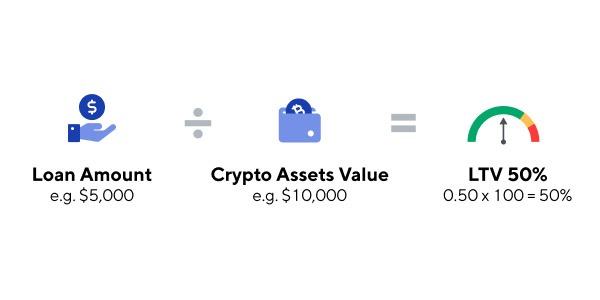
- Loan-to-Value (LTV) Ratio Definition: The percentage of an asset's value that can be borrowed against, typically 25-50% for Bitcoin due to its price volatility.
LTV Definition
Source: Nexo
The Bitcoin lending market has grown substantially, with total locked value in decentralized finance (DeFi) lending protocols exceeding $10 billion. This growth reflects increasing institutional and retail adoption of crypto as a legitimate asset class worthy of financial innovation.
How Do Bitcoin Loans Work?
Bitcoin loans operate through a straightforward process where borrowers pledge their Bitcoin as collateral and receive fiat currency loans in return, typically without the traditional in depth credit checks or extensive documentation requirements that standard banks would require.
The lending platform then holds the pledged Bitcoin in custody until the loan is repaid, providing security for the lender while allowing the borrower to access liquidity.
The process begins with the borrower transferring Bitcoin to the lending platform's custody (or smart contract in the case if Defi platforms). The lending platform then evaluates the current market value of the deposited Bitcoin and offers a loan amount based on predetermined loan-to-value ratios.
Most platforms maintain conservative LTV ratios between 25-50% to account for Bitcoin's price volatility and provide adequate collateral cushion.
Custodial Lending Definition: A lending arrangement where a third party holds the borrower's cryptocurrency collateral until loan repayment, as opposed to non-custodial solutions using smart contracts.
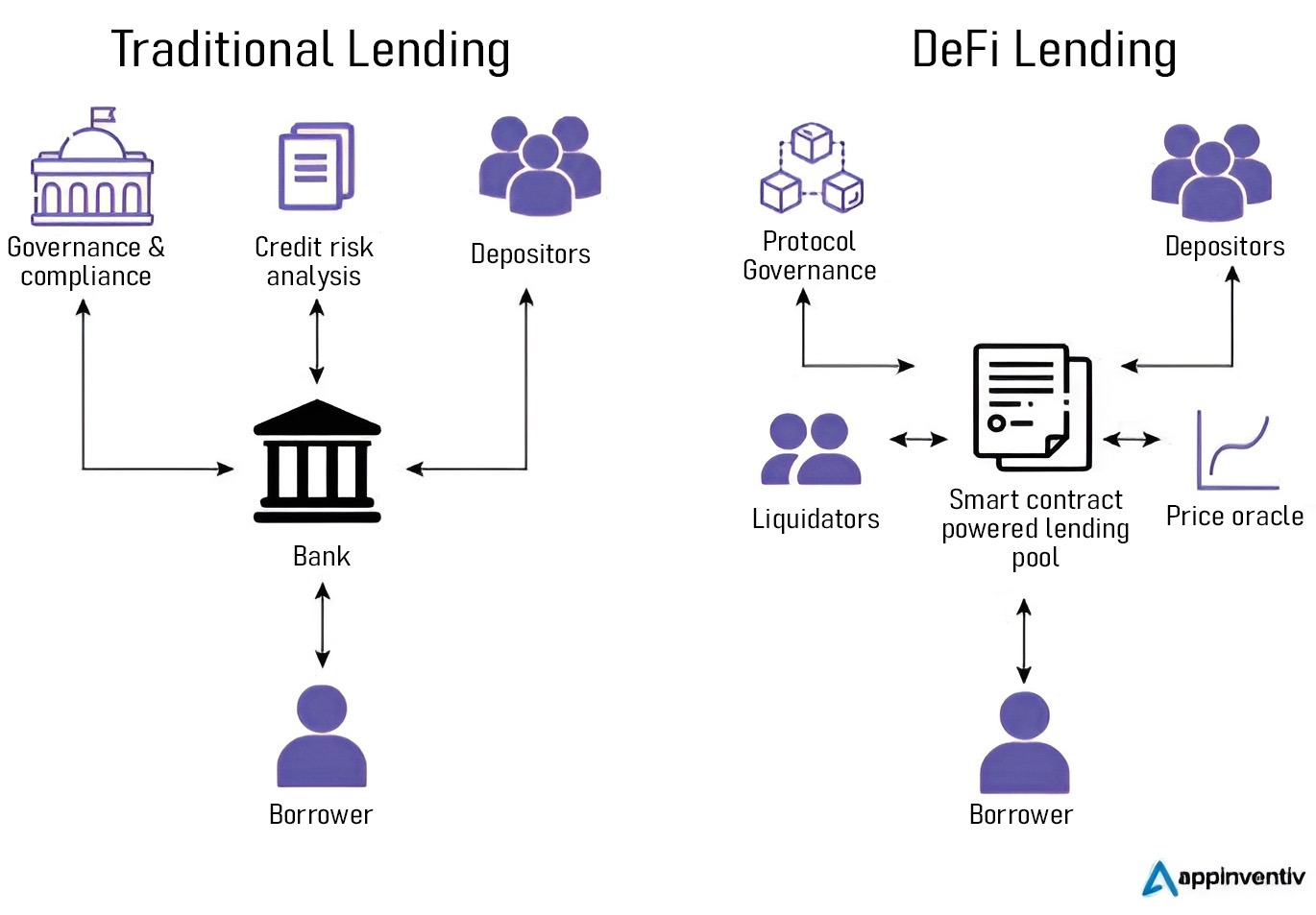
DeFi vs Traditional Lending
Source: Decentralized Finance by Rohini Pise
Once the loan terms are agreed upon, the lender transfers fiat currency to the borrower's designated bank account or digital wallet. The borrower then makes periodic payments according to the agreed schedule, which may include interest-only payments with principal due at maturity or traditional amortizing payments.
Throughout the loan period, the platform monitors the Bitcoin collateral value relative to the outstanding loan balance. If the Bitcoin price declines significantly, approaching the liquidation threshold, the platform typically issues margin calls requiring additional collateral or partial loan repayment to maintain adequate coverage ratios.
The collateral management process involves several key mechanisms:
- Daily Valuation: Bitcoin collateral is marked-to-market daily using real-time price feeds
- Margin Calls: Borrowers receive notifications when collateral ratios approach danger zones
- Grace Periods: Most platforms provide 24-48 hours to respond to margin calls
- Partial Liquidations: Some platforms liquidate only enough collateral to restore healthy ratios
- Full Liquidations: Complete collateral sale may occur if margin calls go unheeded
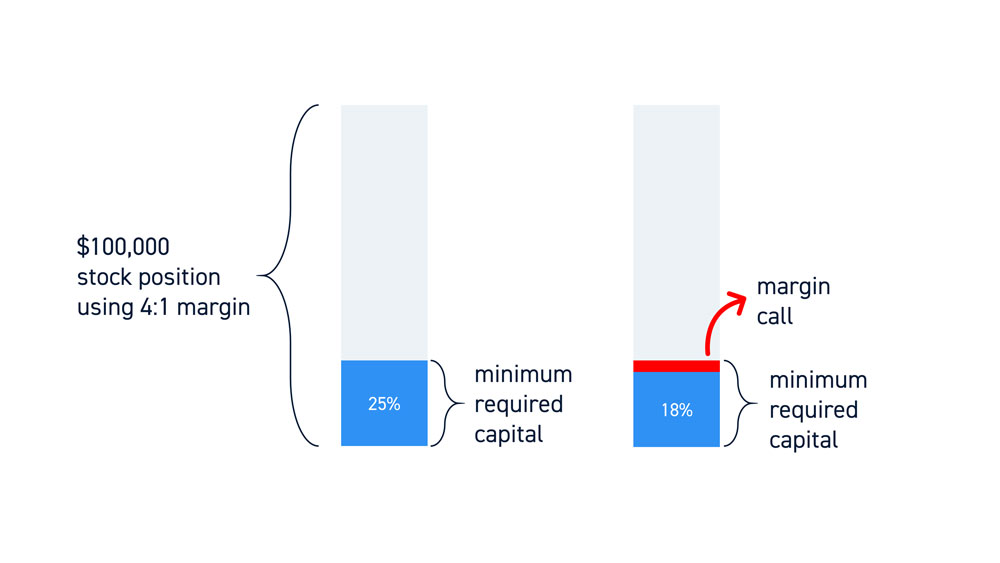
- Margin Call Definition: A demand for additional collateral when the value of pledged assets falls below required maintenance levels, protecting lenders from potential losses.
Visual Representation of a Margin Call
Source: CenterpointSecurities.com
Upon successful loan repayment, the platform releases the Bitcoin collateral back to the borrower's control. This process may involve returning the exact Bitcoin originally deposited (in custodial arrangements) or equivalent value (in some DeFi protocols where assets may be rehypothecated).
Interest rates for Bitcoin-backed loans vary based on several factors including loan duration, LTV ratio, market conditions, and platform-specific pricing models. Rates typically range from 3-15% annually, often competitive with traditional secured loans while also offering much faster processing times.
Types of Bitcoin Lending Platforms
Bitcoin lending platforms can be categorized into three primary types: centralized exchanges, specialized lending companies, and decentralized finance (DeFi) protocols, each offering distinct advantages and risk profiles for borrowers seeking Bitcoin-backed loans.
Centralized Finance (CeFi) Definition: Traditional financial service models adapted for cryptocurrency, where a central authority controls operations, as opposed to decentralized autonomous systems.
Centralized Lending Platforms operate similarly to traditional financial institutions, maintaining full custody of user funds and implementing Know Your Customer (KYC) compliance procedures. These platforms typically offer the most user-friendly interfaces and customer support options, making them attractive for newcomers to cryptocurrency lending. Examples include established companies that have built robust lending products around Bitcoin collateral.
These centralized platforms generally provide several advantages including insurance coverage for custodied assets, dedicated customer service teams, integration with traditional banking systems, and regulatory compliance in multiple jurisdictions. However, they also introduce counterparty risk, as users must trust the platform's security measures and financial stability.
Specialized Crypto Lending Companies focus exclusively on cryptocurrency-backed loans, often providing more competitive rates and flexible terms than generalist platforms. These companies may offer institutional-grade services including higher loan limits, customized repayment schedules, and over-the-counter (OTC) trading capabilities for large transactions.
Many specialized lenders have developed sophisticated risk management systems specifically designed for cryptocurrency volatility, potentially offering better terms for experienced borrowers. They may also provide additional services such as tax optimization strategies, portfolio management advice, and structured financial products.
Decentralized Finance (DeFi) Protocols use smart contracts to automate lending without centralized intermediaries, potentially offering greater transparency and eliminating counterparty risk associated with centralized platforms. Borrowers interact directly with blockchain-based protocols, maintaining self-custody of funds until collateralization occurs.
Smart Contract Definition: Self-executing contracts with terms directly written into code, automatically enforcing agreements without requiring trusted intermediaries.
DeFi lending protocols offer several unique advantages:
- Transparency: All transactions and contract code are publicly auditable on blockchain networks
- Permissionless Access: No KYC requirements or geographic restrictions for most protocols
- Composability: Integration with other DeFi applications for complex financial strategies
- Governance Tokens: Many protocols offer governance participation and potential yield rewards
- Lower Costs: Reduced operational overhead may translate to better rates for users
However, DeFi protocols also present distinct challenges including technical complexity, smart contract risks, regulatory uncertainty, and limited customer support options. Users must understand blockchain interactions and wallet management to safely utilize these platforms.
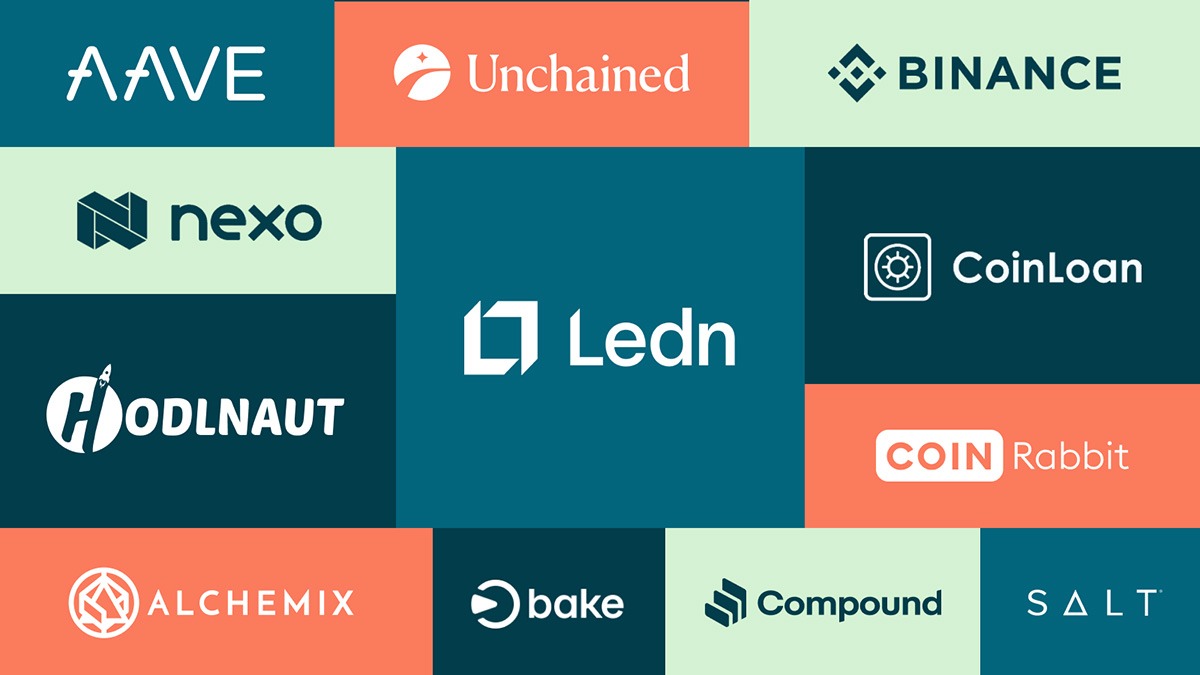
Popular Bitcoin & Crypto Lending Platforms
Source: Ledn
The choice between platform types depends on individual preferences regarding user experience, technical sophistication, risk tolerance, and specific loan requirements. Many sophisticated borrowers utilize multiple platform types to diversify risk and optimize lending terms across different market conditions.
Bitcoin Loans vs Traditional Loans
Bitcoin-backed loans offer several distinct advantages over traditional bank loans, including faster approval times, no credit score requirements, and the ability to maintain cryptocurrency exposure, though they also introduce unique risks related to collateral volatility and regulatory uncertainty.
Comparison Chart:
Approval Time: Bitcoin loans take minutes to hours versus days to weeks for traditional loans - Best for urgent funding needs.
Credit Check: Bitcoin loans require no credit check versus required for traditional loans - Best for borrowers with poor credit.
Collateral: Bitcoin cryptocurrency versus real estate, vehicles, etc. - Depends on available assets.
Interest Rates: Bitcoin loans typically 3-15% versus 2-20% based on credit for traditional loans - Varies by creditworthiness.
Loan Amount: Bitcoin loans offer 25-50% of Bitcoin value versus up to 80-95% asset value for traditional loans - Traditional loans better for higher LTV.
Volatility Risk: High for Bitcoin loans (margin calls possible) versus low for traditional loans (stable collateral) - Traditional loans better for stability.
Tax Implications: No immediate taxable event for Bitcoin loans versus varies by loan purpose for traditional loans - Bitcoin loans better for tax optimization.
Regulatory Protection: Limited/evolving for Bitcoin loans versus extensive (FDIC, CFPB) for traditional loans - Traditional loans better for consumer protection.
The speed advantage of Bitcoin loans is particularly significant for time-sensitive opportunities. While traditional bank loans may require extensive documentation, employment verification, and weeks of processing time, Bitcoin-backed loans can often be approved and funded within the same day. This speed comes from the collateralized nature eliminating credit risk assessment.
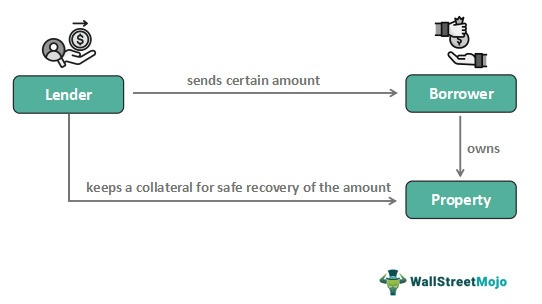
Collateralization Definition: The practice of pledging assets as security for a loan, reducing lender risk and typically resulting in better terms for borrowers.
Collateralization Definition
Source: WallStreetMojo
Interest rate comparisons reveal mixed results depending on individual circumstances. Borrowers with excellent credit may find traditional bank loans offer lower rates, particularly for secured loans like mortgages or auto loans. However, those with poor credit or unconventional income sources may find Bitcoin loans more accessible and competitively priced.
The absence of credit checks in Bitcoin lending democratizes access to capital markets, particularly benefiting international borrowers, entrepreneurs with irregular income, or individuals rebuilding credit history. Traditional banks rely heavily on credit scores and income documentation, potentially excluding viable borrowers who possess substantial cryptocurrency wealth.
However, the loan-to-value limitations of Bitcoin lending represent a significant constraint. While traditional mortgages may allow borrowing up to 95% of property value, Bitcoin loans typically cap at 50% of cryptocurrency value due to volatility concerns. This means borrowers need substantially more Bitcoin collateral to access equivalent loan amounts.
Volatility Risk Comparison:
Traditional loans using stable collateral like real estate face minimal day-to-day valuation changes. Bitcoin's price volatility can trigger margin calls requiring immediate action from borrowers, creating stress and potential forced liquidations during market downturns. This dynamic makes Bitcoin loans less suitable for borrowers unable to monitor positions actively or provide additional collateral when needed.
Regulatory Environment Differences:
Traditional lending benefits from extensive consumer protection frameworks including Truth in Lending Act disclosures, Fair Credit Reporting Act protections, and potential FDIC insurance on deposits. Bitcoin lending operates in a regulatory gray area with limited consumer protections and evolving compliance requirements.
The tax optimization potential of Bitcoin loans provides significant advantages for cryptocurrency holders facing large capital gains. Selling Bitcoin to access liquidity triggers immediate taxable events, while borrowing against Bitcoin allows continued exposure to potential appreciation without current tax liability.
Benefits of Bitcoin-Backed Lending
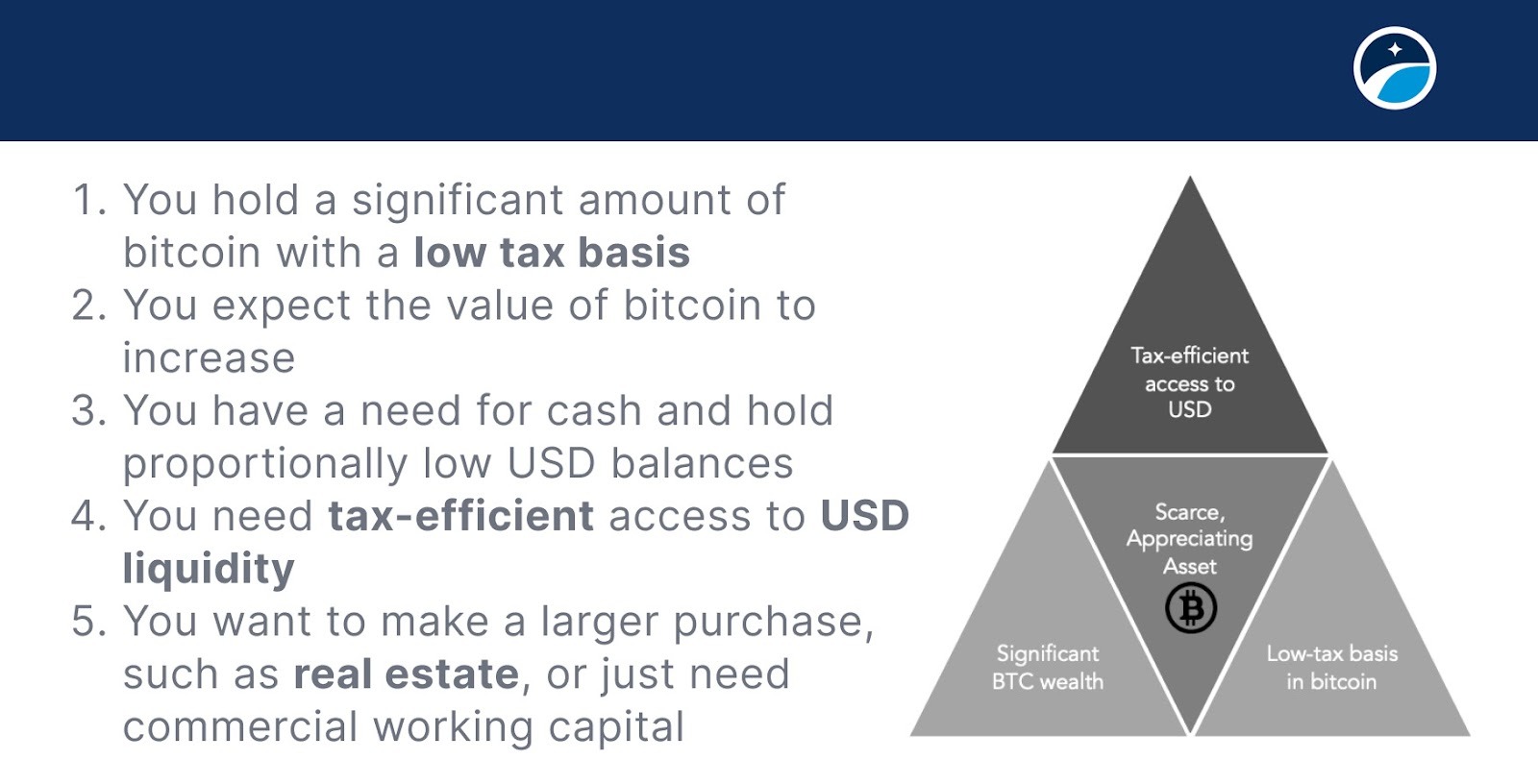
Bitcoin-backed lending provides cryptocurrency holders with immediate liquidity access while maintaining their digital asset positions, eliminating the need to sell Bitcoin and trigger taxable capital gains events that could result in significant tax liability.
The primary benefit centers on liquidity without liquidation - borrowers can access cash for various purposes including business investments, real estate purchases, debt consolidation, or personal expenses while retaining full exposure to Bitcoin's potential price appreciation. This strategy proves particularly valuable during Bitcoin bull markets when holders prefer maintaining positions rather than selling at potentially premature levels.
Benefits of Bitcoin-Backed Loans
Source: Unchained
Tax optimization advantages represent another compelling benefit for Bitcoin-backed lending. Selling appreciated Bitcoin creates immediate capital gains tax liability, potentially at rates up to 37% for short-term gains or 20% plus 3.8% net investment income tax for long-term gains. By borrowing against Bitcoin instead of selling, holders defer tax obligations while accessing needed capital.
Capital Gains Tax Definition: Tax on profits from selling assets at higher prices than purchase costs, with rates varying based on holding period and income levels.
The speed and convenience of Bitcoin loan approval processes far exceed traditional banking timelines. Where conventional loans may require weeks of documentation review, employment verification, and credit analysis, Bitcoin-backed loans can often be approved and funded within hours. This speed advantage proves crucial for time-sensitive opportunities or urgent funding needs.
No credit score requirements democratize access to capital markets for borrowers who may face challenges with traditional lending due to limited credit history, irregular income, or international residence. The collateralized nature of Bitcoin loans eliminates credit risk for lenders, allowing them to extend credit based solely on collateral value rather than creditworthiness metrics.
Competitive interest rates often make Bitcoin loans attractive compared to alternative funding sources, particularly for borrowers without excellent credit. While rates vary based on market conditions and platform-specific factors, Bitcoin loan rates frequently compare favorably to credit cards, personal loans, or other unsecured debt options.
Key benefits include:
Maintain Bitcoin Exposure: Continue benefiting from potential price appreciation.
Avoid Taxable Events: No immediate capital gains recognition upon borrowing.
Fast Access to Capital: Same-day or next-day funding availability.
No Credit Requirements: Collateral-based lending eliminates credit score dependency.
Flexible Terms: Various repayment options including interest-only structures.
Global Accessibility: Platform availability not limited by traditional banking relationships.
Privacy Benefits: Reduced documentation requirements compared to traditional loans.
Interest-only payment options provide additional cash flow flexibility, allowing borrowers to minimize periodic payments while maintaining collateral positions. This structure proves particularly beneficial for borrowers expecting near-term Bitcoin price appreciation or those managing seasonal cash flow variations.
Global accessibility enables international borrowers to access dollar-denominated loans without traditional banking relationships or extensive documentation requirements. This benefit proves valuable for entrepreneurs, digital nomads, or international investors seeking USD liquidity while maintaining Bitcoin positions.
The combination of these benefits creates unique opportunities for sophisticated financial planning strategies, including portfolio diversification, tax-loss harvesting coordination, and strategic asset allocation adjustments without triggering unwanted tax consequences.
Risks and Considerations
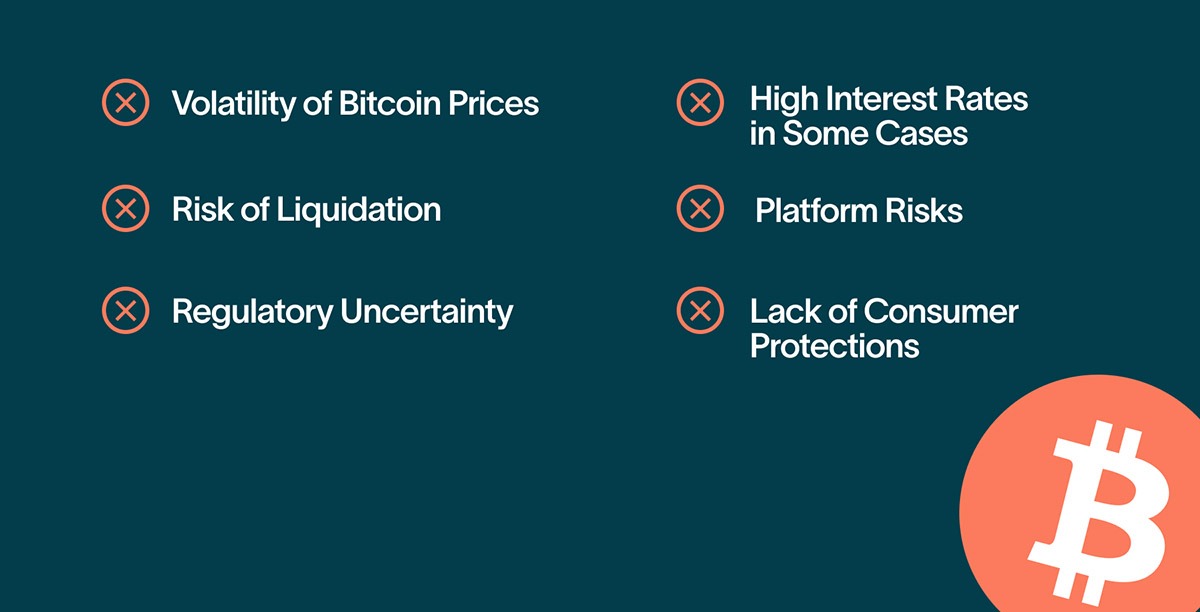
Bitcoin-backed lending carries significant risks primarily related to price volatility that can trigger margin calls and forced liquidation of collateral, potentially resulting in permanent loss of Bitcoin holdings if borrowers cannot meet additional collateral requirements during market downturns.
Risks of Bitcoin-Backed Loans
Source: Ledn
Key risk factors include:
- Liquidation Risk represents the most immediate and serious concern for Bitcoin loan borrowers. When Bitcoin prices decline substantially, the value of collateral may approach or fall below required maintenance levels, triggering automatic liquidation mechanisms. These liquidations often occur during periods of high market stress when Bitcoin prices are depressed, forcing sales at unfavorable prices.
Liquidation Definition: The forced sale of collateral assets when their value falls below required thresholds, designed to protect lenders from losses but potentially harmful to borrowers.
The liquidation process typically provides limited opportunity for borrower intervention. Many platforms allow only 24-48 hours to respond to margin calls by either providing additional Bitcoin collateral or making partial loan repayments. During severe market volatility, borrowers may find themselves unable to act quickly enough to prevent liquidation.
- Counterparty Risk varies significantly between platform types but represents a fundamental concern for centralized lending platforms. Borrowers must trust that platforms will maintain adequate security measures, remain financially solvent, and honor withdrawal requests. High-profile platform failures in the cryptocurrency industry have resulted in complete loss of user funds, demonstrating the importance of careful platform selection.
- Regulatory Uncertainty creates ongoing risks as governments worldwide develop cryptocurrency oversight frameworks. Potential regulatory changes could impact platform operations, loan terms, or tax treatment of Bitcoin-backed loans. Borrowers may face retroactive compliance requirements or limited recourse if regulatory actions affect their chosen platforms.
- Interest Rate Volatility affects borrowers using variable-rate loans, as changing market conditions may significantly increase borrowing costs over time. Unlike traditional loans with rate caps or fixed terms, cryptocurrency lending rates can fluctuate rapidly based on supply and demand dynamics within lending protocols.
- Technical Risks include potential smart contract vulnerabilities, blockchain network congestion, or wallet security issues. DeFi protocols face additional risks from code bugs that could lock funds or enable exploits by malicious actors. Even custodial platforms face technical challenges that may temporarily or permanently impact user access to funds.
- Tax Complexity emerges when loan proceeds are used for various purposes, liquidations occur, or platforms provide insufficient documentation for tax reporting. The evolving tax treatment of cryptocurrency transactions creates uncertainty about proper reporting requirements and potential future liability.
- Rehypothecation Definition: The practice of using client assets as collateral for the institution's own borrowing, potentially increasing risk for the original asset owner.
- Opportunity Cost considerations involve comparing Bitcoin loan costs against potential appreciation. If Bitcoin prices increase significantly during the loan period, borrowers may regret not selling some holdings to access needed liquidity without ongoing interest costs.
Mitigation strategies include maintaining conservative loan-to-value ratios, keeping additional Bitcoin available for margin calls, diversifying across multiple platforms, and carefully monitoring collateral ratios during volatile market periods. Risk management becomes crucial for successful Bitcoin-backed lending strategies.
How to Get a Bitcoin Loan
Getting a Bitcoin loan involves a systematic process that typically takes less than 24 hours from initial application to fund disbursement, beginning with selecting an appropriate lending platform and completing necessary verification procedures before depositing Bitcoin collateral.
Step 1: Research and Select a Lending Platform
Begin by evaluating multiple Bitcoin lending platforms based on interest rates, loan-to-value ratios, liquidation policies, customer reviews, and regulatory compliance. Consider factors such as minimum loan amounts, maximum loan durations, supported countries, and customer service quality. Specialized Bitcoin financial services platforms may also offer integrated lending solutions with competitive terms.
Step 2: Complete Platform Registration and Verification
Most centralized platforms require Know Your Customer (KYC) verification including identity documents, proof of address, and sometimes source of funds documentation. This process can take anywhere from minutes to several days depending on platform requirements and document quality. Some platforms offer expedited verification for larger loan amounts.
Know Your Customer (KYC) Definition: Identity verification requirements mandated by anti-money laundering regulations, requiring platforms to collect and verify customer identity information.
Step 3: Determine Loan Parameters
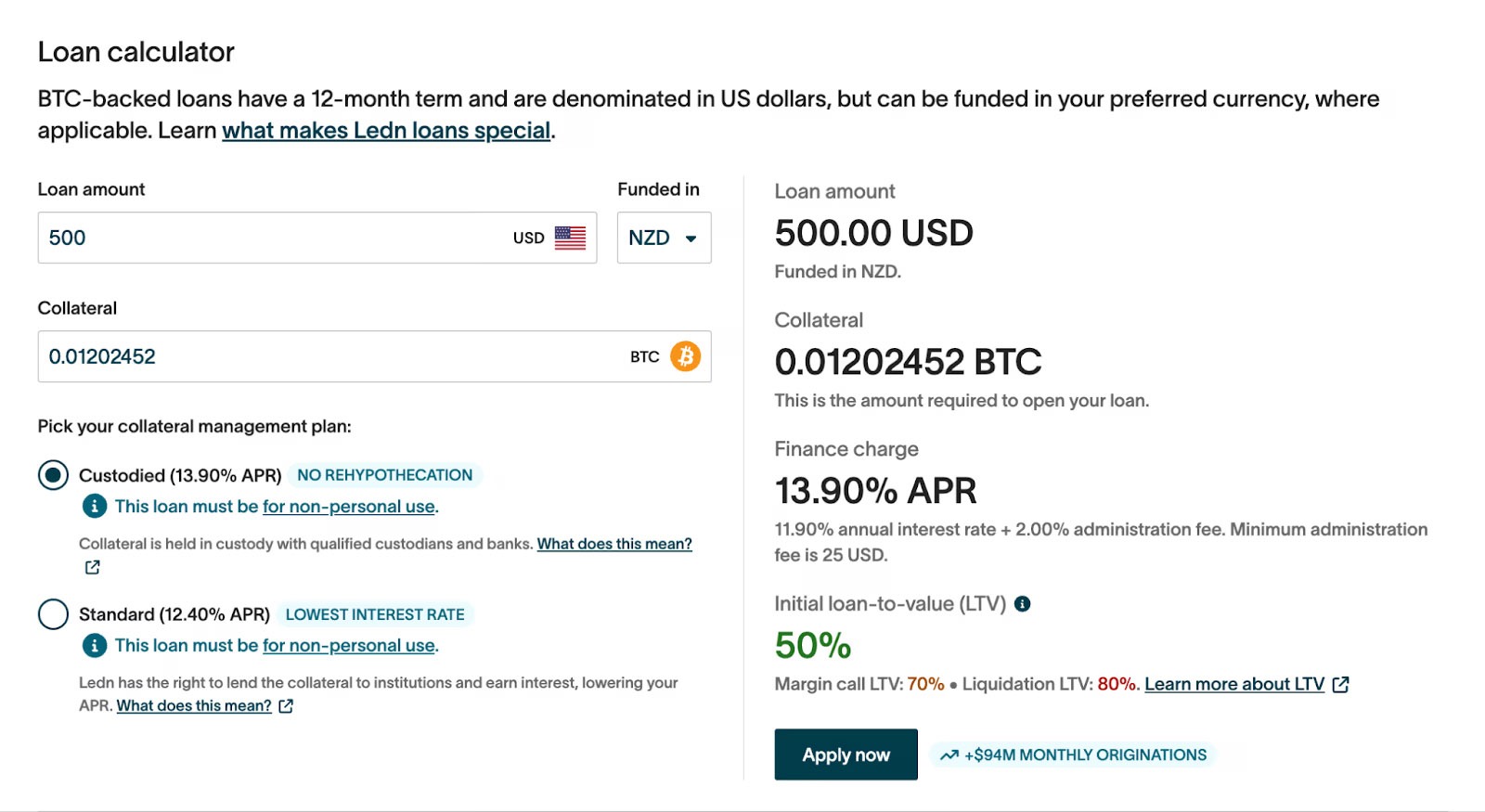
Calculate your desired loan amount based on available Bitcoin collateral and platform loan-to-value ratios. Most platforms offer 25-50% LTV ratios, meaning $100,000 in Bitcoin could support a $25,000-$50,000 loan. Consider your ability to provide additional collateral if Bitcoin prices decline and margin calls occur.
Parameters in a Bitcoin-Backed Loan from Ledn
Source: MilkRoad
Step 4: Transfer Bitcoin Collateral
Send your Bitcoin to the platform's designated custody address or connect your wallet to DeFi lending protocols. Ensure you understand the platform's security measures and insurance coverage for custodied assets. Some platforms require multiple confirmations before recognizing deposits, which may take up to 30-60 minutes.
Step 5: Submit Loan Application
Complete the loan application specifying desired amount, duration, and repayment terms. Many platforms offer instant approval for amounts within standard parameters, while larger loans may require additional review. Carefully review all terms including interest rates, liquidation thresholds, and fee structures.
Step 6: Review and Accept Loan Terms
Thoroughly examine the loan agreement paying particular attention to:
- Interest rate structure (fixed vs. variable)
- Liquidation threshold and margin call procedures
- Early repayment options and penalties
- Fee schedules for loan origination, maintenance, and processing
- Dispute resolution mechanisms and governing law
Step 7: Receive Loan Proceeds
Upon acceptance, funds are typically transferred to your designated bank account or cryptocurrency wallet within hours. Verify receipt of funds and confirm understanding of repayment schedules and ongoing monitoring requirements.
Step 8: Monitor Collateral Ratios
Regularly check your collateral position, especially during volatile market periods. Set up platform notifications for margin calls and maintain reserves of additional Bitcoin or cash to respond quickly if needed. Consider using monitoring tools or alerts to track Bitcoin price movements relative to your liquidation threshold.
Step 9: Manage Repayment Schedule
Make payments according to your agreed schedule, whether interest-only or principal-plus-interest. Many platforms offer automatic payment options to prevent missed payments that could trigger additional fees or accelerate liquidation timelines.
Step 10: Loan Completion and Collateral Release
Upon final payment, verify release of your Bitcoin collateral and transfer to your personal wallet. Review final account statements and retain documentation for tax reporting purposes.
Best Practices for Bitcoin Loan Success:
- Maintain conservative LTV ratios (below 40%) to provide margin for volatility
- Keep additional Bitcoin reserves available for potential margin calls
- Monitor positions daily during volatile market conditions
- Consider partial repayments during Bitcoin price run-ups to reduce liquidation risk
- Understand platform-specific liquidation procedures and timeline requirements
- Document all transactions for tax reporting compliance.
The entire process from application to funding typically completes within 24 hours for standard loan amounts, making Bitcoin-backed loans one of the fastest sources of secured lending available to cryptocurrency holders.
Best Bitcoin Loan Rates and Platforms
Bitcoin loan rates vary significantly across platforms and market conditions, typically ranging from 3% to 15% annually, with the most competitive rates reserved for larger loan amounts, lower loan-to-value ratios, and established customer relationships with lending platforms.
Interest rate determination involves multiple factors including overall market liquidity, Bitcoin volatility levels, lending platform operational costs, regulatory compliance expenses, and competitive positioning within the cryptocurrency lending market. Rates may fluctuate daily based on supply and demand dynamics, particularly for platforms using algorithmic rate setting.
Factors Affecting Bitcoin Loan Rates:
- Loan-to-Value Ratio: Lower LTV ratios typically qualify for better rates
- Loan Amount: Larger loans often receive preferential pricing
- Loan Duration: Shorter terms may offer lower rates but less flexibility
- Market Volatility: Higher Bitcoin volatility increases lending risk and rates
- Platform Competition: More competitive markets generally benefit borrowers
- Customer Relationship: Repeat borrowers may access preferential rates
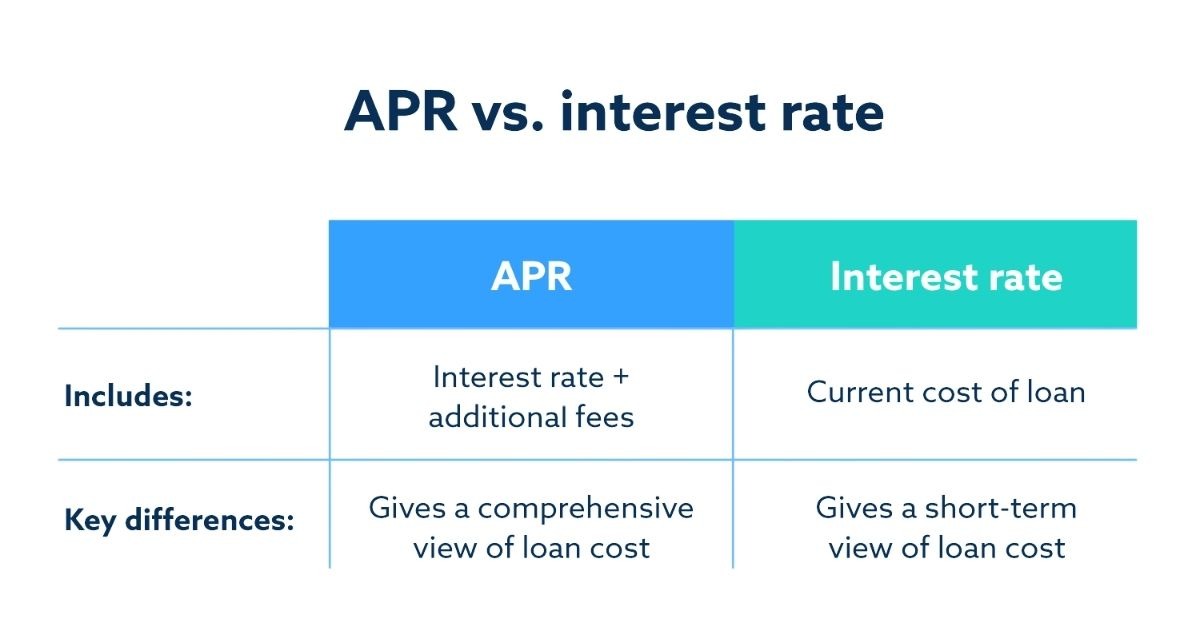
Annual Percentage Rate (APR) Definition: The yearly cost of borrowing including interest and fees, providing a standardized way to compare loan costs across different lenders.
Loan APR (vs Interest Rate)
Source: Lexington Law
Platform Evaluation Criteria:
When comparing Bitcoin lending platforms, consider multiple factors beyond headline interest rates. Security measures, insurance coverage, customer service quality, liquidation procedures, and regulatory compliance all impact the overall borrowing experience and risk profile.
Key evaluation metrics include:
- Interest Rate Structure: Fixed vs. variable rates and rate adjustment mechanisms
- Loan-to-Value Ratios: Maximum borrowing capacity relative to collateral value
- Liquidation Policies: Margin call procedures and liquidation thresholds
- Fee Structures: Origination fees, maintenance costs, and early repayment penalties
- Insurance Coverage: Protection for custodied Bitcoin against platform risks
- Regulatory Compliance: Licenses, audits, and consumer protection measures
- Geographic Considerations:
Platform availability varies by jurisdiction due to regulatory requirements. US-based borrowers should verify state-level licensing and compliance, while international borrowers may face additional verification requirements or service limitations. Some platforms specialize in specific geographic markets, potentially offering better terms for local customers.
- Rate Optimization Strategies:
Borrowers can potentially secure better rates through several approaches including maintaining lower LTV ratios, choosing longer-term relationships with preferred platforms, bundling multiple services, and timing loan origination during favorable market conditions.
Consider these optimization tactics:
- Conservative Collateralization: Maintain LTV ratios below 40% for better pricing
- Relationship Building: Establish history with preferred platforms for rate improvements
- Market Timing: Originate loans during stable market periods when rates may be lower
- Service Bundling: Platforms offering multiple services may provide package discounts
- Term Structure: Balance rate benefits against flexibility needs for loan duration
- Institutional vs. Retail Rates:
Large borrowers seeking substantial loan amounts may access institutional pricing tiers with significantly lower rates than retail offerings. These institutional products typically require minimum loan amounts of $100,000 or more and may include dedicated relationship management and customized terms.
The lending landscape continues evolving rapidly, with new platforms entering the market and existing providers adjusting their models. Regular rate comparison shopping helps ensure borrowers maintain access to competitive terms as market conditions change.
For current market conditions and specific platform recommendations, borrowers should conduct fresh research at the time of their borrowing need, as rates and terms change frequently in the dynamic cryptocurrency lending environment.
Bitcoin Loan Calculator and Terms
Bitcoin loan calculators help borrowers determine maximum loan amounts, estimate monthly payments, and analyze liquidation risks based on current Bitcoin holdings, desired loan-to-value ratios, and prevailing interest rates across different lending platforms.
Understanding loan calculation methodology enables borrowers to make informed decisions about collateral requirements, repayment capacity, and risk management strategies. Most calculations involve straightforward formulas, but Bitcoin's volatility adds complexity requiring scenario analysis and risk modeling.
Loan-to-Value Calculator Definition: A tool that determines the maximum borrowing amount based on collateral value and platform-specific LTV limits, typically 25-50% for Bitcoin loans.
Basic Loan Amount Calculation:
Maximum Loan Amount = Bitcoin Value × Loan-to-Value Ratio
For example, with $100,000 in Bitcoin and a 40% LTV ratio: Maximum Loan = $100,000 × 0.40 = $40,000
Interest Payment Calculations:
Monthly Interest Payment = Loan Amount × (Annual Interest Rate ÷ 12)
Using a $40,000 loan at 8% annual interest: Monthly Interest = $40,000 × (0.08 ÷ 12) = $266.67
Liquidation Threshold Analysis:
Understanding liquidation thresholds helps borrowers assess risk levels and maintain safe collateral ratios. Most platforms liquidate when collateral value approaches 110-125% of outstanding loan balance.
Liquidation Price = Loan Balance ÷ (Bitcoin Quantity × Liquidation Ratio)
For a $40,000 loan secured by 1 Bitcoin with 120% liquidation ratio: Liquidation Price = $40,000 ÷ (1 × 1.20) = $33,333
This means Bitcoin would need to fall to approximately $33,333 to trigger liquidation, representing a 67% decline from the original $100,000 collateral value.
Key Loan Terms and Definitions:
Principal: The original loan amount borrowed against Bitcoin collateral.
Interest Rate: Annual cost of borrowing, may be fixed or variable.
Term Length: Duration of the loan, typically ranging from 30 days to several years.
LTV Ratio: Loan amount as percentage of collateral value.
Maintenance Margin: Minimum collateral ratio required to avoid margin calls.
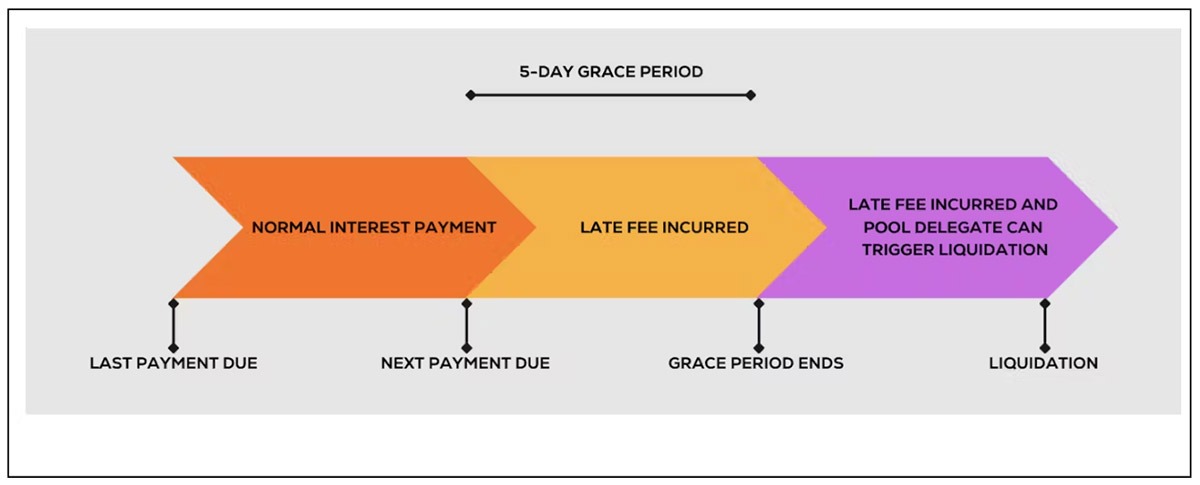
Grace Period: Time allowed to respond to margin calls before liquidation.
Grace Periods in Load Repayment
Source: Maple Finance
Amortization Definition: Gradual loan repayment through scheduled payments covering both principal and interest, as opposed to interest-only payments with balloon principal repayment.
Payment Structure Options:
Bitcoin loans typically offer several repayment structures to accommodate different borrower needs and cash flow preferences:
Interest-Only Payments: Borrowers pay only interest charges monthly with principal due at maturity. This minimizes periodic payment requirements but maintains full loan balance throughout the term.
Amortizing Payments: Regular payments include both principal and interest, gradually reducing loan balance over time. This structure provides predictable payoff but requires higher monthly payments.
Balloon Payments: Combination of small periodic payments with large final payment including remaining principal balance. This hybrid approach balances cash flow management with eventual loan satisfaction.
Margin Call Calculation Examples:
Platforms typically issue margin calls when collateral ratios fall to predetermined levels, often around 150-200% of loan value. Understanding these calculations helps borrowers prepare for potential margin requirements.
Margin Call Trigger = Outstanding Loan Balance × Margin Call Ratio.
For a $40,000 loan with 150% margin call ratio: Margin Call Trigger = $40,000 × 1.50 = $60,000.
If Bitcoin value falls to $60,000, the platform would issue a margin call requiring additional collateral or partial loan repayment to restore healthy ratios.
Additional Collateral Required:
Additional Collateral = (Target Ratio × Loan Balance) - Current Collateral Value.
To restore a 200% ratio when collateral falls to $60,000: Additional Collateral = ($40,000 × 2.00) - $60,000 = $20,000.
Fee Structure Considerations:
Most platforms charge various fees beyond interest rates, including origination fees (0.5-2% of loan amount), maintenance fees (monthly or annual), early repayment penalties, and liquidation fees. These costs should factor into total borrowing cost calculations.
Effective Annual Rate = Interest Rate + (Total Fees ÷ Loan Amount ÷ Term in Years)
Understanding comprehensive borrowing costs enables accurate comparison between different platforms and loan structures, helping borrowers select optimal financing arrangements for their specific situations.
Frequently Asked Questions
1. What happens if the Bitcoin price crashes and I can't meet my margin call?
If you cannot provide additional collateral or make partial loan repayments within the platform's grace period (typically 24-48 hours), the lending platform will automatically liquidate your Bitcoin collateral to repay the outstanding loan balance. This liquidation occurs at current market prices, which may be significantly lower than your original collateral value, potentially resulting in permanent loss of your Bitcoin holdings. Any remaining Bitcoin after loan repayment would be returned to your account, but substantial losses are possible during severe market downturns.
2. Can I get a Bitcoin loan with no credit check required?
Yes, most Bitcoin-backed lending platforms do not require traditional credit checks because the loan is fully collateralized by your Bitcoin holdings. The collateral eliminates credit risk for lenders, allowing them to approve loans based solely on the value of your deposited Bitcoin rather than your credit score, income verification, or employment history. This makes Bitcoin loans accessible to borrowers with poor credit, irregular income, or limited credit history who might struggle to qualify for traditional bank loans.
3. How quickly can I receive the funds from a BTC loan?
Bitcoin loan approval and funding typically occurs within hours rather than days or weeks required for traditional loans. After completing platform verification (which may take 1-3 days initially), depositing Bitcoin collateral, and submitting your loan application, funds can often be transferred to your bank account or digital wallet within the same business day. Some platforms offer even faster processing for established customers or smaller loan amounts, with funding possible within minutes of application approval.
4. What interest rates should I expect for Bitcoin-backed loans?
Bitcoin loan interest rates typically range from 3% to 15% annually, depending on factors including the lending platform, loan-to-value ratio, loan amount, market conditions, and loan duration. Lower LTV ratios (25-35%) generally qualify for better rates, while higher ratios approach the upper end of the range. These rates often compare favorably to credit card rates or personal loans, particularly for borrowers without excellent credit scores who might face higher traditional lending costs.
5. Are Bitcoin loans taxable events?
Taking out a Bitcoin loan is generally not considered a taxable event because you are borrowing against your cryptocurrency rather than selling it, similar to how home equity loans don't trigger capital gains taxes. However, tax implications can arise if your Bitcoin collateral is liquidated due to margin calls, which may be treated as a sale for tax purposes. Additionally, interest payments may or may not be tax-deductible depending on how loan proceeds are used. Consult with a tax professional familiar with cryptocurrency taxation for specific guidance based on your situation.
6. What loan-to-value ratio should I choose to minimize liquidation risk?
Conservative borrowers should consider loan-to-value ratios of 25-35% to provide substantial cushion against Bitcoin price volatility and reduce liquidation risk. While platforms may offer LTV ratios up to 50% or higher, lower ratios provide more room for price fluctuations before triggering margin calls. A 30% LTV ratio means Bitcoin would need to decline approximately 40-50% before approaching dangerous territory, depending on the platform's specific liquidation thresholds. This conservative approach sacrifices borrowing capacity for increased safety and peace of mind.
7. Can I repay my Bitcoin loan early without penalties?
Early repayment policies vary significantly between lending platforms, with some allowing penalty-free prepayment while others charge early repayment fees ranging from 1-5% of the outstanding balance. Review loan terms carefully before signing, as prepayment flexibility can be valuable if you want to reduce interest costs or retrieve your Bitcoin collateral ahead of schedule. Some platforms offer partial repayment options allowing you to reduce loan balance and liquidation risk without full loan satisfaction.
8. What happens to my Bitcoin during the loan period?
Your Bitcoin collateral remains locked in the lending platform's custody or smart contract throughout the loan period, meaning you cannot access, trade, or transfer these holdings until loan repayment. Some platforms may use your Bitcoin for their own trading or lending activities (rehypothecation), while others maintain segregated custody. The platform typically provides regular statements showing your collateral value and loan status, but you cannot benefit from potential Bitcoin price appreciation through trading or spending during the loan term.
9. Are Bitcoin lending platforms insured against hacking or fraud?
Insurance coverage varies dramatically between platforms, with some offering comprehensive protection against hacking, theft, or operational failures, while others provide limited or no insurance coverage. Centralized platforms may carry commercial insurance policies covering custodied assets, but coverage limits, exclusions, and claim procedures vary significantly. DeFi protocols typically offer no insurance beyond potential smart contract audit protections. Carefully research each platform's insurance policies and consider this factor heavily when selecting a lending platform for your Bitcoin collateral.
10. Can international borrowers access Bitcoin lending platforms?
Many Bitcoin lending platforms serve international customers, though availability depends on local regulations and platform compliance policies. Some platforms restrict service to specific countries due to regulatory requirements, while others welcome global customers with enhanced verification procedures. International borrowers may face additional documentation requirements, longer verification times, or limited customer service hours, but can often access the same basic loan products as domestic customers. Check platform terms of service and regulatory compliance in your jurisdiction before proceeding.
Conclusion
Bitcoin-backed lending represents a powerful financial tool for cryptocurrency holders seeking liquidity without sacrificing their digital asset positions or triggering immediate tax consequences. The ability to access cash within hours while maintaining Bitcoin exposure addresses a fundamental need in the growing cryptocurrency ecosystem, though borrowers must carefully manage the inherent risks associated with collateral volatility.
The key to successful Bitcoin lending lies in conservative collateralization strategies, thorough platform due diligence, and active risk management throughout the loan period. Borrowers who maintain loan-to-value ratios well below maximum limits, keep additional collateral reserves available for margin calls, and carefully monitor their positions during volatile market conditions can effectively utilize this innovative financing option while minimizing potential downsides.
As the Bitcoin lending market continues maturing, increased competition among platforms, regulatory clarity, and improved risk management tools should benefit borrowers through better rates, enhanced protections, and more sophisticated product offerings. However, the fundamental dynamics of cryptocurrency volatility will continue requiring careful attention to collateral management and liquidation risks.
The integration of Bitcoin lending with other financial services, such as those offered by comprehensive Bitcoin banking platforms, may provide additional opportunities for optimizing borrowing strategies within broader financial planning contexts. This evolution toward complete cryptocurrency financial ecosystems could further enhance the utility and accessibility of Bitcoin-backed lending for mainstream adoption.
For cryptocurrency holders considering Bitcoin loans, success depends on understanding the risks, choosing reputable platforms, maintaining conservative collateral positions, and treating borrowed funds as temporary liquidity rather than permanent capital access. When used appropriately, Bitcoin-backed lending can be an effective tool for unlocking the value of cryptocurrency holdings while preserving long-term investment positions.
References
- Internal Revenue Service. "Topic No. 409 Capital Gains and Losses." IRS.gov.
- Consumer Financial Protection Bureau. "What is the difference between a mortgage interest rate and an APR?" CFPB.gov.
- Wikipedia. "Cryptocurrency." Wikipedia.org.
- Wikipedia. "Loan-to-value ratio." Wikipedia.org.
- Wikipedia. "Smart contract." Wikipedia.org.
- Federal Trade Commission. "Credit and Loans." FTC.gov.
- Financial Industry Regulatory Authority. "Investor Protection." FINRA.org.
Disclaimer: This content is provided for educational and informational purposes only and should not be construed as financial, investment, or legal advice. Bitcoin-backed lending involves significant risks including potential loss of collateral through liquidation, and past performance does not guarantee future results. Readers should conduct their own research and consult with qualified financial advisors before making any lending or investment decisions.
Risk Warnings: Bitcoin and cryptocurrency lending involves substantial risks including but not limited to: market volatility that may trigger margin calls and liquidation, counterparty risk from lending platforms, regulatory uncertainty, technical risks from smart contracts or platform failures, and potential total loss of collateral. Interest rates and loan terms can change without notice, and lending platforms may suspend operations or become insolvent. This information does not constitute an offer to lend or borrow and availability of services may vary by jurisdiction.
Conflicts of Interest: This content may contain references to Rhino Bitcoin services. Such references are provided for informational purposes and do not constitute endorsements or recommendations. Readers should evaluate all available options and make independent decisions based on their specific circumstances and risk tolerance.
.png)
.png)