
Exposing the Myth of "Free" Bitcoin Mining
Discover why "free Bitcoin mining" is a myth. Learn about the energy costs, hardware investments, and competition involved in Bitcoin mining.

Buy Bitcoin with Zero Fees with Rhino
The most secure way to stack sats. Simple, fast, and zero trading fees.
The idea of "free Bitcoin mining" might seem appealing to newcomers seeking to profit from bitcoin’s growing value without the upfront costs associated with mining equipment or energy consumption.
However, the concept of free bitcoin mining is fundamentally flawed. Mining bitcoin requires significant resources, both in terms of hardware and energy, and no platform can offer free mining without major costs that need to be offset in some way.
This article will explore why free bitcoin mining is a myth, by looking at the energy costs of bitcoin mining, hardware investments and maintenance, mining difficulty, and how so-called “free mining platforms” operate.
The Energy Costs of Bitcoin Mining
Bitcoin mining is an energy-intensive process. The network relies on miners to validate transactions and secure the blockchain, and they are rewarded with newly minted bitcoin.
However, this isn’t a simple process. Bitcoin miners must solve mathematical equations, which require a significant amount of computational power. These computations are known as "Proof of Work" and are critical to ensuring the integrity of Bitcoin's decentralized network.
The computational power required to mine bitcoin translates directly into energy consumption. As the Bitcoin network has grown, so too has the difficulty of mining, which means that more and more energy is required. According to various studies, Bitcoin mining on a global scale consumes as much electricity as entire small nations.
Bitcoin Consumes “as Much Energy as the Netherlands”
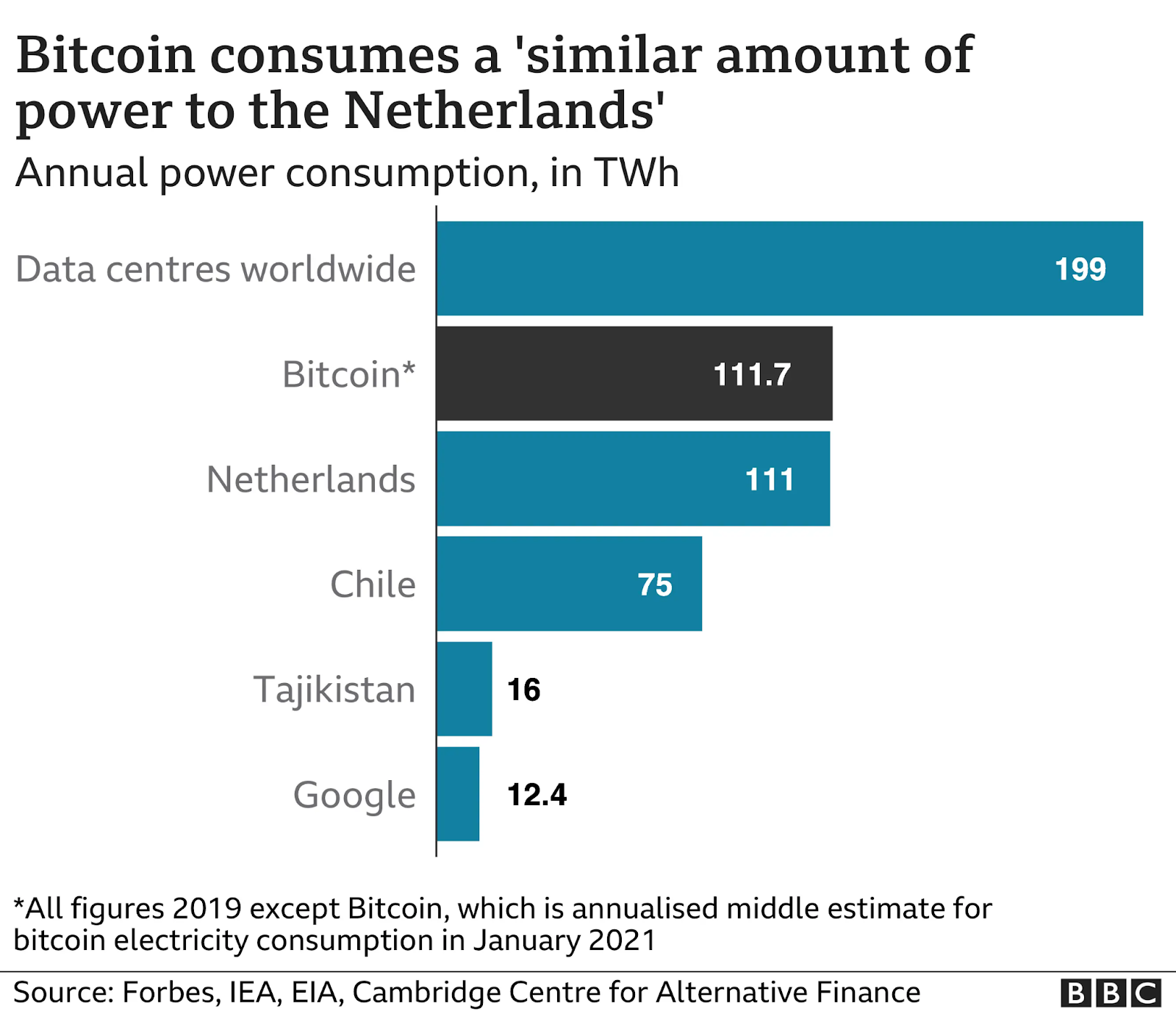
Source: BBC
Any platform offering free Bitcoin mining must account for these energy costs. If users are not paying for electricity, then the platform must be covering it, and such expenses need to be recouped elsewhere. This is where the business models of so-called “free Bitcoin mining” platforms become questionable.
Hardware Investment and Maintenance
Beyond energy costs, Bitcoin mining requires specialized hardware known as Application-Specific Integrated Circuits (ASICs). ASICs are optimized for the specific task of mining Bitcoin and are far more powerful than typical home computers—meaning that they can do only one task (mining Bitcoin), but they can do it fast. However, they are also expensive, with the most efficient ASICs costing thousands of dollars.
Latest Bitmain Antminers Costs Between $5,000 to $6,000

Source: Viperatech
Antminer S21 Hydro 335T/Hs Profitability
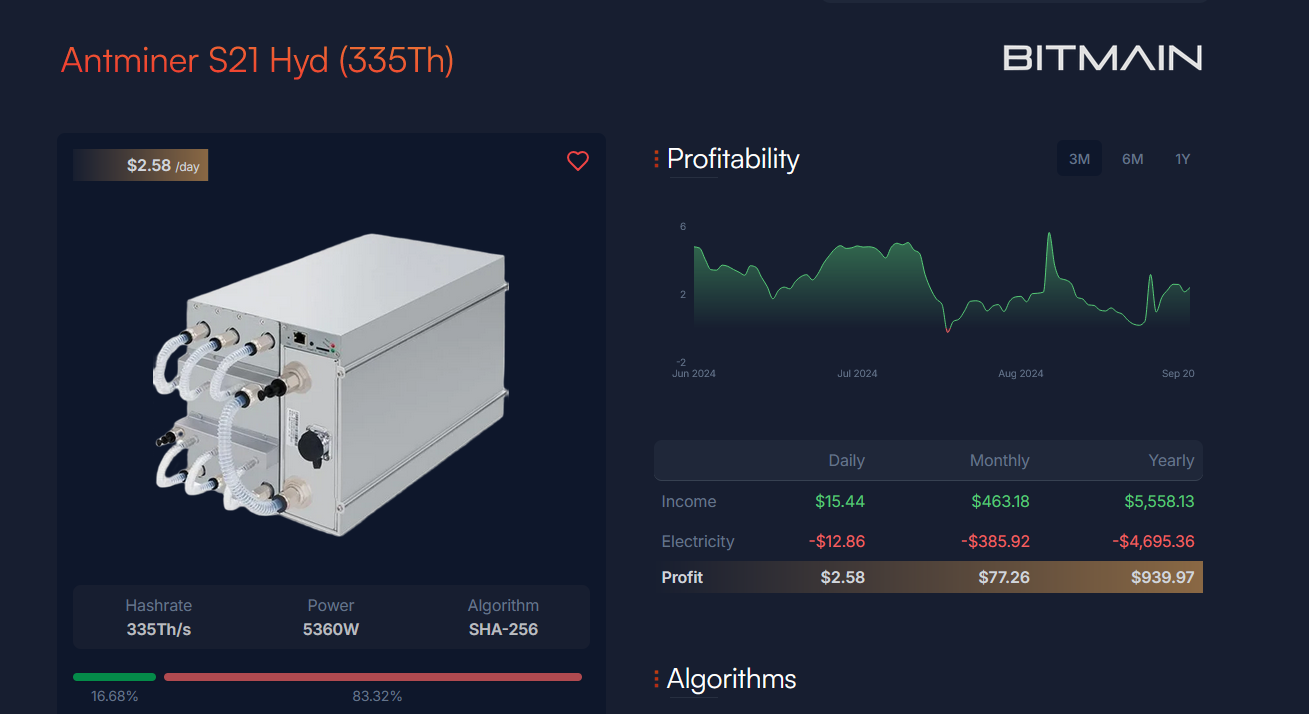
Source: Asicminervalue
Moreover, ASICs have a limited lifespan and must be maintained regularly to continue operating effectively.
The computational power required to mine bitcoin creates significant heat, and without proper cooling systems, the hardware can degrade quickly. This adds to the overall cost, as miners need to replace and upgrade equipment over time to remain competitive in the Bitcoin network.
The financial barrier to entry for Bitcoin mining is substantial. Therefore, any platform claiming to offer “free Bitcoin mining” is essentially offering users access to expensive, energy-hungry hardware without charging for it.
This simply doesn’t add up—someone must pay for the equipment and its upkeep. Thus, "free Bitcoin mining" shifts the cost burden elsewhere or is outright deceptive.
Mining Difficulty and Competition
Bitcoin mining difficulty adjusts every 2016 blocks (roughly every two weeks) to ensure that new blocks are added to the blockchain approximately every 10 minutes. This adjustment is based on the total computational power of the network—when more miners join, the difficulty increases, and when miners leave, the difficulty decreases.
As Bitcoin mining difficulty increases, miners require even more computational power to successfully mine Bitcoin, which adds to the competitive nature of the process. The rising difficulty, driven by more miners entering the market, increases the cost of winning a block, necessitating expensive hardware and significant energy resources. This makes the concept of free Bitcoin mining platforms highly implausible.
Bitcoin Network Difficulty From Inception to September 2024 In Trillions
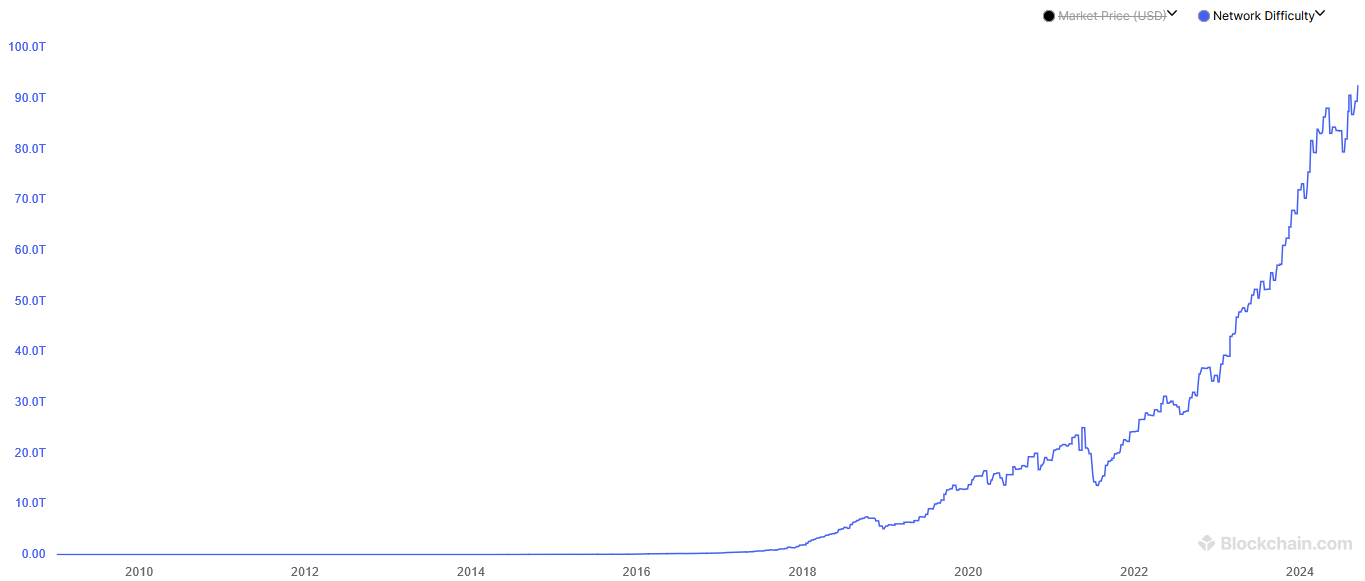
Source: Blockchain.com
Whoever wants to earn bitcoin from mining has to compete against large-scale mining operations with vast resources. This competitive pressure further increases the costs associated with mining, which free platforms would have to bear.
Bitcoin Mining Pools Hashrate Distribution
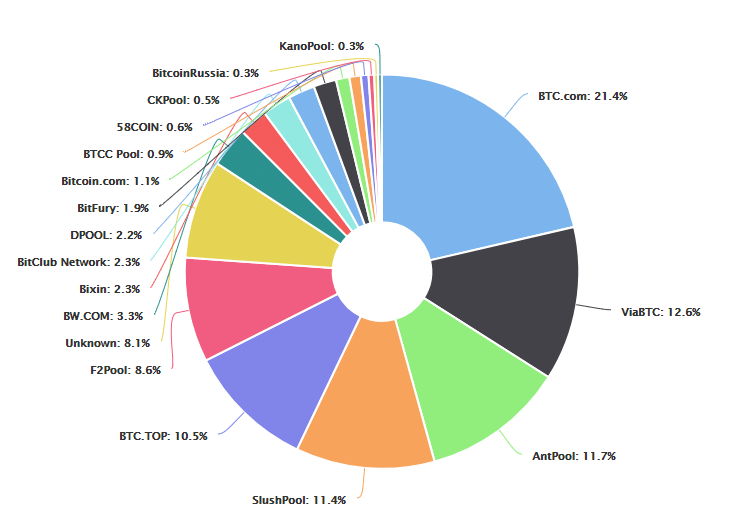
Source: Researchgate
How Do Some Free Bitcoin Mining Platforms Pay Users?
Given the high costs of energy, hardware, and competition, one might wonder how so-called “free Bitcoin mining platforms” claim to offer rewards. In most cases, these platforms do not profit from actual Bitcoin mining. Instead, they employ other methods to generate income.
One common method is through advertising. These platforms might display ads to users and use that revenue to pay small bitcoin rewards. However, the amount of bitcoin distributed to users is usually minuscule and not worth the time and effort involved.
The concept of "free" mining is merely a marketing strategy designed to attract users who will view ads or engage with the platform in some way that generates revenue.
Some platforms operate under even more dubious circumstances. Instead of mining bitcoin, they may mine other, less valuable digital assets while claiming to mine bitcoin. The profits made from these alternative assets are then used to pay users in bitcoin, creating the illusion that free bitcoin is being generated. However, this model is unsustainable in the long term as it relies on exploiting users' lack of knowledge and understanding of mining economics.
Finally, some platforms are outright Ponzi schemes. They would have free tiers that pay really small amounts, and paid tiers that promise much larger rewards.
These platforms attract users by promising free bitcoin mining and paid upgrades to unlock higher returns, but in reality, they pay early users with the deposits of newer users. This type of scam eventually collapses when the platform can no longer attract new participants to sustain payouts.
Conclusion: Free Bitcoin Mining Does Not Exist
The reality is that Bitcoin mining requires substantial energy, hardware investment, and continuous maintenance, all of which come at a significant cost. Platforms claiming to offer free Bitcoin mining either cover their costs through advertising, mine other digital assets, or operate as unsustainable Ponzi schemes.
In essence, the concept of “free” bitcoin mining is misleading. There are always underlying costs associated with mining, whether users pay them directly or indirectly through their time, data, or by being part of a deceptive scheme.
Bitcoin’s value stems from its decentralized, transparent, and secure nature, but these features are deeply rooted in physical tangible assets like energy and hardware. Mining bitcoin is a resource-intensive process that cannot be offered for free in any sustainable or legitimate manner.
.png)
.png)