
Bitcoin Watch Only Wallet Security Guide: Monitor Holdings Safely Without Private Keys
Monitor Bitcoin balances without exposing private keys by learning how watch-only wallets enhance security while keeping spending authority offline.
Buy Bitcoin with Zero Fees with Rhino
The most secure way to stack sats. Simple, fast, and zero trading fees.
A Bitcoin watch-only wallet allows you to monitor bitcoin addresses and balances without storing private keys, making it impossible to spend funds from that wallet. This security-focused tool lets you track holdings, generate receiving addresses, and verify transactions while keeping your spending keys safely stored elsewhere.
Key Summary: Watch-only wallets provide a secure way to monitor Bitcoin holdings without exposing private keys to internet-connected devices, combining convenience with enhanced security.
Key Takeaways:
- Watch-only wallets can view balances but cannot spend bitcoin
- Ideal for cold storage monitoring and accounting purposes
- Requires corresponding wallet with private keys to spend funds
- Commonly used with hardware wallets and multi-signature setups
What Is a Watch-Only Wallet?
A watch-only wallet is a Bitcoin wallet that contains public keys or addresses but no private keys. It functions as a read-only interface to the Bitcoin blockchain, allowing you to monitor transactions and balances without the ability to authorize spending.
The wallet derives its name from its primary function: watching. You can observe incoming transactions, check balances, and generate new receiving addresses, but you cannot sign transactions to send bitcoin. This creates a natural security barrier between monitoring your holdings and actually controlling them.
Watch-Only Wallet: A Bitcoin wallet configuration that tracks addresses and balances using public keys or extended public keys (xpub) without storing the private keys needed to spend funds.
Watch-only wallets work by importing public keys, extended public keys (xpub), or individual Bitcoin addresses. The wallet software then queries the blockchain to retrieve transaction history and current balances for those addresses. This approach is particularly valuable for Bitcoin security strategies that separate viewing access from spending authority.
How Does a Watch-Only Wallet Work?
Watch-only wallets operate by importing public information about Bitcoin addresses without the corresponding private keys. When you set up a watch-only wallet, you typically import an extended public key (xpub), which allows the wallet to derive all public addresses in a hierarchical deterministic (HD) wallet structure.
The wallet software connects to Bitcoin nodes or block explorers to scan the blockchain for transactions involving your addresses. It builds a complete transaction history and calculates your current balance, all without ever possessing the keys needed to spend those funds.
Addresses can be Derived from Extended Public Key Without Need for Private Keys
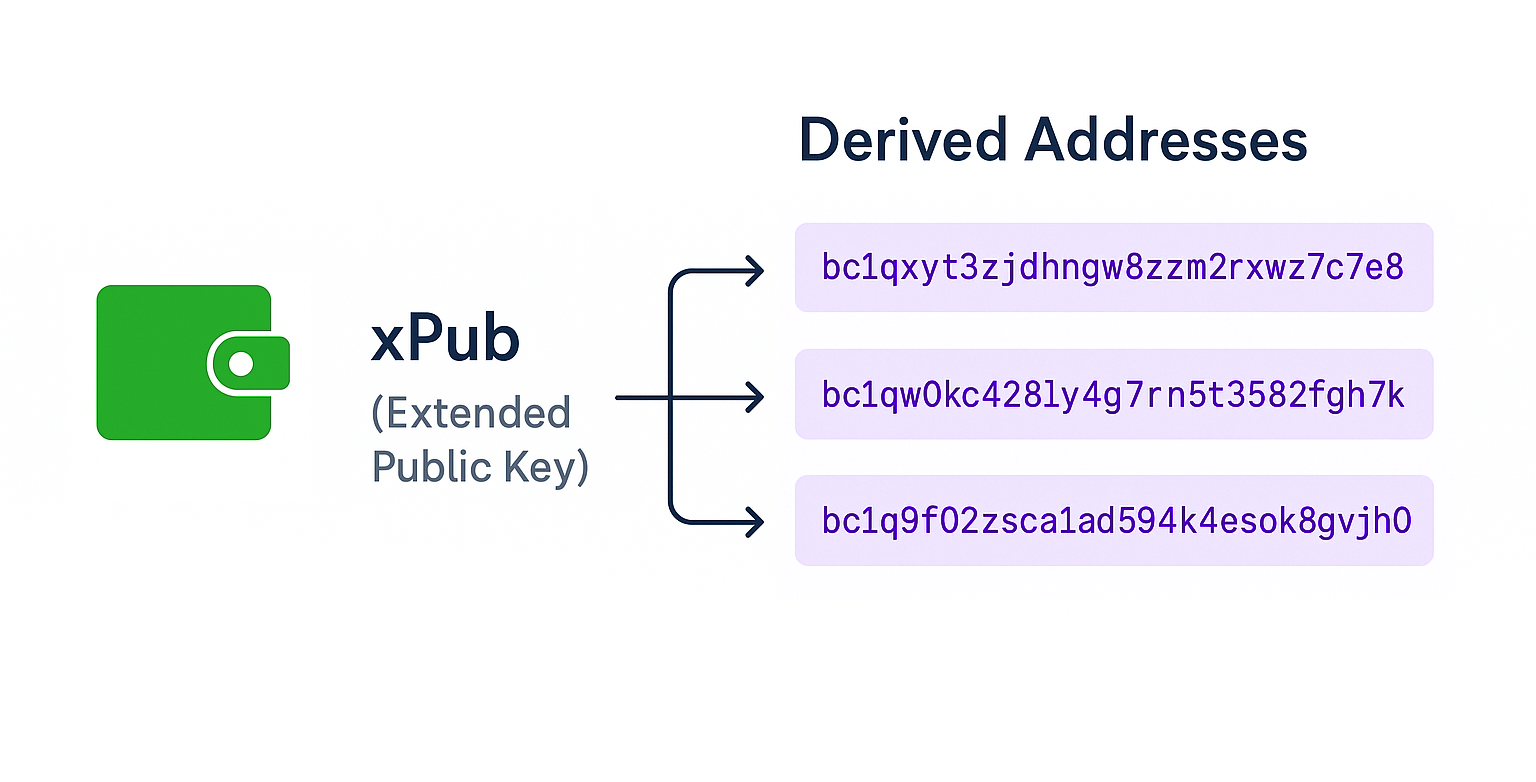
The technical process involves these steps:
- Key import: You provide public keys, xpub, or individual addresses to the wallet software
- Address derivation: The wallet generates all relevant addresses from the xpub using the same derivation path as the spending wallet
- Blockchain scanning: The software queries the blockchain for all transactions involving those addresses
- Balance calculation: The wallet tallies unspent transaction outputs (UTXOs) to display your current balance
- Address generation: New receiving addresses can be created for incoming payments without exposing private keys
This separation between viewing and spending creates a powerful security model. Even if the device running your watch-only wallet is compromised, attackers gain no ability to steal your bitcoin since the private keys never existed on that device.
Why Use a Watch-Only Wallet?
Watch-only wallets serve multiple security and practical purposes in Bitcoin custody strategies. The primary benefit is enabling safe monitoring of cold storage holdings without exposing private keys to internet-connected devices.
For individuals managing significant bitcoin holdings, watch-only wallets solve a common problem: how to check your balance without compromising security. You can keep your hardware wallet or offline signing device in secure storage while using a watch-only wallet on your everyday computer or smartphone.
Security Benefits
The security advantages of watch-only wallets stem from eliminating private key exposure:
- Cold storage monitoring: Check balances on hardware wallets or paper wallets without connecting them to online devices
- Malware protection: Even if your monitoring device is compromised, your bitcoin remains secure
- Reduced attack surface: Limits the number of devices that store sensitive private keys
- Safe address sharing: Generate new receiving addresses without risking spending keys
Practical Applications
Beyond security, watch-only wallets offer practical benefits for daily Bitcoin use:
- Portfolio tracking: Monitor multiple wallets and addresses from a single interface
- Business accounting: Companies can give accounting staff view-only access to verify payments
- Payment verification: Confirm customer payments without exposing treasury wallets
- Multi-signature coordination: Co-signers can monitor shared wallets without holding all keys
- Inheritance planning: Family members can track holdings without spending access
Platforms like Rhino Bitcoin integrate watch-only functionality with multi-signature security, allowing users to monitor holdings while maintaining robust custody controls.
Setting Up a Watch-Only Wallet
Creating a watch-only wallet requires exporting public key information from your spending wallet and importing it into watch-only software. The process varies slightly depending on your wallet type, but the fundamental steps remain consistent.
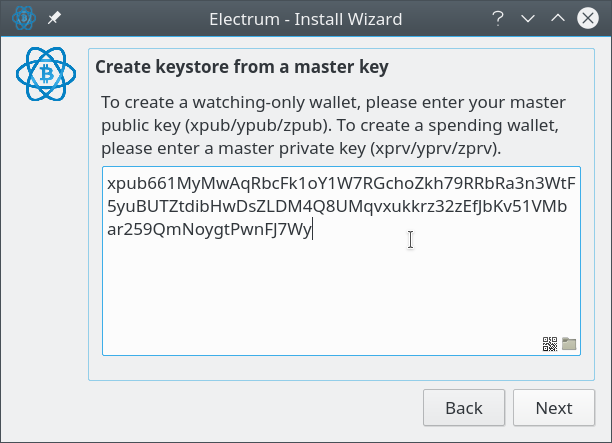
Most modern Bitcoin wallets support exporting extended public keys (xpub, ypub, or zpub depending on address type). This single string of characters allows watch-only wallets to derive all addresses in your wallet without exposing private keys.
General setup process:
- Export xpub: From your hardware wallet or cold storage, export the extended public key (usually found in settings or advanced options)
- Choose watch-only software: Select compatible wallet software that supports watch-only mode
- Import xpub: Enter or scan the extended public key into the watch-only wallet
- Verify addresses: Confirm that generated addresses match those from your spending wallet
- Label and organize: Add descriptive names to help identify different accounts or purposes
Extended Public Key (xpub): A master public key that allows wallet software to generate all public addresses and monitor transactions for a hierarchical deterministic wallet without exposing the private keys needed to spend funds. BIP 32 specification
Compatible Wallet Software
Several popular Bitcoin wallets support watch-only functionality with varying features and interfaces. Electrum, BlueWallet, and Sparrow Wallet all offer robust watch-only capabilities with desktop and mobile options.
When selecting watch-only software, consider factors like platform compatibility, address type support, and whether you need features like PSBT (Partially Signed Bitcoin Transaction) coordination for multi-signature setups.
Watch-Only Wallets can be Created in Electrum Using Extended Public Keys
Watch-Only Wallets vs. Hot Wallets vs. Cold Storage
Understanding where watch-only wallets fit in the Bitcoin security spectrum helps clarify when to use each wallet type. Each approach balances convenience against security in different ways.
Security and Accessibility Comparison:
Watch-Only Wallets
- Security level: High for monitoring (no spending risk)
- Convenience: High for viewing, requires separate signing device for spending
- Best for: Monitoring cold storage, business accounting, multi-sig coordination
- Risk profile: Minimal risk since private keys never present
Hot Wallets
- Security level: Lower (private keys on internet-connected devices)
- Convenience: Highest for both viewing and spending
- Best for: Small amounts, frequent transactions, Lightning Network payments
- Risk profile: Vulnerable to device compromise and malware
Cold Storage
- Security level: Highest (private keys never touch online devices)
- Convenience: Lowest for spending, none for viewing without watch-only companion
- Best for: Long-term holdings, large amounts, inheritance planning
- Risk profile: Physical security and backup become primary concerns
The optimal strategy often combines these approaches. Keep significant holdings in cold storage, use a watch-only wallet to monitor balances, and maintain a small hot wallet for everyday spending.
Common Use Cases for Watch-Only Wallets
Watch-only wallets excel in specific scenarios where monitoring needs outweigh the inconvenience of separate signing devices. These use cases span individual security practices to enterprise treasury management.
Hardware Wallet Companion
The most common use case pairs a watch-only wallet with a hardware wallet like Ledger or Trezor. You keep the hardware wallet in secure storage and use the watch-only wallet on your phone or computer for daily monitoring. When you need to spend, you connect the hardware wallet, review the transaction, and sign it offline.
This approach provides the convenience of checking balances anytime while maintaining hardware wallet security for your private keys. You can generate new receiving addresses through the watch-only wallet without ever connecting your hardware device.
Business Treasury Management
Companies holding bitcoin face a challenging balance between security and operational needs. Watch-only wallets let accounting teams verify incoming payments and track balances without accessing treasury keys.
A typical business setup might include:
- Treasury bitcoin held in multi-signature cold storage
- Watch-only wallets for accounting staff to verify payments
- Separate signing devices held by officers for spending authorization
- Regular audits comparing watch-only records against blockchain data
Multi-Signature Coordination
In multi-signature setups requiring multiple parties to approve transactions, watch-only wallets help all participants monitor the shared wallet. Each co-signer can track the wallet's activity and prepare to sign when transactions need approval, without holding all keys.
This is particularly valuable for family shared wallets, business partnerships, or Bitcoin custody solutions that distribute control among multiple stakeholders.
Privacy-Preserving Balance Checks
Watch-only wallets that run their own Bitcoin node allow you to check balances without revealing your addresses to third-party servers. This preserves privacy while still enabling convenient monitoring.
Running Electrum Personal Server or BTCPay Server with watch-only wallet integration gives you the best of both worlds: complete privacy and the convenience of always-available balance information.
Security Considerations and Limitations
While watch-only wallets enhance security by separating viewing from spending, they introduce considerations around privacy, backup, and operational security that users should understand.
Privacy Trade-offs
When you import an xpub into watch-only wallet software that connects to third-party servers, those servers learn all your addresses and can track your complete transaction history. This creates a privacy leak even though your spending ability remains secure.
To maintain privacy, consider these approaches:
- Run your own node: Connect watch-only wallets to your personal Bitcoin node
- Use Tor: Route connections through Tor to prevent IP address correlation
- Separate wallets: Use different watch-only wallets for different purposes to avoid linking activities
Address Reuse Detection
Watch-only wallets make it easy to generate new receiving addresses, but they can also reveal address reuse patterns. If someone gains access to your xpub, they can see your entire transaction history and future addresses, even without spending ability.
This matters because Bitcoin best practices recommend using each address only once. Watch-only wallets help you follow this practice by making address generation convenient, but the xpub itself represents a privacy-sensitive piece of information.
Backup Complexity
Watch-only wallets add another element to your backup strategy. While you don't need to back up watch-only wallet data with the same security as private keys, you should maintain records of which xpubs correspond to which cold storage devices.
Losing your watch-only wallet data doesn't risk your bitcoin, but it does mean you'll need to re-import xpubs and may temporarily lose convenient monitoring access until you reconnect your hardware wallet or restore from backups.
Transaction Signing Workflow
Watch-only wallets cannot sign transactions themselves, which creates an extra step when spending. You'll need to coordinate between the watch-only wallet (to create unsigned transactions) and your signing device (to authorize them).
This workflow typically uses PSBT (Partially Signed Bitcoin Transactions), a standard format that allows wallets to pass transaction data back and forth. Understanding this process prevents frustration when you need to spend funds.
Frequently Asked Questions
Can a watch-only wallet receive bitcoin?
Yes, watch-only wallets can generate receiving addresses that work perfectly for receiving bitcoin. However, you cannot spend the received bitcoin from the watch-only wallet itself; you'll need the corresponding wallet with private keys to authorize spending.
What happens if my watch-only wallet is hacked?
Your bitcoin remains completely safe because the watch-only wallet contains no private keys. Attackers would gain visibility into your addresses and transaction history, which creates a privacy issue but no ability to steal your funds.
How do I spend bitcoin from a watch-only wallet?
You create an unsigned transaction in the watch-only wallet, transfer it to your signing device (hardware wallet or offline computer), sign it with your private keys, then broadcast the signed transaction to the network. This process uses PSBT format for coordination.
Can I use a watch-only wallet with Lightning Network?
Standard watch-only wallets typically only support on-chain Bitcoin transactions. Lightning Network requires active channel management and signing, which needs access to private keys and is incompatible with the watch-only security model.
Is an xpub safe to share?
No, you should treat xpubs as privacy-sensitive information. Anyone with your xpub can see all your addresses, balances, and transaction history, though they cannot spend your bitcoin. Only share xpubs with trusted services or when specifically needed for monitoring purposes.
What's the difference between xpub, ypub, and zpub?
These represent different Bitcoin address types: xpub for legacy addresses, ypub for nested SegWit, and zpub for native SegWit (bech32). Modern wallets typically use zpub for lower fees and better efficiency.
Do I need to backup my watch-only wallet?
Backing up watch-only wallet data is optional since it contains no private keys. However, keeping a record of which xpubs you've imported makes restoration easier if you switch devices or reinstall wallet software.
Can watch-only wallets work with multi-signature setups?
Yes, watch-only wallets are commonly used in multi-signature configurations. Each co-signer can monitor the shared wallet using watch-only mode, then coordinate signing when transactions require multiple approvals through PSBT.
Conclusion
Watch-only wallets provide a practical solution for monitoring Bitcoin holdings without compromising security. By separating viewing access from spending authority, they enable convenient balance checks and payment verification while keeping private keys safely stored on hardware wallets or offline devices.
Key considerations when implementing watch-only wallets:
- Choose wallet software compatible with your hardware wallet or cold storage setup
- Protect your xpub as privacy-sensitive information
- Understand the PSBT signing workflow for spending
- Consider running your own node for maximum privacy
For users seeking institutional-grade security combined with convenient monitoring, explore Rhino Bitcoin's multi-signature custody solutions that integrate watch-only functionality with comprehensive Bitcoin banking services.
References
- Bitcoin.org. "Vocabulary - Watch-Only Address."
- Bitcoin Improvement Proposal 32. "Hierarchical Deterministic Wallets." GitHub. https://github.com/bitcoin/bips/blob/master/bip-0032.mediawiki
- Bitcoin Improvement Proposal 174. "Partially Signed Bitcoin Transaction Format." GitHub. https://github.com/bitcoin/bips/blob/master/bip-0174.mediawiki
- Antonopoulos, Andreas M. Mastering Bitcoin: Programming the Open Blockchain. O'Reilly Media, 2017.
- Bitcoin Wiki. "Cold Storage." https://en.bitcoin.it/wiki/Cold_storage
Important Disclaimers
Disclaimer: Educational information only. Not financial, legal, medical, or tax advice.
Risk Warnings: All investments carry risk, including loss of principal. Past performance is not indicative of future results. Bitcoin is a volatile asset and may not be suitable for all investors.
Conflicts of Interest: Rhino Bitcoin provides Bitcoin financial services. This content is educational and may reference our products.
.png)
.png)