
Bitcoin SIMPLE IRA Options: Tax-Advantaged Retirement For Small Businesses
Learn how a Bitcoin SIMPLE IRA works, who qualifies, contribution limits, tax benefits, and risks for small business retirement planning.
Buy Bitcoin with Zero Fees with Rhino
The most secure way to stack sats. Simple, fast, and zero trading fees.
A Bitcoin SIMPLE IRA allows small business owners and self-employed individuals to save for retirement using bitcoin. It also provides tax advantages and simple administration.
This retirement account combines a Savings Incentive Match Plan for Employees (SIMPLE) IRA with bitcoin as the primary investment asset. It offers an alternative to traditional investments such as stocks and bonds.
Key Summary:
Bitcoin SIMPLE IRAs provide small businesses and self-employed individuals with a tax-advantaged way to invest in bitcoin for retirement. These plans have lower contribution limits than 401(k) plans but require far less administrative work.
Key Takeaways
- SIMPLE IRAs are designed for businesses with 100 or fewer employees
- The 2025 contribution limit is $16,500, with catch-up contributions available
- Employers must match employee contributions or make nonelective contributions
- Bitcoin investments grow tax-deferred until retirement withdrawals
What Is a Bitcoin SIMPLE IRA?
A Bitcoin SIMPLE IRA is a self-directed retirement account that holds bitcoin as its primary asset. It operates under SIMPLE IRA rules established by the Internal Revenue Service.
The SIMPLE (Savings Incentive Match Plan for Employees) structure is built for small businesses. It applies to companies with 100 or fewer employees, including sole proprietors and self-employed individuals.
This account type sits between traditional IRAs and 401(k) plans. SIMPLE IRAs require far less administration than 401(k) plans. They also allow higher contribution limits than traditional or Roth IRAs.
When bitcoin is added through a self-directed structure, the result is a retirement account that combines tax benefits with exposure to bitcoin’s long-term growth potential.
Self-Directed IRA:
A retirement account that allows investments beyond traditional stocks, bonds, and mutual funds. These assets can include real estate, precious metals, and cryptocurrency such as bitcoin.
Learn more from the IRS
The main difference with a Bitcoin SIMPLE IRA is asset selection. Traditional SIMPLE IRAs usually hold mutual funds or ETFs. A self-directed Bitcoin SIMPLE IRA holds actual bitcoin instead.
This requires a qualified custodian. The custodian must specialize in alternative assets and manage bitcoin custody while complying with retirement account regulations.
For a deeper overview of bitcoin retirement strategies, see our complete Bitcoin IRA investing guide.
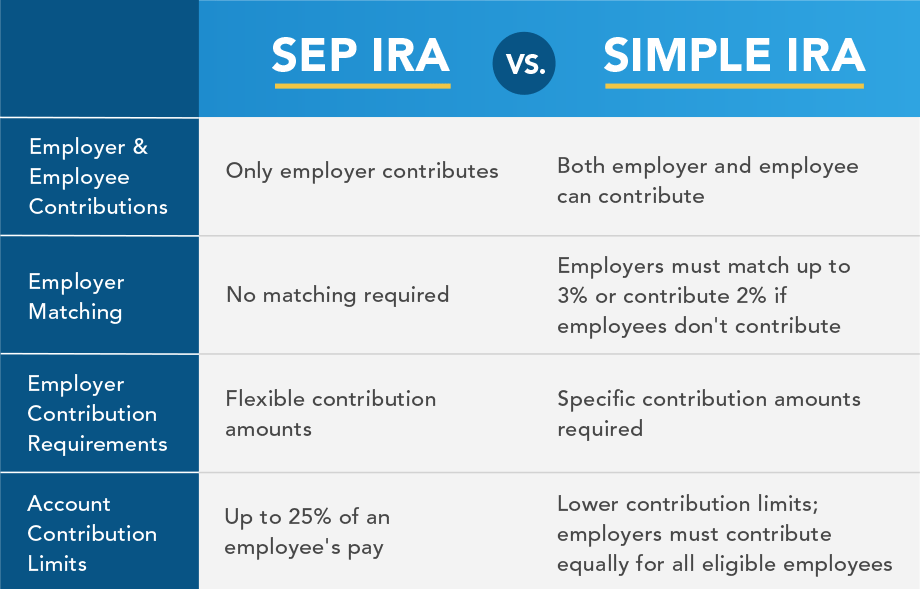
SEP IRA vs SIMPLE IRA
Who Qualifies for a Bitcoin SIMPLE IRA?
SIMPLE IRAs are available to businesses with 100 or fewer employees. Employees must have earned at least $5,000 in compensation during the prior calendar year.
Eligible businesses include sole proprietorships, partnerships, S corporations, C corporations, and certain tax-exempt organizations.
Employee eligibility rules are straightforward. To qualify, an employee must:
- Have earned at least $5,000 in compensation during any two prior calendar years
- Be reasonably expected to earn at least $5,000 in the current year
Employers may choose less restrictive requirements. They cannot impose stricter ones.
Common Eligible Participants
- Self-employed consultants and freelancers with no employees
- Small business owners with fewer than 100 employees
- Partners in small partnerships
- S corporation owners who receive W-2 wages
One important limitation applies. Employers that sponsor a SIMPLE IRA cannot maintain another retirement plan in the same calendar year.
This means a SIMPLE IRA and a 401(k) cannot run at the same time. In exchange, SIMPLE IRAs offer lower costs and much simpler administration, though with lower contribution limits.
How Do Bitcoin SIMPLE IRA Contribution Limits Work?
For 2025, employees may contribute up to $16,500 through salary deferrals. Participants age 50 or older may contribute an additional $3,500. This brings the total annual contribution to $20,000.
SIMPLE IRAs require employer participation. Employers must choose one of two contribution methods.
They must either:
- Match employee contributions dollar-for-dollar up to 3% of compensation, or
- Make a 2% nonelective contribution for all eligible employees
Employer contributions are immediately 100% vested. Employees own these funds outright.
Salary Deferral:
The portion of an employee’s paycheck redirected into a retirement account before taxes are calculated. This reduces current taxable income while building retirement savings.
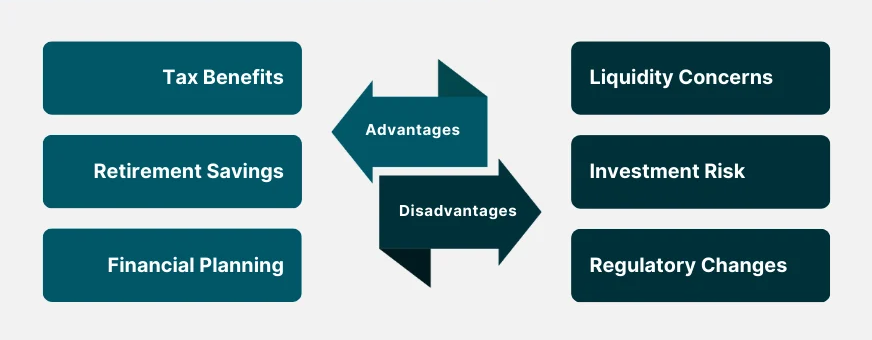
Advantages and Disadvantages of Salary Deferrals
When contributions are made to a Bitcoin SIMPLE IRA, the funds are used to purchase bitcoin at current market prices. The bitcoin remains in the account and fluctuates with market conditions.
All gains grow tax-deferred until withdrawal.
Contribution Comparison for 2025
- SIMPLE IRA: $16,500 employee limit ($20,000 with catch-up)
- Traditional IRA: $7,000 limit ($8,000 with catch-up)
- 401(k): $23,500 employee limit ($31,000 with catch-up)
- SEP IRA: Up to $69,000 or 25% of compensation
What Are the Tax Advantages of Bitcoin SIMPLE IRAs?
Bitcoin SIMPLE IRAs offer tax-deferred growth. No taxes are owed on bitcoin appreciation until funds are withdrawn.
Employee salary deferrals also reduce current taxable income. This lowers today’s tax bill while building retirement savings.
This matters for bitcoin investors. Outside an IRA, selling bitcoin creates a taxable capital gains event.
For example, buying bitcoin at $30,000 and selling at $60,000 creates a $30,000 taxable gain. Inside a SIMPLE IRA, that same growth is not taxed until distribution.
The IRS treats bitcoin as property under IRS Notice 2014-21. SIMPLE IRAs avoid ongoing capital gains taxes by deferring taxation until retirement.
Key Tax Benefits
- Immediate income tax deduction for employee contributions
- No capital gains tax on bitcoin growth inside the account
- Long-term tax-deferred compounding
- Potentially lower tax bracket in retirement
One key consideration remains. SIMPLE IRA withdrawals are taxed as ordinary income, not capital gains. Whether this is beneficial depends on future tax rates and how long the bitcoin remains invested.
How Do You Set Up a Bitcoin SIMPLE IRA?
Setting up a Bitcoin SIMPLE IRA requires a qualified custodian that supports self-directed accounts and cryptocurrency custody.
Most traditional custodians do not support bitcoin. A specialized provider is required.
The process begins by selecting a custodian that offers both SIMPLE IRA administration and bitcoin custody. The custodian manages IRS reporting and compliance.
They also handle private key security and bitcoin storage.
Typical Setup Steps
- Research and select a qualified self-directed IRA custodian
- Complete the account application with employer and employee details
- Execute the SIMPLE IRA adoption agreement (IRS Form 5304-SIMPLE or 5305-SIMPLE)
- Notify employees at least 60 days before the plan year
- Set up payroll deductions for salary deferrals
- Fund the account and direct the custodian to purchase bitcoin
Employers must adopt the plan between January 1 and October 1 of the calendar year. New businesses may adopt the plan as soon as administratively feasible.
Employee contributions must be deposited within 30 days after the end of the month in which wages would otherwise have been paid.
Platforms like Rhino Bitcoin provide streamlined Bitcoin IRA solutions designed for bitcoin-focused retirement investing.
What Are the Rules for Bitcoin SIMPLE IRA Withdrawals?
SIMPLE IRA withdrawals follow strict IRS rules. Early withdrawals are subject to penalties.
Penalty-free withdrawals begin at age 59½. Required minimum distributions (RMDs) must begin by April 1 following the year the account holder turns 73.
A stricter rule applies during the first two years of participation. Withdrawals during this period face a 25% penalty plus ordinary income tax.
After two years, the early withdrawal penalty drops to 10%.
Required Minimum Distribution (RMD):
The minimum amount that must be withdrawn annually from retirement accounts starting at age 73, based on IRS life expectancy tables.
IRS RMD guidance
Certain exceptions allow penalty-free early withdrawals. These include death, disability, substantially equal periodic payments, and qualified education expenses. Ordinary income tax still applies.
Distribution Considerations for Bitcoin Holders
- Distributions may be taken in cash or in-kind bitcoin
- Bitcoin price volatility may affect withdrawal amounts
- RMDs are based on the prior year’s December 31 balance
- Missed RMDs trigger a 25% penalty
What Are the Differences Between Bitcoin SIMPLE IRA and Other Bitcoin Retirement Options?
Bitcoin SIMPLE IRAs serve a specific role in retirement planning.
Bitcoin SIMPLE IRA vs. Bitcoin Traditional IRA
Traditional IRAs allow lower contributions but offer greater flexibility. No employer involvement is required.
SIMPLE IRAs require employer sponsorship but allow higher contributions and include mandatory employer funding.
Bitcoin SIMPLE IRA vs. Bitcoin 401(k)
401(k) plans allow higher contributions but require complex administration, annual testing, and higher costs.
SIMPLE IRAs offer easier administration, no nondiscrimination testing, and no Form 5500 filing.
Bitcoin SIMPLE IRA vs. Bitcoin SEP IRA
SEP IRAs allow large employer contributions but no employee contributions.
SIMPLE IRAs allow salary deferrals, making them better for employees who want to contribute personally.
For a full comparison, see our Bitcoin IRA investing guide.
What Are the Risks and Considerations for Bitcoin SIMPLE IRAs?
Bitcoin SIMPLE IRAs combine cryptocurrency volatility with retirement account rules.
Bitcoin-Specific Risks
Bitcoin is highly volatile. It has experienced drawdowns exceeding 80%, including the 2022 market decline.
Volatility remains regardless of the account holding the asset.
Custodian and Security Risks
Custodians introduce counterparty risk. Security practices, insurance coverage, and solvency vary widely.
Key Evaluation Factors
- Cold storage usage
- Security controls
- Insurance coverage
- Regulatory history
- All applicable fees
Regulatory and Tax Complexity
Bitcoin is treated as property. Certain IRA transactions are prohibited and may trigger penalties.
UBIT generally does not apply to passive bitcoin holding. Mining or lending inside an IRA may trigger UBIT.
Consult a qualified tax professional before implementing advanced strategies.
Frequently Asked Questions
Can I Roll Over an Existing 401(k) Into a Bitcoin SIMPLE IRA?
No. During the first two years, SIMPLE IRAs cannot receive rollovers from 401(k) plans. After two years, funds may be rolled into a traditional IRA.
Can I Hold Other Assets Besides Bitcoin in a SIMPLE IRA?
Yes. SIMPLE IRAs may hold any IRS-approved investment, including stocks, bonds, mutual funds, and alternative assets.
What Happens to My Bitcoin SIMPLE IRA If I Leave My Employer?
The account remains yours. After two years, you may roll it into a traditional IRA without penalty.
How Are Bitcoin SIMPLE IRA Fees Structured?
Fees may include annual custodial fees, transaction fees, and asset-based fees. Costs vary by provider.
Can I Take a Loan From My Bitcoin SIMPLE IRA?
No. SIMPLE IRAs do not allow participant loans.
What Happens If Bitcoin Goes to Zero in My SIMPLE IRA?
The account balance would drop to zero. Losses inside retirement accounts cannot offset other income.
Can My Employer Force Me to Hold Bitcoin?
No. Investment choices are made by the account holder, subject to custodian options.
How Do RMDs Work With Bitcoin Volatility?
RMDs are based on prior year-end values. If bitcoin falls, more bitcoin may need to be sold to meet the dollar requirement.
Conclusion
Bitcoin SIMPLE IRAs offer a practical way for small businesses and self-employed individuals to invest in bitcoin for retirement.
They combine higher contribution limits than traditional IRAs with lower administrative burden than 401(k) plans.
Key Considerations
- Contribution limits fit your situation
- Bitcoin volatility matches your risk tolerance
- Custodian security and fees meet your standards
- Tax-deferred growth outweighs capital gains treatment
For those ready to explore tax-advantaged bitcoin retirement investing,
discover Rhino Bitcoin’s Bitcoin IRA solutions.
References
- Internal Revenue Service. “SIMPLE IRA Plan.”
- Internal Revenue Service. “IRS Notice 2014-21: Virtual Currency Guidance.”
https://www.irs.gov/pub/irs-drop/n-14-21.pdf - Internal Revenue Service. “Retirement Topics – SIMPLE IRA Contribution Limits.”
https://www.irs.gov/retirement-plans/plan-participant-employee/retirement-topics-simple-ira-contribution-limits - Internal Revenue Service. “Retirement Plan and IRA Required Minimum Distributions FAQs.”
https://www.irs.gov/retirement-plans/retirement-plans-faqs-regarding-required-minimum-distributions - U.S. Congress. “SECURE 2.0 Act of 2022.”
https://www.congress.gov/bill/117th-congress/house-bill/2617
Important Disclaimers
Disclaimer: Educational information only. Not financial, legal, medical, or tax advice.
Risk Warnings: All investments carry risk, including loss of principal. Past performance is not indicative of future results. Bitcoin is a volatile asset.
Conflicts of Interest: Rhino Bitcoin provides Bitcoin financial services. This content may reference company products.
.png)
.png)