
Bitcoin Self-Custody Banking: Replace Traditional Banks
Discover how Bitcoin banking replaces traditional banks through self-custody wallets, Lightning Network payments, and true financial sovereignty. Start today.
Buy Bitcoin with Zero Fees with Rhino
The most secure way to stack sats. Simple, fast, and zero trading fees.
Bitcoin Self-Custody Banking: Replace Traditional Banks
Bitcoin represents a fundamental shift away from traditional banking by enabling individuals to achieve complete financial sovereignty through self-custody and decentralized money management. Unlike conventional banks that control your funds and require permission for transactions, Bitcoin allows you to truly own your money, send payments globally without intermediaries, and maintain privacy while accessing advanced (and affordable) financial services through the Lightning Network.
This revolutionary approach to banking eliminates the need for traditional financial institutions by putting you in direct control of your wealth. Bitcoin banking combines the security of cryptographic technology with the convenience of modern financial services, offering everything from instant payments to savings accounts without the restrictions, fees, and surveillance of legacy banking systems.
The transition to Bitcoin banking represents more than just a technological upgrade, but rather a return to the fundamental principles of sound money and personal financial responsibility. As traditional banks face increasing instability and regulatory pressures, Bitcoin provides a robust alternative that operates 24/7, requires no credit checks, and gives you complete control over your financial destiny.
Key Points:
- Complete financial sovereignty through self-custody of Bitcoin
- 24/7 global payments without bank approval or intermediaries
- Lightning Network enables instant, low-cost transactions
- Hardware wallets provide bank-level security for personal use
- No credit checks, account minimums, or geographic restrictions
- Protection from inflation, bank failures, and government seizure
- Privacy-focused transactions without surveillance or reporting.
What Is Financial Sovereignty?
Financial sovereignty means having complete control over your money without depending on banks, governments, or other third parties to store, transfer, or validate your wealth. It represents the ultimate form of monetary independence where you alone decide how to save, spend, and manage your financial resources.
Traditional banking systems create dependencies by requiring permission for transactions, imposing limits on withdrawals, and maintaining the ability to freeze or seize accounts. Financial sovereignty eliminates these vulnerabilities by giving individuals direct ownership of their money through cryptographic keys and blockchain technology.
Financial Sovereignty: The ability to control your money completely without relying on banks or governments, achieved through self-custody of digital assets and peer-to-peer transaction networks.
Bitcoin’s Role in Financial Sovereignty

Source: Alexandra Maria on Medium
Bitcoin enables financial sovereignty through several key mechanisms:
- Self-custody: Direct ownership of private keys that control your Bitcoin
- Peer-to-peer transactions: Direct payments without intermediaries
- Censorship resistance: Transactions cannot be blocked by authorities
- Global accessibility: 24/7 access from anywhere in the world
- Fixed supply: Protection from inflation and monetary debasement
- Privacy protection: Pseudonymous transactions without identity verification.
The path to financial sovereignty requires understanding the trade-offs between convenience and control. While traditional banks offer familiar services and customer support, they come with counterparty risk, surveillance, and the potential for account freezes. Bitcoin banking may require more personal responsibility but delivers genuine ownership and independence.
How Bitcoin Replaces Traditional Banking
Bitcoin replaces traditional banking by providing all essential financial services without requiring banks as intermediaries. The Bitcoin network serves as a global payment system, while various protocols and applications built on top provide savings, lending, and other advanced financial services.
The core banking functions that Bitcoin replicates include money storage, payment processing, and value transfer across borders. However, Bitcoin improves upon these services by eliminating fees, processing delays, and geographic restrictions that characterize traditional banking.
Key ways Bitcoin replaces traditional banking services:
- Payment processing: Lightning Network enables instant, low-cost payments globally
- Money storage: Hardware wallets provide secure, self-sovereign storage
- Savings accounts: Bitcoin appreciation and Lightning Network yield opportunities
- International transfers: Cross-border payments without forex fees or delays
- Lending services: Bitcoin-backed loans without credit checks
- Investment products: Direct Bitcoin ownership and Lightning Network infrastructure.
Lightning Network: A second-layer payment protocol built on Bitcoin that enables instant, low-cost transactions by creating payment channels between users.
Unlike traditional banks that operate during business hours and process transactions in batches, Bitcoin operates continuously. This means you can send payments, check balances, and manage your finances at any time without waiting for bank approval or processing delays.
The programmable nature of Bitcoin also enables advanced financial services through smart contracts and automated protocols. These innovations provide banking-like services without the overhead, restrictions, and risks associated with traditional financial institutions.
Be Your Own Bank with Bitcoin
"Being your own bank" means taking complete responsibility for your money by holding your own Bitcoin keys and managing your financial services independently. This approach eliminates dependence on traditional banks while providing superior control, privacy, and security for your wealth.
The concept involves replacing traditional banking services with Bitcoin-based alternatives that you control directly. Instead of trusting a bank to hold your money, you store Bitcoin in wallets you control. Instead of relying on bank payment systems, you use the Bitcoin network for transactions.
Essential components of being your own bank with Bitcoin:
- Private key management: Secure storage and backup of cryptographic keys
- Wallet selection: Choosing appropriate storage solutions for different needs
- Transaction management: Understanding fees, confirmations, and network optimization
- Security protocols: Implementing multi-signature and cold storage practices
- Backup strategies: Redundant storage of recovery phrases and important data
- Network interaction: Using Lightning Network for everyday transactions
Private Keys: Cryptographic codes that prove ownership of Bitcoin and authorize transactions, similar to a digital signature that only you can create.
Relationship Between Public and Private Keys in Bitcoin
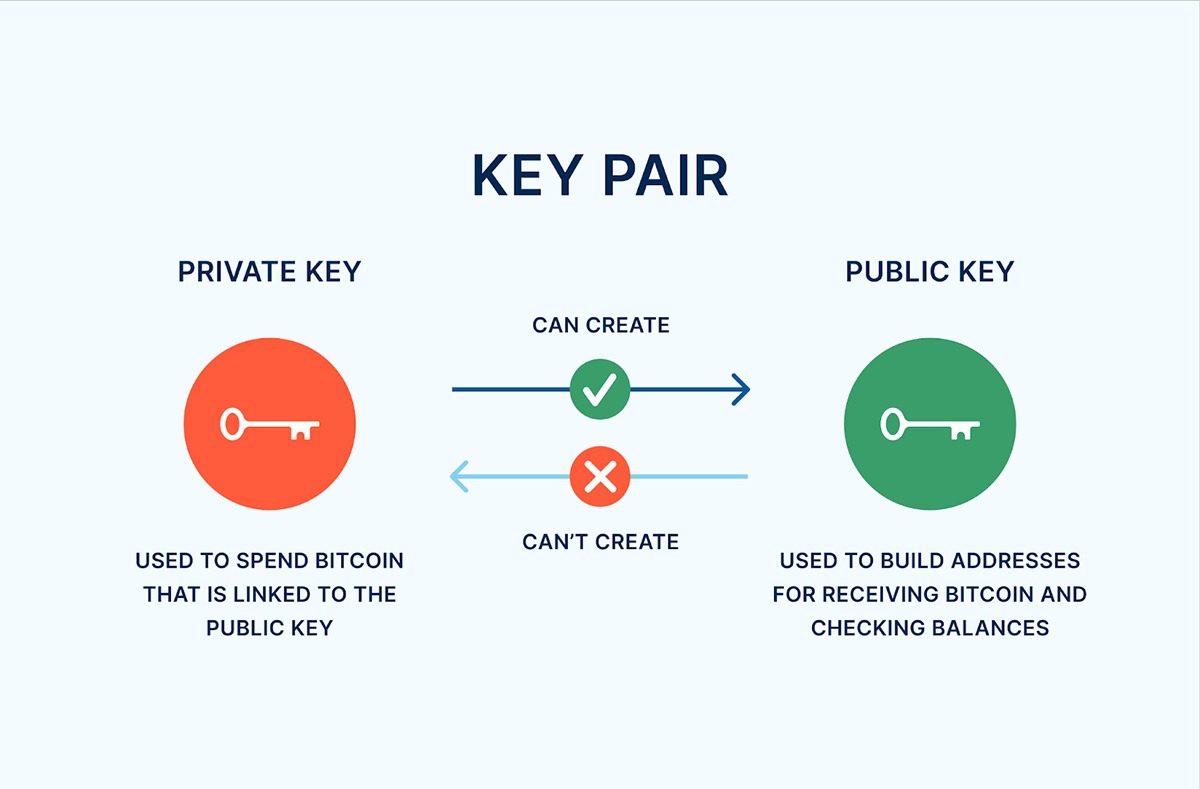
Source: Unchained
The responsibilities of being your own bank include maintaining security, managing backups, and understanding how to recover access if something goes wrong. While this requires more knowledge than traditional banking, it provides unprecedented control and eliminates counterparty risk.
Bitcoin banking platforms like Rhino Bitcoin bridge the gap between self-sovereignty and convenience by providing user-friendly interfaces for Bitcoin self-custody while maintaining the security and control benefits of being your own bank.
Bitcoin Self-Custody Guide
Bitcoin self-custody involves taking direct control of your Bitcoin by managing your own private keys rather than relying on exchanges or custodial services. This approach provides maximum security and sovereignty but requires understanding proper storage, backup, and security practices.
Self-custody eliminates counterparty risk by ensuring that you—and only you—control access to your Bitcoin. This protection becomes crucial during market volatility, regulatory changes, or exchange failures that could otherwise compromise your funds.
Step-by-step self-custody implementation:
- Choose a wallet type: Hardware, software, or paper wallets based on security needs
- Generate seed phrase: Create and securely store your recovery words
- Test recovery process: Verify you can restore your wallet from backup
- Implement security measures: Use passphrases, multi-signature, or time locks
- Create redundant backups: Store recovery information in multiple secure locations
- Practice good hygiene: Regular security audits and backup verification
Seed Phrase: A series of 12-24 words that can restore your entire Bitcoin wallet, serving as the master backup for all your private keys and addresses.
Examples of Keys, Addresses and Seed Phrases in Bitcoin
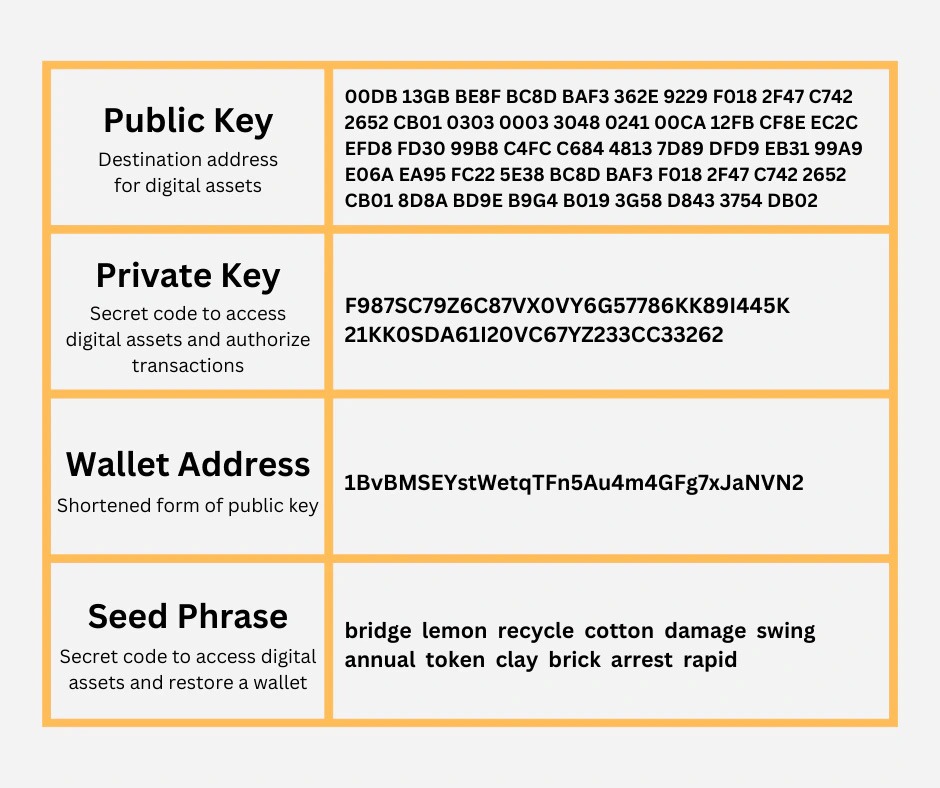
Source: Bitcoin News
The security model for self-custody differs significantly from traditional banking. Instead of relying on institutional security measures, you become responsible for protecting your own funds through proper key management and operational security practices.
Common self-custody mistakes include storing seed phrases digitally, using weak passphrases, or failing to test recovery procedures. Following established best practices and gradually increasing your self-custody knowledge helps avoid these pitfalls while maximizing the security benefits.
Types of Bitcoin Wallets
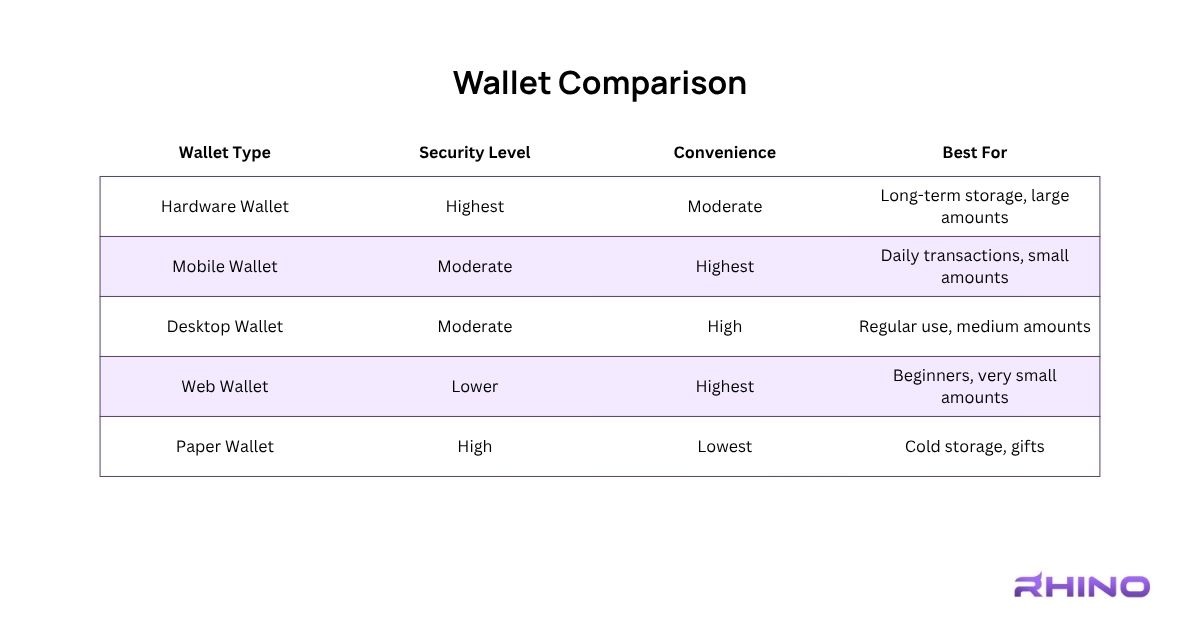
Bitcoin wallets come in several varieties, each offering different trade-offs between security, convenience, and functionality. Understanding wallet types helps you choose the right solution for your specific needs and risk tolerance.
The main distinction between wallet types relates to how and where your private keys are stored and managed. This fundamental difference determines the security level, ease of use, and control you have over your Bitcoin.
Hardware Wallets
Hardware wallets provide the highest security by storing private keys on dedicated devices that never connect directly to the internet. These devices sign transactions offline and only transmit signed transactions to the network, protecting your keys from malware and hackers.
- Pros: Maximum security, offline storage, malware protection
- Cons: Higher cost, less convenient for frequent transactions
- Popular options: Ledger, Trezor, Coldcard, BitBox
Mobile Wallets
Mobile wallets offer the best balance of security and convenience for everyday Bitcoin use. Modern mobile wallets support Lightning Network payments and provide excellent user experiences while maintaining reasonable security for smaller amounts.
- Pros: Convenient, Lightning Network support, QR code scanning
- Cons: Vulnerable to phone theft, limited security features
- Popular options: Phoenix, Muun, BlueWallet, Rhino Bitcoin
Lightning Network Wallet: A specialized Bitcoin wallet that can create payment channels for instant, low-cost transactions using Lightning Network technology.
Desktop Wallets
Desktop wallets provide a middle ground between security and functionality, offering more features than mobile wallets while maintaining better security than web-based solutions. They're ideal for users who primarily manage Bitcoin from their computers.
- Pros: Feature-rich, good security, full control
- Cons: Computer-dependent, potential malware exposure
- Popular options: Electrum, Bitcoin Core, Wasabi, Sparrow
Hardware Wallet Comparison
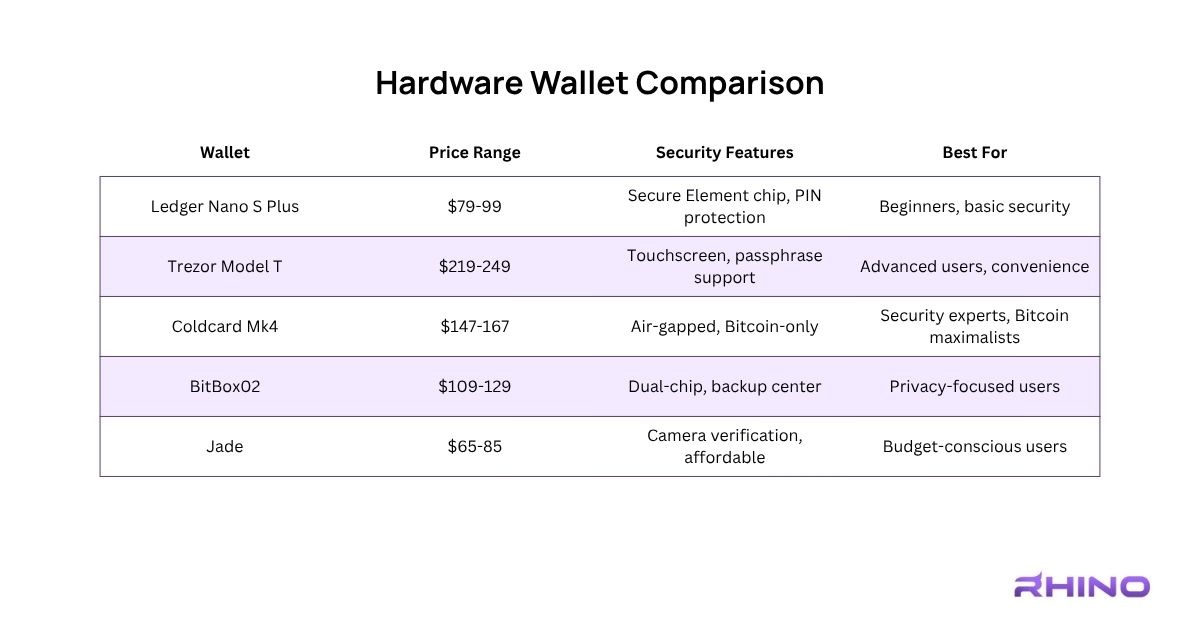
Hardware wallets represent the gold standard for Bitcoin self-custody, offering the highest level of security for long-term storage and large amounts. Choosing the right hardware wallet depends on your technical expertise, security requirements, and budget considerations.
The major hardware wallet manufacturers each take different approaches to security, user experience, and feature sets. Understanding these differences helps you select the wallet that best fits your needs and risk profile.
Security Considerations
Hardware wallet security depends on multiple factors including the secure element design, firmware verification, and supply chain integrity. The most secure wallets use dedicated security chips and provide mechanisms to verify device authenticity.
- Secure Element: Dedicated chip designed to resist physical attacks
- Open Source: Verifiable firmware and hardware designs
- Supply Chain: Protection against tampering during shipping
- Firmware Updates: Regular security patches and feature improvements
- Recovery Options: Multiple ways to restore access if device fails.
Feature Comparison
Modern hardware wallets offer various features beyond basic Bitcoin storage, including support for Lightning Network, multi-signature setups, and integration with popular software wallets. Consider which features matter most for your use case.
- Lightning Network: Native support for instant payments
- Multi-signature: Shared control with multiple devices
- Passphrase Support: Additional security layer
- Mobile Integration: Bluetooth or USB connectivity
- Display Quality: Clear verification of transaction details.
Lightning Network Banking
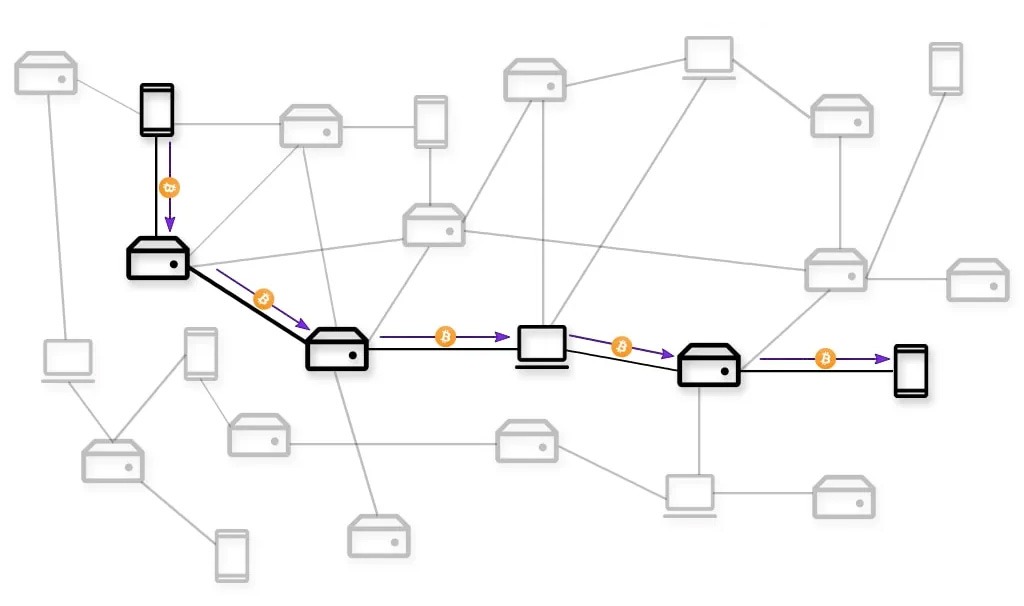
The Lightning Network transforms Bitcoin into a complete banking system by enabling instant, low-cost payments and advanced financial services. This second-layer solution addresses Bitcoin's scalability limitations while preserving the security and decentralization of the base layer.
Lightning Network banking provides traditional banking services without traditional banks. You can make instant payments, earn yield on Bitcoin holdings, and access credit facilities—all while maintaining self-custody of your funds.
Core Lightning Network banking capabilities:
- Instant payments: Sub-second transaction confirmation
- Micro-transactions: Payments as small as one satoshi
- Low fees: Typical costs under one cent per transaction
- Streaming payments: Continuous, programmable money flows
- Cross-border transfers: Global payments without forex fees
- Yield generation: Earning fees by routing payments.
Payment Channels: Direct connections between two parties on the Lightning Network that enable instant Bitcoin transactions without broadcasting to the main blockchain.
Lightning Network Routes Payments Through “Payment Channels”
Source: Athena Alpha
Lightning Network Services
Lightning Network enables various financial services that compete directly with traditional banking products. These services operate 24/7, require no credit checks, and provide global accessibility.
- Bill payments: Automated recurring payments for utilities and services
- Payroll systems: Instant salary payments in Bitcoin
- Merchant processing: Point-of-sale payments with instant settlement
- Remittances: Cross-border transfers without intermediaries
- Subscription services: Streaming payments for digital content
- Savings products: Yield-generating Lightning Network nodes.
The programmable nature of payments on the Lightning Network enables innovative financial products impossible with traditional banking. Smart contracts can automate complex payment arrangements, while streaming money allows for per-second salary payments and usage-based pricing models.
Bitcoin vs Traditional Banking
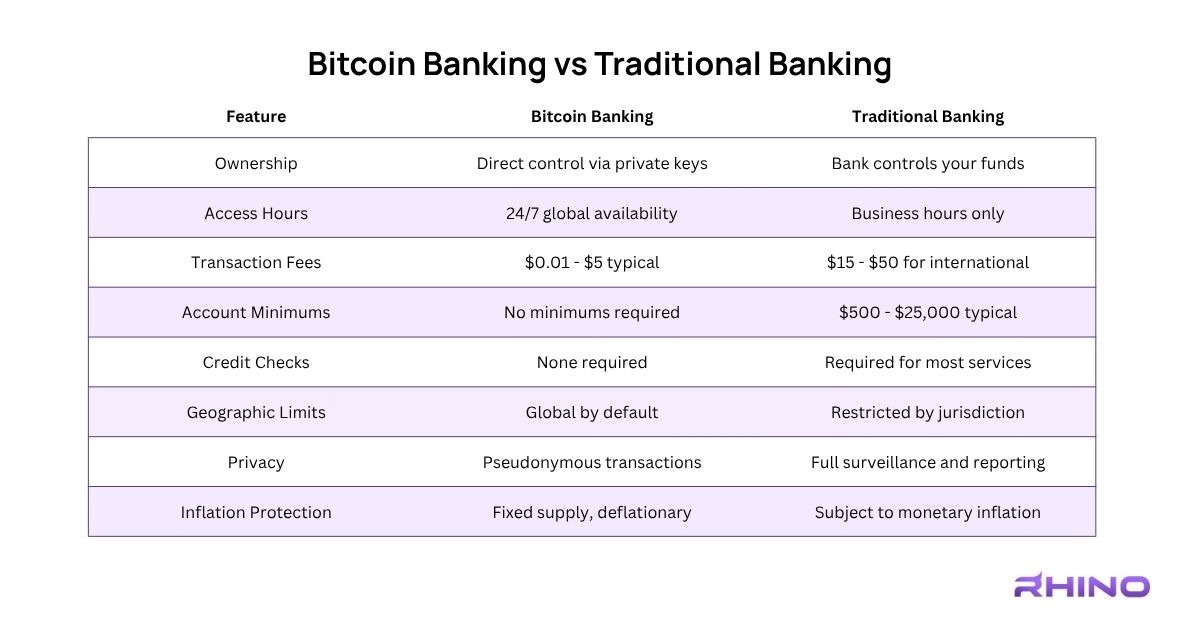
Bitcoin banking offers fundamental advantages over traditional banking by eliminating intermediaries, reducing costs, and providing global accessibility. While traditional banks control your money and impose restrictions, Bitcoin gives you direct ownership and unrestricted access to your wealth.
The comparison extends beyond simple feature sets to encompass different philosophies about money, privacy, and financial independence. Traditional banking operates on fractional reserves and centralized control, while Bitcoin provides full reserves and decentralized consensus.
Advantages of Bitcoin Banking
Bitcoin banking provides numerous advantages that traditional banks cannot match due to their centralized nature and regulatory constraints. These benefits become more pronounced during financial crises or in countries with unstable currencies.
- Censorship resistance: Transactions cannot be blocked or reversed
- No counterparty risk: Self-custody eliminates bank failure exposure
- Global accessibility: Same service quality worldwide
- Programmable money: Smart contracts and automated payments
- Fixed monetary policy: Predictable supply and inflation schedule
- Immediate settlement: Final payment settlement in minutes
Traditional Banking Limitations
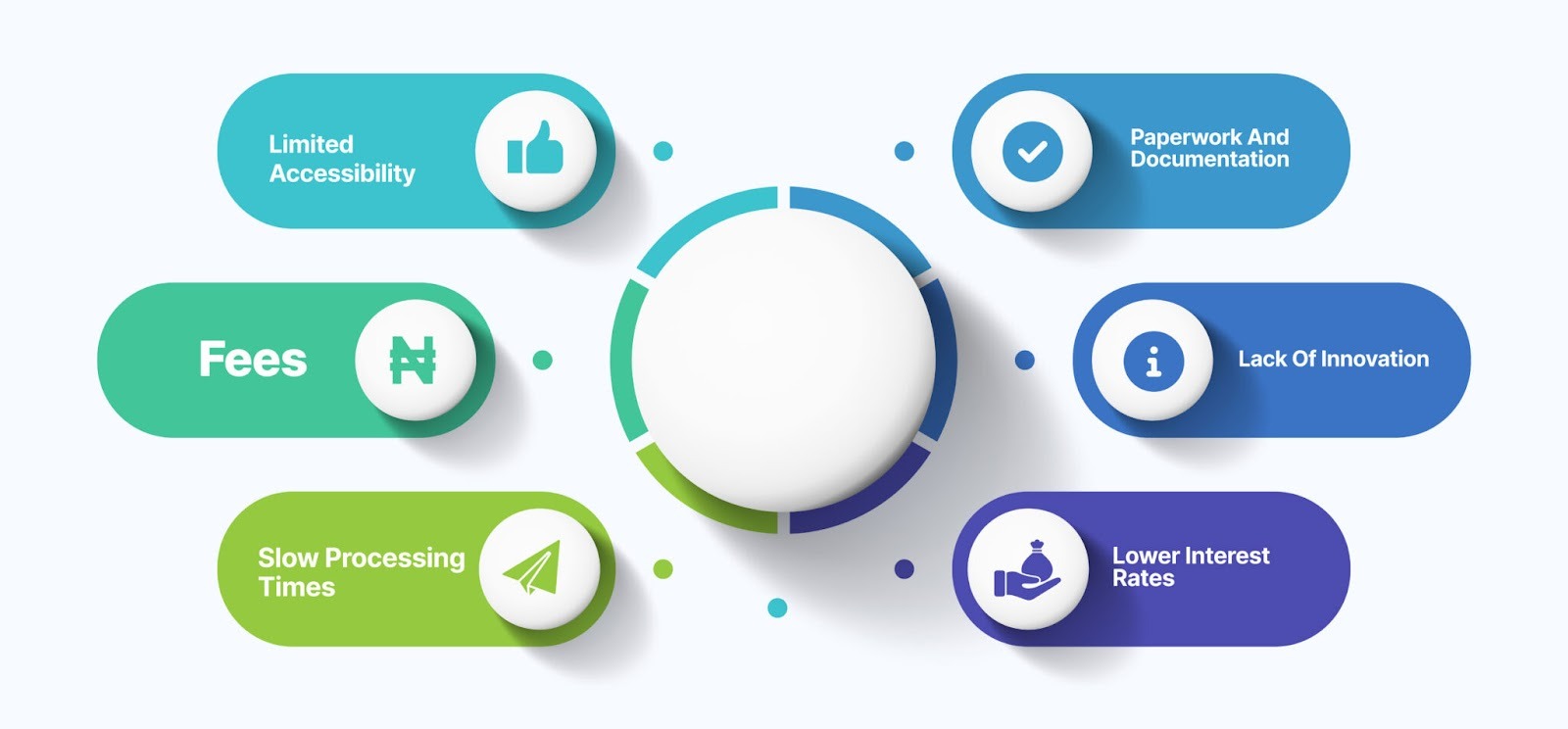
Traditional banking systems face structural limitations that Bitcoin inherently solves. These limitations become more apparent as financial technology advances and user expectations increase.
- Operating hours: Limited availability and processing delays
- Geographic restrictions: Service quality varies by location
- Regulatory compliance: Complex requirements limit innovation
- Fractional reserves: Not all deposits are actually held
- Inflation exposure: Currency debasement reduces purchasing power
- Privacy erosion: Extensive transaction monitoring and reporting
Disadvantages of Traditional Banking
Source: Mintyn
Bitcoin Savings Accounts
Bitcoin savings accounts provide alternatives to traditional bank savings by offering yield opportunities through Lightning Network operations, lending protocols, and Bitcoin appreciation. Unlike bank savings accounts that typically offer negative real returns, Bitcoin savings can provide substantial long-term value growth.
The concept of Bitcoin savings differs from traditional savings in that your "account" is simply your Bitcoin wallet, and the "yield" comes from Bitcoin's deflationary monetary policy and various yield-generating activities within the Bitcoin ecosystem.
Bitcoin savings strategies and yield sources:
- HODL strategy: Long-term appreciation through fixed supply economics
- Lightning Network routing: Earning fees by providing payment liquidity
- Bitcoin lending: Collateralized loans to generate yield
- Mining participation: Shares in Bitcoin mining operations
- DCA accumulation: Regular purchases to build Bitcoin savings
- Stacking sats: Small, consistent Bitcoin purchases.
HODL: A Bitcoin strategy of holding the asset long-term regardless of price volatility, based on belief in Bitcoin's fundamental value proposition and scarcity.
Origin of “HODL”

Source: Investopedia
Yield Opportunities
Bitcoin savings accounts can generate yield through various mechanisms that don't exist in traditional banking. These opportunities range from low-risk Lightning Network operations to more sophisticated financial products.
- Lightning routing fees: 0.1% - 1% annually for node operators
- Bitcoin lending platforms: 3% - 8% annually with collateral
- Mining pool participation: Variable returns based on network difficulty
- Dollar-cost averaging: Consistent accumulation strategy
- Covered call strategies: Options-based yield generation
Risk Considerations
Bitcoin savings come with different risk profiles compared to traditional bank deposits. Understanding these risks helps you make informed decisions about allocation and strategy.
- Price volatility: Short-term value fluctuations
- Technology risk: Software bugs or protocol issues
- Regulatory risk: Potential government restrictions
- Self-custody risk: Responsibility for secure storage
- Liquidity risk: Market access during stress periods
Bitcoin savings accounts excel in environments of currency debasement, financial instability, or capital controls. They provide a hedge against traditional financial system risks while offering growth potential that bank savings cannot match.
Security and Risk Management
Bitcoin banking security requires a comprehensive approach that addresses both digital and physical threats to your funds. Unlike traditional banking where the bank handles security, Bitcoin self-custody makes you responsible for implementing robust protection measures.
Effective Bitcoin security involves multiple layers of protection, from secure key generation and storage to operational security practices that prevent common attack vectors. The goal is creating a security model that protects against both sophisticated attacks and simple mistakes.
Essential security components for Bitcoin banking:
- Secure key generation: Using hardware devices or air-gapped computers
- Multi-signature setups: Requiring multiple keys to authorize transactions
- Geographic distribution: Storing backups in different physical locations
- Access controls: Time locks and spending limits for large amounts
- Regular audits: Periodic verification of security measures
- Incident response: Plans for dealing with security breaches
Multi-sig: A Bitcoin security feature that requires multiple private keys to authorize a transaction, distributing control among several devices or parties for enhanced security.
Common Security Threats
Understanding potential attack vectors helps you implement appropriate countermeasures. Bitcoin security threats range from simple phishing attempts to sophisticated social engineering and physical attacks.
- Phishing attacks: Fake websites and emails stealing private keys
- Malware infections: Software that monitors or steals wallet information
- Physical theft: Stolen devices containing wallet access
- Social engineering: Manipulation to reveal security information
- SIM swapping: Phone number hijacking for two-factor authentication
- Supply chain attacks: Compromised hardware or software.
Common Scams in the Bitcoin Space
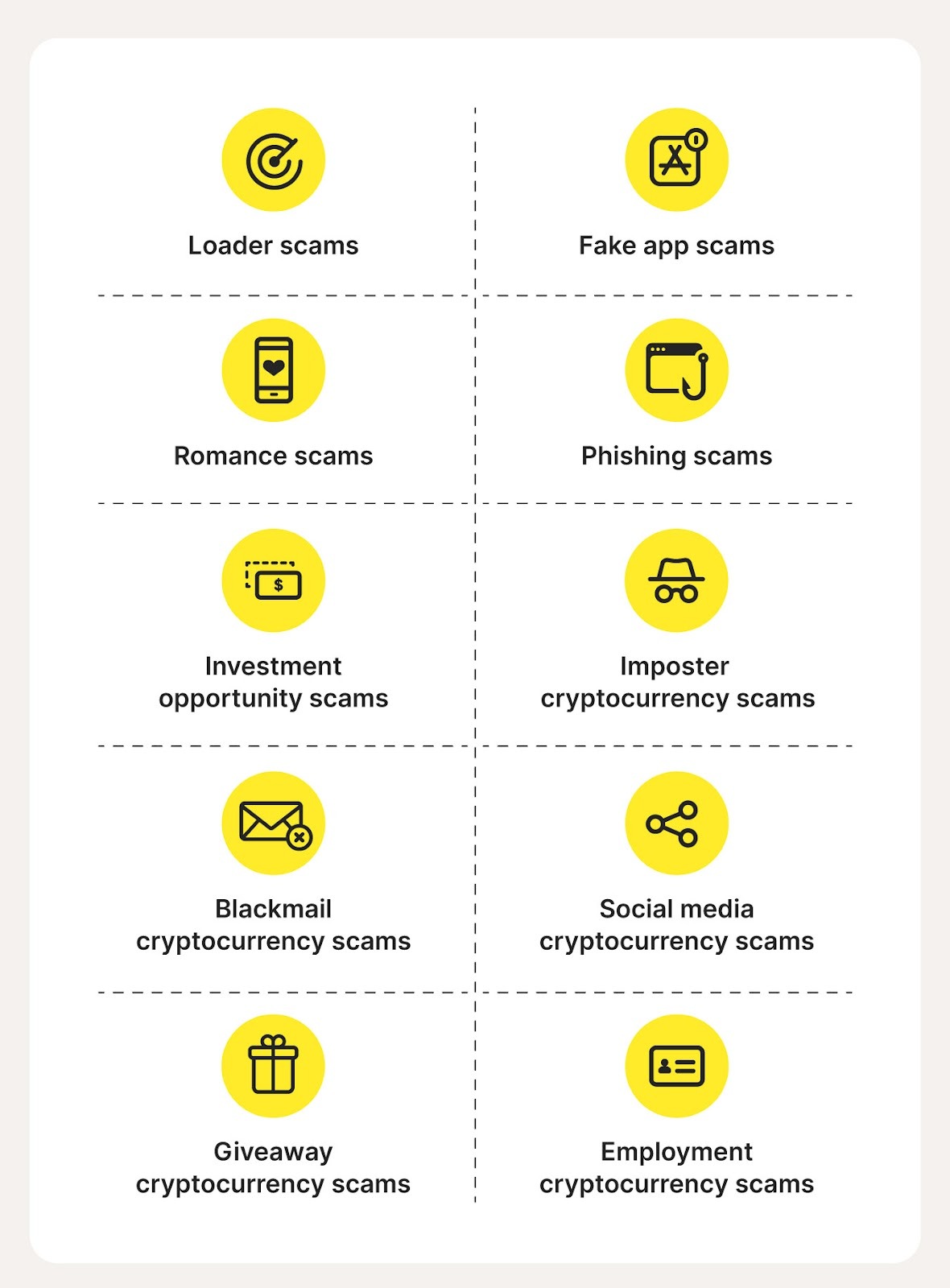
Source: Norton Security
Best Practices Implementation
Implementing Bitcoin security best practices requires balancing security with usability. The most secure setup is useless if it's so complex that you make mistakes or cannot access your funds when needed.
- Start simple: Begin with basic security and gradually increase complexity
- Test everything: Verify backup and recovery procedures regularly
- Separate concerns: Use different wallets for different purposes
- Educate yourself: Stay informed about evolving threats and solutions
- Use reputable tools: Stick to well-reviewed, open-source solutions
- Plan for inheritance: Ensure others can access funds if needed.
Getting Started with Bitcoin Banking
Beginning your journey towards Bitcoin banking requires a systematic approach that prioritizes security while building your knowledge and confidence. Start with small amounts and basic setups before advancing to more sophisticated self-custody solutions.
The transition from traditional banking to Bitcoin banking doesn't have to be immediate or complete. Many users benefit from a gradual approach that allows them to learn while maintaining some traditional banking relationships during the transition period.
Step-by-step Bitcoin banking implementation:
- Education phase: Learn Bitcoin basics and security fundamentals
- Wallet setup: Choose and configure your first Bitcoin wallet
- Small purchases: Buy small amounts to practice with real transactions
- Security upgrade: Implement hardware wallet for larger amounts
- Lightning Network: Set up Lightning wallet for daily transactions
- Service integration: Begin using Bitcoin for real-world payments
- Advanced features: Explore lending, yield generation, and other services.
Choosing Your First Wallet
Your first Bitcoin wallet should balance security with ease of use while providing room to grow as your knowledge increases. Mobile wallets often provide the best starting point for beginners.
- Mobile wallets: Start with reputable apps like Rhino Bitcoin
- Small amounts: Keep only spending money in mobile wallets initially
- Hardware upgrade: Move to hardware wallet as holdings increase
- Lightning integration: Choose wallets with Lightning Network support
- Backup verification: Test recovery process before storing significant amounts
Comparison of Different Hardware Wallets
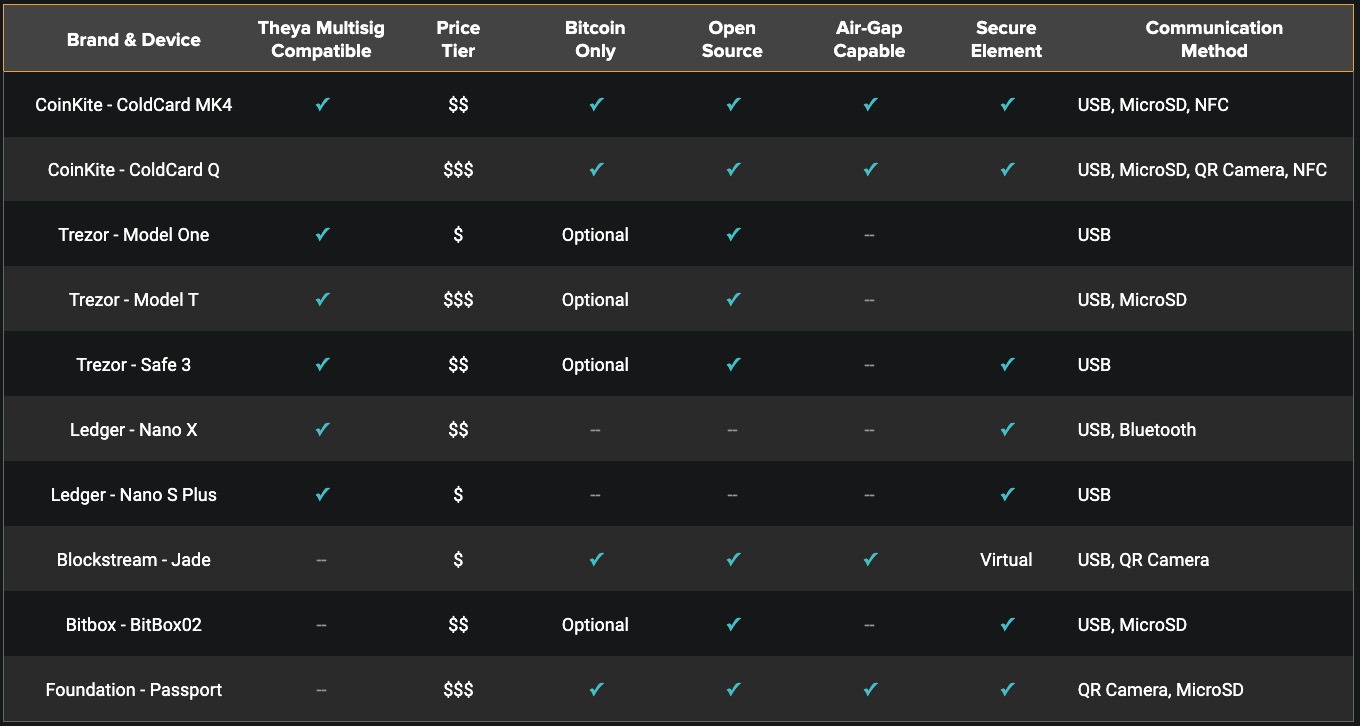
Source: Theya
Common Beginner Mistakes
Avoiding common mistakes accelerates your Bitcoin banking journey while protecting your funds. Most errors stem from rushing the process or not properly understanding the technology.
- Skipping backups: Always secure your recovery phrase first
- Keeping funds on exchanges: Move Bitcoin to self-custody quickly
- Ignoring fees: Understand transaction costs before sending
- Sharing private information: Never reveal seed phrases or private keys
- Using unsecured networks: Avoid public WiFi for Bitcoin transactions
- Rushing into complexity: Master basics before advanced features.
Remember that Bitcoin banking is a skill that improves with practice. Start conservatively, learn continuously, and gradually increase your sophistication as you gain experience with the technology and develop confidence in your security practices.
Frequently Asked Questions
Is Bitcoin banking safe for storing large amounts of money?
Bitcoin banking can be extremely safe for large amounts when proper security measures are implemented, including hardware wallets, multi-signature setups, and distributed backups. However, it requires taking personal responsibility for security rather than relying on institutional protections.
How much does it cost to use Bitcoin instead of traditional banking?
Bitcoin transaction fees typically range from $1-10 for on-chain transactions and under $0.01 for Lightning Network payments. This compares favorably to traditional banking fees like wire transfers ($15-50), international payments ($25-50), and all added monthly account maintenance fees ($10-25).
Can I lose my Bitcoin if I forget my password or lose my wallet?
You can lose access to Bitcoin if you lose both your wallet and recovery phrase without proper backups. However, implementing proper backup procedures—including storing recovery phrases in multiple secure locations—prevents this risk entirely.
What happens if the Bitcoin network goes down or stops working?
The Bitcoin network operates across thousands of independent nodes worldwide, making complete failure extremely unlikely. Even if internet access is temporarily unavailable, your Bitcoin remains secure in your wallet and accessible once connectivity returns.
Do I need technical expertise to use Bitcoin as my bank?
Modern Bitcoin wallets are designed for non-technical users and require no more expertise than using traditional banking apps. However, understanding basic security principles helps you use Bitcoin safely and effectively as your primary banking solution.
How do I pay bills and receive salary with Bitcoin?
Many services now accept Bitcoin payments directly, while others can be paid through Bitcoin debit cards or payment processors. For salary, an increasing number of employers offer Bitcoin payment options, or you can convert traditional salary to Bitcoin immediately upon receipt.
Is Bitcoin banking legal in my country?
Bitcoin is legal in most countries, though specific regulations vary. Bitcoin banking operates within existing financial laws, and many jurisdictions explicitly recognize Bitcoin as legal tender or property. Check local regulations to understand any specific requirements in your area.
How do taxes work with Bitcoin banking?
Bitcoin transactions may be subject to capital gains taxes when converted to other currencies, similar to other investments. Using Bitcoin for payments typically requires tracking cost basis for tax reporting. Consult tax professionals familiar with cryptocurrency regulations in your jurisdiction.
What if I need customer support with Bitcoin banking?
Bitcoin banking platforms like Rhino Bitcoin provide customer support for their services, while the underlying Bitcoin network operates automatically without customer service needs. Community forums and educational resources also provide extensive support.
Can Bitcoin replace all my traditional banking needs?
Bitcoin can replace most traditional banking functions including payments, savings, international transfers, and lending. However, some services like mortgages or business loans may still require traditional banking relationships, though this is changing as Bitcoin adoption increases.
References
- Lightning Network Protocol Specification. GitHub. https://github.com/lightning/bolts
- Bitcoin Core Development. Bitcoin.org. https://bitcoin.org/en/development
- Financial Sovereignty and Digital Assets. Federal Reserve Bank of St. Louis. https://www.stlouisfed.org
- Cryptocurrency Security Best Practices. NIST Cybersecurity Framework. https://www.nist.gov/cyberframework
- Digital Asset Regulatory Guidance. Financial Crimes Enforcement Network. https://www.fincen.gov
- Bitcoin Network Statistics and Analysis. https://en.wikipedia.org/wiki/Bitcoin
- Lightning Network Growth and Adoption Metrics. https://lightning.network
Disclaimer: This content is for educational and informational purposes only and should not be construed as financial, investment, legal, or tax advice. Bitcoin banking and self-custody involve risks including price volatility, technical complexity, and regulatory uncertainty. Always conduct your own research and consult with qualified professionals before making financial decisions.
Risk Warning: Bitcoin banking and self-custody services involve significant risks including total loss of funds, extreme price volatility, and market instability. Self-custody requires personal responsibility for security, and loss of private keys can result in permanent and irreversible loss of funds. Bitcoin transactions are irreversible and users face risks from technological failures, security vulnerabilities, malware, phishing attacks, and regulatory changes. Users should only invest amounts they can afford to lose and should thoroughly understand Bitcoin technology, wallet security, and backup procedures before proceeding.
Disclosure: This content may contain references to Rhino Bitcoin, a Bitcoin wallet and banking service provider. The author may have business relationships with companies mentioned in this article. All information presented is believed to be accurate but is not guaranteed. Past performance does not indicate future results.
.png)
.png)