
Bitcoin Private Key Management: Essential Security Guide For Safe Storage
Learn how Bitcoin private keys work, why they matter, and how to store them safely to protect your bitcoin from loss or theft.
Buy Bitcoin with Zero Fees with Rhino
The most secure way to stack sats. Simple, fast, and zero trading fees.
Bitcoin private key management is the practice of securely generating, storing, and protecting the cryptographic keys that control access to your bitcoin. Your private key is the only way to authorize transactions from your wallet, making proper key management the foundation of bitcoin security.
Key Summary: Private keys are cryptographic codes that prove ownership of bitcoin. Proper management includes secure generation, encrypted storage, reliable backups, and protection from physical and digital threats.
Key Takeaways:
- Private keys grant complete control over your bitcoin—lose them and your funds are gone forever
- Multiple storage methods exist, from hardware wallets to paper backups, each with distinct security tradeoffs
- Most bitcoin losses result from poor key management, not blockchain vulnerabilities
- Understanding key management fundamentals is essential before taking self-custody of significant bitcoin holdings
This article explores private key management within the broader context of Bitcoin security best practices. Whether you're new to self-custody or refining your existing security approach, understanding how to properly manage private keys protects your bitcoin from loss, theft, and unauthorized access.
What Are Bitcoin Private Keys?
A Bitcoin private key is a 256-bit number that serves as the secret password to your bitcoin. This cryptographic key allows you to sign transactions and prove ownership of funds on the Bitcoin blockchain.
Private keys work with public keys in an asymmetric cryptography system. Your public key (and the bitcoin address derived from it) can be shared freely to receive funds. Your private key must remain secret because anyone with access to it can spend your bitcoin.
Private Key: A secret 256-bit number (typically displayed as a 64-character hexadecimal string or 12–24 word seed phrase) that proves ownership of bitcoin and authorizes transactions.
Learn more from Bitcoin.org
The relationship between private and public keys is mathematically linked but one-way. You can derive a public key from a private key, but you cannot reverse the process. This asymmetry creates the security foundation for Bitcoin ownership.
Bitcoin Private vs Public Keys
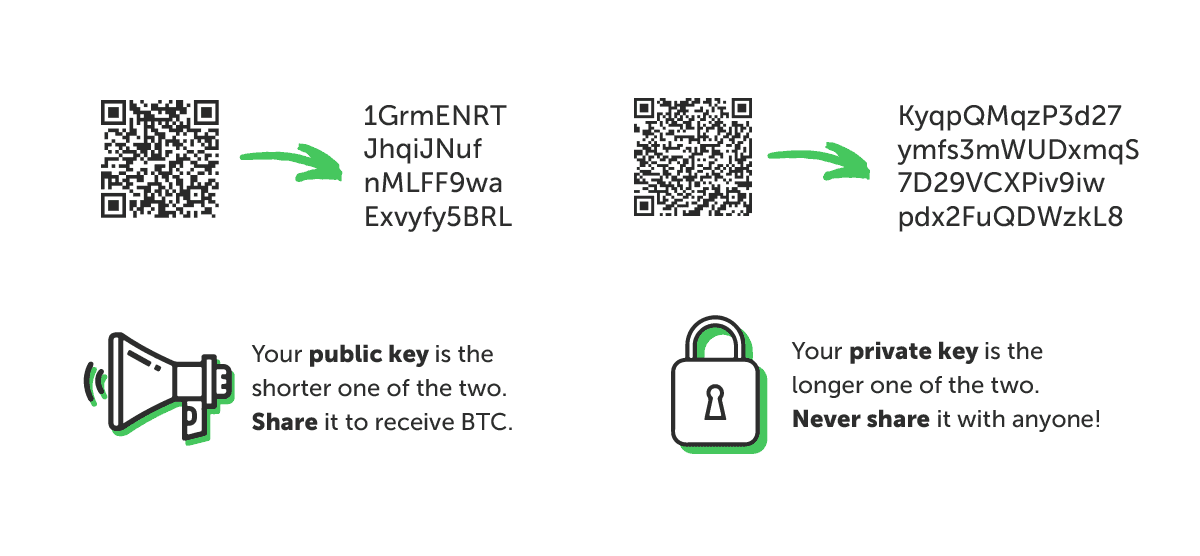
Source: CryptoManiaks
Modern wallets typically display private keys as seed phrases (also called recovery phrases or mnemonic phrases). These 12 or 24 English words represent your private key in human-readable format, making backup and recovery more manageable than working with raw hexadecimal strings.
Why Private Key Management Matters
Private key management determines whether you truly own your bitcoin or simply have an IOU from a third party. The Bitcoin protocol recognizes only one form of ownership: possession of the private key.
Unlike traditional banking where institutions can reverse transactions or reset passwords, Bitcoin operates on an immutable ledger with no central authority. If you lose your private key, no bank manager, customer service department, or government agency can recover your funds. Similarly, if someone steals your private key, their transactions cannot be reversed.
Consider these stark realities of Bitcoin ownership:
- Irreversible loss: An estimated 3–4 million bitcoin (approximately 20% of the total supply) are permanently lost due to mismanaged or lost private keys
- No password reset: Unlike online accounts, Bitcoin has no “forgot password” option—your seed phrase is the only recovery method
- Inheritance challenges: Without proper planning, your bitcoin may become inaccessible to heirs if you die or become incapacitated
- Single point of failure: A compromised private key means immediate and total loss of funds with no recourse
The responsibility of self-custody requires understanding the security tradeoffs between convenience and protection. Many newcomers underestimate this responsibility, storing significant bitcoin holdings with minimal security measures.
How Private Keys Are Generated
Secure private key generation requires true randomness. Wallets use cryptographically secure random number generators to create private keys from the enormous possible key space.
The Bitcoin private key space contains 2²⁵⁶ possible combinations (approximately 1.16 × 10⁷⁷ keys). This number exceeds the estimated atoms in the observable universe, making random collisions between two independently generated keys statistically impossible.
Most modern wallets follow the BIP39 standard for generating seed phrases:
- Entropy generation: The wallet creates 128–256 bits of random data using the device’s secure random number generator
- Checksum addition: A cryptographic hash adds verification data to detect errors
- Word conversion: The entropy plus checksum maps to 12–24 words from a standardized 2,048-word dictionary
- Key derivation: The seed phrase generates a master private key, which derives all future addresses and keys
Seed Phrase: A human-readable representation of your wallet’s master private key, typically 12 or 24 words from a standardized dictionary. This phrase can regenerate all private keys and addresses in your wallet.
BIP39 specification
Quality of randomness matters critically. Wallets that use weak random number generators or predictable entropy sources create vulnerable private keys. Hardware wallets typically provide superior entropy sources compared to software wallets on potentially compromised devices.
Storage Methods for Private Keys
Your storage method directly determines your security level. Each approach balances accessibility, security, and resilience against different threat models.
Hardware Wallets
Hardware wallets store private keys on dedicated devices designed to never expose keys to internet-connected computers. These specialized devices sign transactions internally, transmitting only the signed transaction to your computer.
Leading hardware wallet manufacturers include Ledger, Trezor, Coldcard, and Foundation Devices. These devices range from basic USB-style wallets to advanced air-gapped signing devices with QR code communication.
Hardware Wallet Advantages:
- Private keys never leave the secure element or chip
- Protection against malware on connected computers
- PIN codes and physical security features prevent unauthorized use
- Suitable for daily use with strong security
Hardware Wallet Limitations:
- Physical device can be lost, stolen, or damaged
- Supply chain attacks during manufacturing remain a theoretical risk
- Requires proper backup of seed phrase to separate location
- Initial cost barrier (typically $50–$300)
Paper Wallets
Paper wallets store private keys on physical paper, completely offline. This method involves printing or writing your seed phrase or private key on durable paper stored in a secure location.
Paper wallets work best for long-term cold storage rather than active use. Creating them requires careful attention to operational security, ensuring no digital copies remain after generation.
Best practices for paper wallets:
- Generate keys on an air-gapped computer that has never connected to the internet
- Use archival-quality paper and fade-resistant ink
- Consider metal backup plates for fire and water resistance
- Store in secure location (safe deposit box, fireproof safe)
- Never photograph or scan your paper wallet
Multi-Signature Wallets
Multi-signature (multisig) wallets require multiple private keys to authorize transactions, distributing trust across several devices or parties. A 2-of-3 multisig configuration, for example, means any two of three keys can sign transactions.
Multi-Signature: A Bitcoin security feature requiring M-of-N signatures to authorize a transaction, where M signatures are required from a set of N possible keys. For example, 2-of-3 multisig requires two out of three private keys to sign.
Learn more about multisig
Platforms like Rhino Bitcoin offer multi-signature security options, allowing users to maintain control over their keys while adding layers of protection against single points of failure.
Multisig provides resilience against various failure scenarios. If one key is lost, the remaining keys can still access funds. If one location is compromised, an attacker cannot steal bitcoin without obtaining additional keys from separate locations.
Software Wallets
Software wallets store encrypted private keys on your phone, tablet, or computer. These “hot wallets” prioritize convenience for frequent transactions but maintain lower security than cold storage methods.
Software wallets work well for smaller amounts you need for regular spending, similar to keeping modest cash in your physical wallet. Larger holdings should remain in more secure cold storage.
Popular software wallet options include Blue Wallet, Electrum, and Sparrow Wallet. Many integrate Lightning Network functionality for instant, low-fee transactions. You can learn more about Bitcoin Lightning wallets for everyday spending.
Common Private Key Vulnerabilities
Understanding threats to private key security helps you defend against the most common attack vectors. Most bitcoin losses result from preventable mistakes rather than sophisticated hacking.
Digital Threats
Malware represents the primary digital threat to private keys. Keyloggers capture seed phrases as you type them, clipboard hijackers swap bitcoin addresses during copy-paste operations, and screen capture malware photographs your wallet information.
- Phishing attacks: Fake wallet websites or apps trick users into entering seed phrases
- Remote access trojans: Attackers gain control of your device to access wallet files
- SIM swapping: Phone number hijacking to bypass two-factor authentication
- Supply chain compromises: Malware pre-installed on devices or wallets
What is a Phishing Attack?
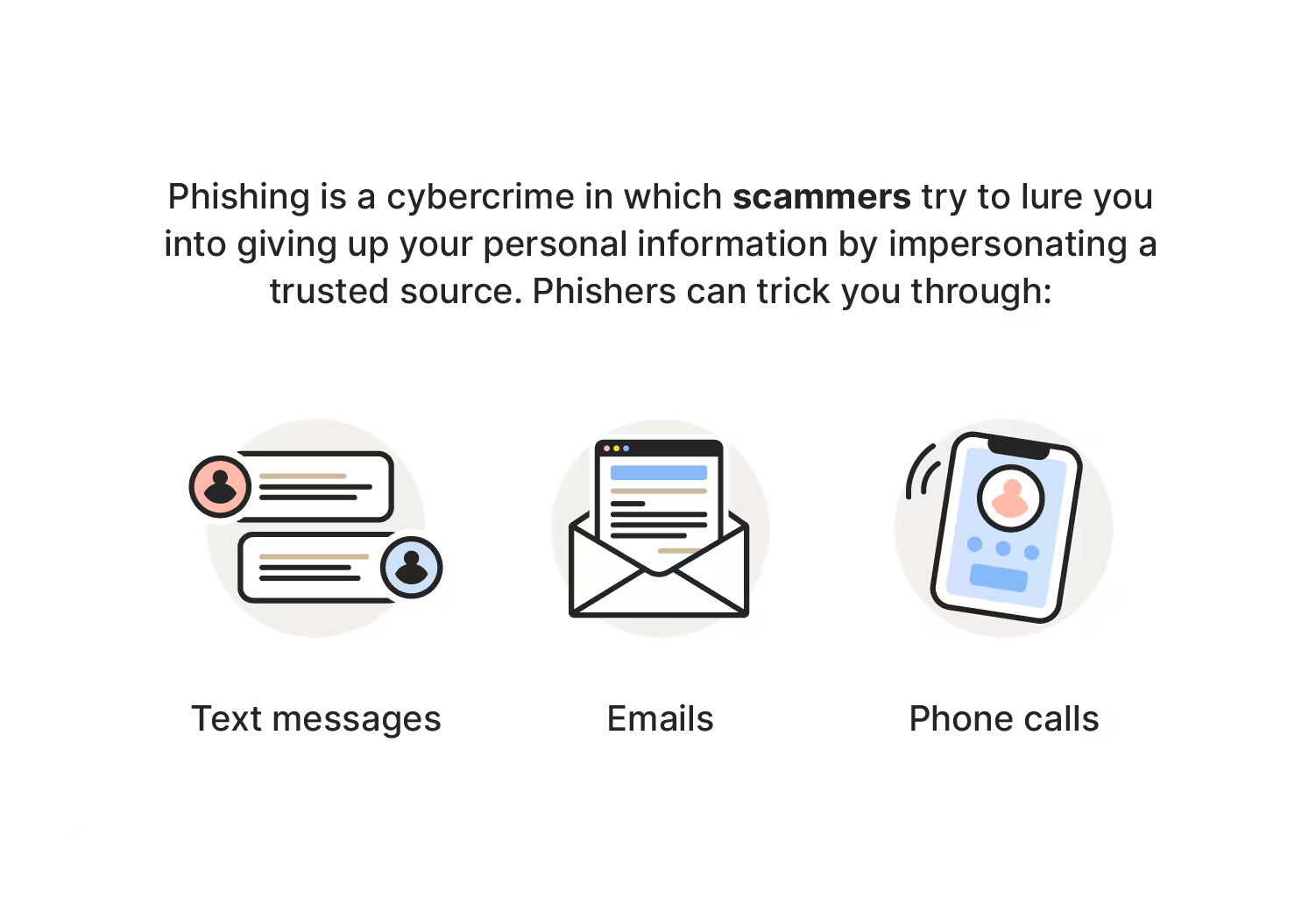
Source: Norton
Defense strategies include using dedicated devices for bitcoin transactions, maintaining updated antivirus software, and never entering seed phrases on internet-connected devices unless absolutely necessary.
Physical Threats
Physical security often receives less attention than digital threats, but physical access to your backup materials poses equal risk. Someone finding your seed phrase written on paper can drain your wallet as easily as a hacker with remote access.
- Theft of backup materials: Seed phrases stored in obvious locations become targets
- Fire and flood damage: Natural disasters can destroy paper or hardware wallet backups
- Social engineering: Attackers manipulate trusted individuals to access your private keys
- Wrench attacks: Physical coercion or violence to obtain private keys
Mitigations include geographically distributed backups, use of passphrase protection as a 25th word, and multi-signature configurations that prevent single-location compromise.
Operational Security Failures
Poor operational security often undermines even technically sound storage methods. Human error causes more bitcoin loss than technology failures.
- Insufficient backups: Relying on a single copy of your seed phrase
- Digital storage of seeds: Saving seed phrases in email, cloud storage, or password managers
- Unclear inheritance plans: Heirs unable to access bitcoin after your death
- Insecure key generation: Using unverified or compromised wallet software
- Excessive complexity: Security systems so complicated that legitimate access becomes impossible
Best Practices for Private Key Management
Implementing comprehensive security practices protects your bitcoin across multiple failure scenarios. These guidelines apply whether you hold 0.01 BTC or 100 BTC.
Secure Generation and Initial Setup
Start with a clean foundation. Generate private keys using reputable, open-source wallet software on a secure device. For significant holdings, consider using an air-gapped computer that will never connect to the internet.
- Download wallet software directly from official sources and verify signatures
- Generate keys in a private location without cameras or witnesses
- Write seed phrases carefully, verifying each word against the BIP39 word list
- Test recovery process with small amounts before transferring significant funds
Backup Strategies
Your backup strategy must survive various disaster scenarios while remaining accessible to authorized users. The 3-2-1 backup rule applies to seed phrases: three copies, two different media types, one off-site.
Recommended backup approach:
- Primary backup: Metal seed phrase plate in fireproof home safe
- Secondary backup: Laminated paper backup in safe deposit box
- Tertiary backup: Trusted family member holds encrypted portion or multisig key
Passphrase Protection: An optional 25th word added to your 24-word seed phrase that creates an entirely new wallet. This additional word acts as a password, requiring both the seed phrase and passphrase for access. Also called a “BIP39 passphrase.”
Consider adding passphrase protection to your seed phrase. This optional 25th word creates plausible deniability (you can reveal the seed phrase under duress while protecting passphrase-secured funds) and adds a layer of security if someone discovers your seed phrase.
Access Control and Permissions
Limit who knows about your bitcoin holdings and where you store access credentials. The principle of least privilege applies: only people who absolutely need access should have it.
- Never share seed phrases digitally (no texts, emails, or photos)
- Consider using multisig to distribute trust among multiple parties
- Document location of keys in a separate secure location (not with the keys themselves)
- Establish clear inheritance instructions with trusted executor
Regular Security Audits
Schedule periodic reviews of your security setup. Technology evolves, threat landscapes change, and your personal circumstances shift over time.
Quarterly security checklist:
- Verify all backup locations remain secure and intact
- Test wallet recovery process on a small amount
- Update wallet software to latest versions
- Review who has knowledge of or access to your keys
- Assess whether your current security level matches your holdings
Advanced Key Management Techniques
As your bitcoin holdings grow or your security requirements increase, consider implementing more sophisticated key management approaches. These techniques require additional setup complexity but provide enhanced security.
Key Sharding
Shamir’s Secret Sharing splits your seed phrase into multiple shares, requiring a threshold number to reconstruct the original. A 3-of-5 configuration means any three of five shares can recover your wallet, providing redundancy without single points of failure.
This approach works well for inheritance planning, distributing shares among trusted family members or professional custodians. No single person can access funds alone, but the death or unavailability of one or two share holders doesn’t lock everyone out.
Timelocks and Inheritance
Bitcoin script supports time-based spending conditions. You can create transactions that become valid only after a specific date or block height, enabling dead-man switch inheritance schemes.
These advanced setups typically require technical expertise to implement securely. For most users, clear documentation and trusted executor arrangements provide more practical inheritance solutions.
Collaborative Custody
Collaborative custody models combine self-custody with institutional backup keys. You control two keys in a 2-of-3 multisig arrangement, while a trusted third party holds the third key with strict usage policies.
This approach provides protection against self-loss while maintaining direct control. If you lose one key, you can work with the service provider using your remaining key plus their key to recover funds.
Private Keys and Lightning Network
Lightning Network adds complexity to key management because channel states require ongoing backups. Unlike on-chain bitcoin where your seed phrase always recovers funds, Lightning channels store state information that determines channel balances.
Lightning wallets handle this differently. Some use static channel backups that allow recovery of on-chain funds after force-closing channels (though you may lose in-channel balances). Others implement more sophisticated backup schemes that preserve channel states.
Understanding the differences between Bitcoin wallets and Lightning wallets helps you choose appropriate tools for your needs. For everyday spending, Lightning offers speed and cost advantages, while on-chain transactions provide simpler key management for savings.
When to Upgrade Your Key Management
Your security posture should scale with your bitcoin holdings. The appropriate key management approach for $500 worth of bitcoin differs dramatically from managing $50,000 or $500,000.
Consider upgrading your security when:
- Holdings exceed one month’s income: Move from mobile wallet to hardware wallet
- Holdings exceed one year’s income: Implement multisig or distributed backups
- Holdings represent significant net worth: Consult with specialized Bitcoin security professionals
- Inheritance becomes concern: Establish clear succession plans and documentation
- Business bitcoin treasury: Implement institutional-grade custody with multiple approvals
Platforms offering comprehensive Bitcoin services, including secure custody options, allow users to scale their security approach as their holdings grow. Self-custody remains an option for those who prefer direct control, while collaborative custody models provide additional safety nets.
Frequently Asked Questions
Can I change my Bitcoin private key?
You cannot change the private key for an existing Bitcoin address. However, you can generate a new address with a new private key and transfer your bitcoin to it.
What happens if someone finds my seed phrase?
Anyone with your seed phrase can access and spend all bitcoin in that wallet. If your seed phrase is compromised, immediately transfer funds to a new wallet with a new seed phrase generated on a secure device.
Should I store my seed phrase digitally?
No. Digital storage exposes your seed phrase to malware, cloud breaches, and unauthorized access. Always store seed phrases on physical media in secure locations.
How many backups of my seed phrase should I have?
Keep at least two backups in separate physical locations using different media types. Three backups provide better resilience against disaster scenarios.
What’s the difference between a private key and a seed phrase?
A seed phrase is a human-readable representation of your wallet’s master private key. The seed phrase generates all private keys for addresses in your wallet using hierarchical deterministic (HD) derivation.
Can I recover bitcoin if I lose my hardware wallet?
Yes, if you have your seed phrase backed up. Your seed phrase, not the hardware wallet device itself, controls access to your bitcoin.
Is multi-signature more secure than single-signature?
Multisig distributes risk across multiple keys and locations, providing better protection against single points of failure. However, it adds complexity that could create new failure scenarios if not implemented carefully.
How do I test my backup without exposing my seed phrase?
Transfer a small test amount to the wallet, perform a complete recovery using only your backup materials on a separate device, then verify you can access the test amount.
Should I memorize my seed phrase?
Memorization should supplement, not replace, physical backups. Memory fails, and brain injuries or cognitive decline could make your bitcoin permanently inaccessible.
What’s the best way to pass bitcoin to heirs?
Document seed phrase locations separately from the seed phrases themselves, designate a trusted executor, and consider using multisig or timelocked transactions. Consult an estate attorney familiar with digital assets.
Conclusion
Private key management determines whether you truly own your bitcoin or simply hold an IOU from a custodian. With proper security practices, backups, and operational discipline, you can safely self-custody bitcoin while protecting against loss, theft, and unauthorized access.
Key security considerations include:
- Generate keys on secure devices using reputable, open-source software
- Maintain multiple backups in separate locations using different media types
- Scale your security approach to match your holdings
- Plan for inheritance and long-term access scenarios
For users seeking institutional-grade security without sacrificing convenience, explore how Rhino Bitcoin combines multi-signature protection with user-friendly access, offering self-custody options alongside comprehensive Bitcoin banking services.
References
- Bitcoin.org. “Private Key.” Bitcoin Glossary. https://bitcoin.org/en/glossary/private-key
- Bitcoin.org. “Multi-Signature.” Bitcoin Glossary. https://bitcoin.org/en/glossary/multisig
- Bitcoin Improvement Proposal 39. “Mnemonic code for generating deterministic keys.” GitHub. https://github.com/bitcoin/bips/blob/master/bip-0039.mediawiki
- Chainalysis. “The 2023 Geography of Cryptocurrency Report.” 2023. (Industry analysis of Bitcoin security practices)
- National Institute of Standards and Technology. “Digital Signature Standard (DSS).” FIPS PUB 186-4. https://nvlpubs.nist.gov/nistpubs/FIPS/NIST.FIPS.186-4.pdf
Important Disclaimers
Disclaimer: Educational information only. Not financial, legal, medical, or tax advice.
Risk Warnings: All investments carry risk, including loss of principal. Past performance is not indicative of future results. Bitcoin is a volatile asset and may not be suitable for all investors.
Conflicts of Interest: Rhino Bitcoin provides Bitcoin financial services. This content is educational and may reference our products.
.png)
.png)