
Personal Loan Application Guide For Bitcoin-Backed Lending
Applying for a bitcoin personal loan lets you access liquidity without selling your BTC, using bitcoin as collateral and avoiding credit checks.

Buy Bitcoin with Zero Fees with Rhino
The most secure way to stack sats. Simple, fast, and zero trading fees.
Applying for a bitcoin personal loan allows you to use bitcoin as collateral to access liquidity without selling your holdings.
This process usually does not require a credit check. Lenders focus on the value of your bitcoin rather than your credit history.
Understanding the application process helps borrowers prepare for requirements, documentation, and approval timelines.
Key Summary:
Bitcoin personal loan applications use bitcoin as collateral to access funds without credit checks. Borrowers must complete verification, deposit collateral, and agree to loan-to-value ratios before receiving liquidity.
Key Takeaways
- No credit checks are required because bitcoin serves as collateral
- Applications often complete within 24–48 hours
- Borrowers maintain potential upside while accessing liquidity
- Loan-to-value ratios typically range from 30–50%
This article explores bitcoin personal loan applications within the broader context of Bitcoin-backed lending:
https://www.rhinobitcoin.com/blog/guide-to-bitcoin-loans-crypto-lending
Bitcoin collateral loans offer an alternative to traditional personal loans. They are especially useful for individuals with significant bitcoin holdings who need liquidity without triggering taxable events.
How Does the Bitcoin Loan Application Process Work?
The bitcoin personal loan application process differs from traditional lending.
Most platforms complete approvals within 24 to 48 hours. Some offer instant decisions based solely on collateral value.
The process begins with account creation and identity verification. Lenders follow Know Your Customer (KYC) regulations established by FinCEN and require government-issued identification.
Verification usually takes a few hours to one business day, depending on the platform and document quality.
Application steps include:
- Create an account and complete identity verification
- Select the desired loan amount and review LTV requirements
- Transfer bitcoin to the platform’s custody or multi-signature wallet
- Review and sign the loan agreement electronically
- Receive funds via wire transfer, ACH, or stablecoin
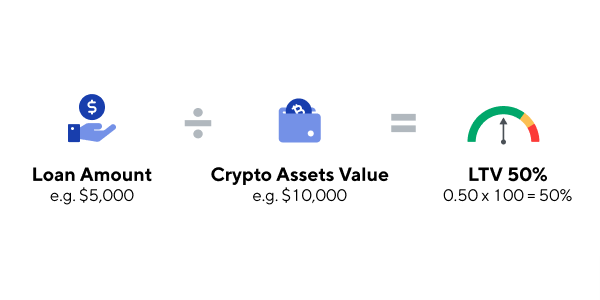
Loan-to-Value (LTV) Ratio:
The percentage of your collateral’s value that you can borrow. Bitcoin loans typically allow 30–50% LTV to protect against price volatility.
How to Calculate Loan to Value Ratio
Unlike traditional loans, bitcoin-backed loans do not require proof of income, employment records, or credit history.
Applications focus almost entirely on collateral value. This allows borrowers to access funds in hours instead of weeks.
What Documentation Do You Need?
Bitcoin personal loan applications require minimal documentation compared to traditional lending.
The main focus is identity verification and proof of bitcoin ownership, not financial history.
Applicants must complete standard KYC procedures. This includes a government-issued photo ID, such as a passport or driver’s license.
Proof of address is also required. Utility bills or bank statements dated within the last 90 days are commonly accepted.
Some platforms use automated verification tools that confirm identity within minutes.
Required documentation typically includes:
- Government-issued photo identification
- Proof of residential address
- Email address and phone number for account verification
- Bitcoin wallet address for collateral transfer
- Bank account details for fund disbursement
Most platforms do not request tax returns, pay stubs, or employment verification.
This makes bitcoin-backed loans appealing to freelancers, self-employed individuals, and borrowers with non-traditional income sources.
What Are the Eligibility Requirements?
Eligibility for bitcoin personal loans depends on collateral value rather than creditworthiness.
Applicants must hold enough bitcoin and meet basic legal requirements.
Most platforms require borrowers to be at least 18 years old. Some jurisdictions require a minimum age of 21.
Geographic availability varies. Many U.S.-based lenders exclude residents of New York, Hawaii, and other states with strict cryptocurrency regulations as of early 2025.
Common eligibility criteria include:
- Legal adult status in your jurisdiction
- Residence in a supported geographic region
- Sufficient bitcoin to meet minimum collateral requirements
- Ability to complete identity verification
- Acceptance of platform terms and loan conditions
Minimum loan amounts usually range from $1,000 to $5,000.
This means borrowers typically need bitcoin worth $2,000 to $10,000, depending on the platform’s LTV ratio.
How Quickly Can You Get Approved?
Bitcoin loan approvals range from instant to 48 hours.
Timing depends on identity verification and internal platform processes.
Many lenders provide conditional approval within minutes after verification.
The fastest approvals occur when borrowers already have verified accounts and request loans within standard parameters.
Platforms like River and BlockFi historically offered instant approvals for returning customers. Actual timelines depend on current operations and regulatory compliance.
Timeline breakdown by stage:
- Identity verification: 1 hour to 1 business day
- Loan approval: Instant to 24 hours after collateral deposit
- Fund disbursement: Same day to 3 business days
- Total process: 24 hours to 5 business days
Wire transfers often arrive the same day or the next business day but may cost $15 to $45.
ACH transfers usually take 1 to 3 business days and cost less or nothing.
Some platforms disburse loans in stablecoins like USDC, allowing near-instant settlement on blockchain networks.
What Loan Terms Should You Expect?
Bitcoin personal loan terms vary by platform but share common features.
Understanding these terms helps borrowers compare offers.
Interest rates for bitcoin-backed loans typically range from 4% to 15% APR as of early 2025.
Rates depend on LTV ratio, loan size, and loan duration. Lower LTV ratios usually qualify for better rates.
Annual Percentage Rate (APR):
The total yearly cost of borrowing, including interest and fees. Bitcoin-backed loans often offer lower APRs than unsecured personal loans due to reduced lender risk.
Standard loan term features:
- Loan duration: Commonly 6 months to 3 years
- Interest structure: Fixed or variable rates
- Repayment options: Interest-only or principal-plus-interest
- Prepayment: No penalties on most platforms
- Origination fees: Typically 0% to 2%
Interest-only loans require monthly interest payments, with principal due at maturity.
This reduces monthly obligations but requires a lump-sum repayment or refinancing later.
Principal-plus-interest loans amortize over time and gradually reduce the balance.
How Do Platforms Handle Collateral Management?
Collateral management is the most critical part of bitcoin personal loans.
Platforms must secure borrower bitcoin while monitoring price changes and liquidation risk.
Most lenders use qualified custodians or multi-signature wallets.
Custodians such as BitGo or Coinbase Custody provide insurance and strict security controls.
Multi-signature wallets require multiple private keys to move funds, reducing single points of failure.
Collateral management components:
- Custody method: Third-party custodian or multi-signature wallet
- LTV monitoring: Continuous or periodic tracking
- Margin call triggers: LTV thresholds requiring action
- Liquidation process: Automated or manual collateral sales
- Insurance coverage: Protection against platform failures
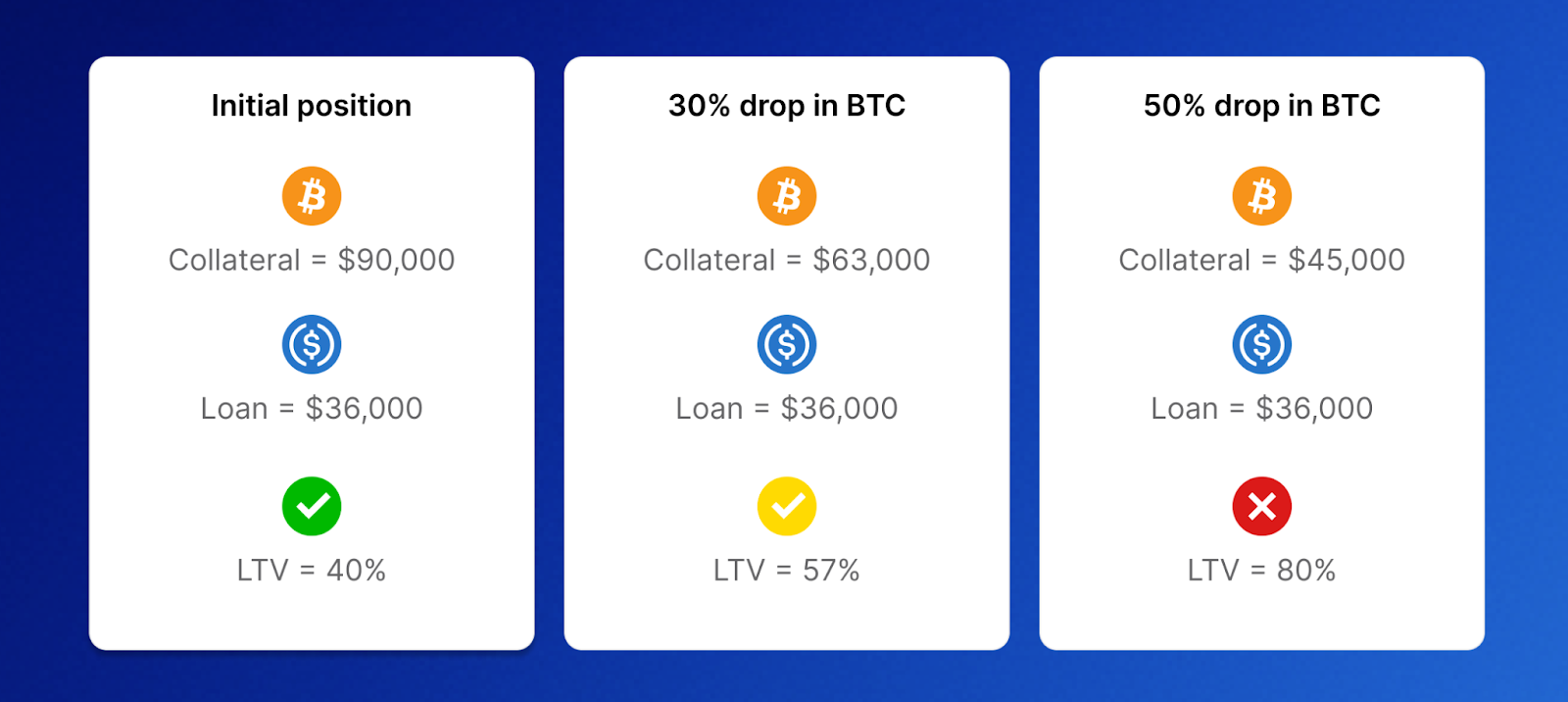
Platforms continuously monitor LTV ratios as bitcoin prices change.
If prices fall, LTV increases because loan balances remain constant while collateral value drops.
When LTV exceeds limits, typically between 65% and 85%, lenders issue margin calls. Borrowers must add collateral or repay part of the loan within 24 to 72 hours.
Failure to meet margin calls leads to liquidation. Platforms sell enough bitcoin to restore safe LTV levels.
What Are the Key Risks and Considerations?
Bitcoin-backed loans carry risks that differ from traditional borrowing.
Price volatility creates liquidation risk. Platform operations introduce counterparty risk.
If bitcoin prices fall sharply, liquidation can occur quickly.
For example, a 30% price drop on a 50% LTV loan can push LTV above 70%, triggering margin calls or liquidation.
Primary risk categories:
- Liquidation risk: Forced collateral sales during price declines
- Counterparty risk: Platform insolvency or operational failure
- Custody risk: Hacks or asset mismanagement
- Regulatory risk: Changing legal requirements
- Interest rate risk: Rising variable rates
Recent industry events highlight counterparty risk.
Several crypto lending platforms, including Celsius Network and BlockFi, filed for bankruptcy in 2022 and 2023. Borrowers in some cases lost access to collateral.
Due diligence helps reduce risk but cannot eliminate it entirely.
How a Drop in Bitcoin’s Price Affects LTV and Liquidation
Tax considerations are also important.
According to IRS Notice 2014-21, borrowing against bitcoin does not create a taxable event. However, liquidation may trigger capital gains taxes.
Consulting a tax professional before borrowing is recommended.
How Do Bitcoin Loans Compare to Traditional Personal Loans?
Bitcoin-backed loans and traditional personal loans serve similar purposes but differ in structure and risk.
Bitcoin-Backed Loans
- Credit requirements: None
- Approval speed: 24–48 hours
- Interest rates: 4–15% APR
- Tax treatment: No taxable event when borrowing
- Best for: Bitcoin holders seeking liquidity
Traditional Personal Loans
- Credit requirements: Credit score usually 600–700+
- Approval speed: 3–7 days
- Interest rates: 6–36% APR
- Tax treatment: No asset appreciation potential
- Best for: Borrowers with good credit
Bitcoin loans remove credit checks but introduce collateral risk.
Traditional loans avoid collateral but depend on creditworthiness.
Frequently Asked Questions
Do bitcoin personal loans require credit checks?
No. Bitcoin-backed loans rely on collateral value rather than credit history.
What happens if bitcoin price drops during my loan?
Your LTV increases. This may trigger margin calls or liquidation if requirements are not met.
Can I repay my bitcoin loan early without penalties?
Most platforms allow early repayment without penalties.
How much can I borrow against my bitcoin?
Typical LTV ratios range from 30–50%.
Are bitcoin loan interest payments tax deductible?
It depends on how the loan proceeds are used. Consult a tax professional.
What happens to my bitcoin if the lending platform fails?
Collateral may become inaccessible during bankruptcy proceedings.
Can I use bitcoin held in a hardware wallet as collateral?
No. Bitcoin must be transferred to platform custody.
How do bitcoin lending platforms make money?
Platforms earn revenue through interest spreads, fees, and treasury activities.
Conclusion
Bitcoin personal loan applications provide a faster alternative to traditional lending.
They rely on bitcoin collateral instead of credit history and typically complete within 24 to 48 hours.
Key considerations before applying:
- Understand liquidation risk
- Compare interest rates and terms
- Review custody and insurance practices
- Consider tax implications
For borrowers seeking liquidity while retaining bitcoin exposure, explore Rhino Bitcoin’s bitcoin-backed loan options:
https://www.rhinobitcoin.com
References
- Internal Revenue Service. “IRS Notice 2014-21: Virtual Currency Guidance.”
https://www.irs.gov/pub/irs-drop/n-14-21.pdf - Financial Crimes Enforcement Network. “Application of FinCEN’s Regulations to Certain Business Models Involving Convertible Virtual Currencies.”
https://www.fincen.gov/resources/statutes-regulations/guidance/application-fincens-regulations-certain-business-models - Bitcoin.org. “Bitcoin Developer Documentation.”
https://bitcoin.org/en/developer-documentation - BitGo. “Qualified Custody for Digital Assets.”
https://www.bitgo.com - Mempool.space. “Bitcoin Network Statistics and Data.”
https://mempool.space
Important Disclaimers
Disclaimer: Educational information only. Not financial, legal, medical, or tax advice.
Risk Warnings: All investments carry risk, including loss of principal. Past performance is not indicative of future results. Bitcoin is volatile and may not be suitable for all investors.
Conflicts of Interest: Rhino Bitcoin provides Bitcoin financial services. This content is educational and may reference its products.
.png)
.png)