
Bitcoin Peer-To-Peer Finance: Your Complete Banking Alternative Guide
Bitcoin peer-to-peer finance enables direct transactions without banks, giving users global access, lower fees, and full control of their funds.
Buy Bitcoin with Zero Fees with Rhino
The most secure way to stack sats. Simple, fast, and zero trading fees.
Bitcoin peer-to-peer finance removes traditional financial intermediaries. It allows people to send and receive money directly using the Bitcoin network.
This model uses Bitcoin’s decentralized design to create trustless financial relationships. Users keep full control of their funds. There is no need to rely on banks, payment processors, or other middlemen.
Key Summary:
Bitcoin peer-to-peer finance uses Bitcoin’s decentralized network to enable direct transactions between individuals. It removes intermediaries while offering transparency, security, and global access without traditional banking systems.
Key Takeaways
- Peer-to-peer Bitcoin transactions remove intermediaries and lower costs
- Users keep self-custody and full control of their funds
- The Lightning Network allows instant P2P payments with very low fees
- Bitcoin P2P finance expands financial access for unbanked populations worldwide
What Is Bitcoin Peer-to-Peer Finance?
Bitcoin peer-to-peer finance changes how people exchange value and access financial services.
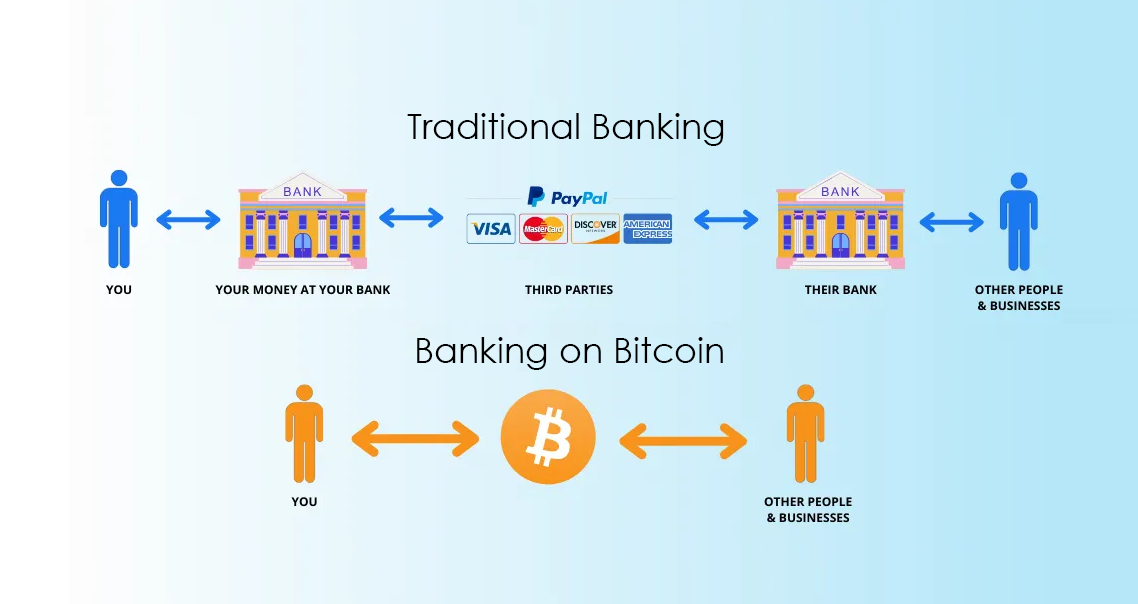
In traditional finance, banks and payment processors act as trusted intermediaries. Bitcoin removes these intermediaries. Instead, it allows direct transactions using cryptographic proof rather than institutional trust.
This idea began with Bitcoin’s launch in 2009. In the original whitepaper, Satoshi Nakamoto described Bitcoin as “a peer-to-peer electronic cash system.”
How the P2P Model Works
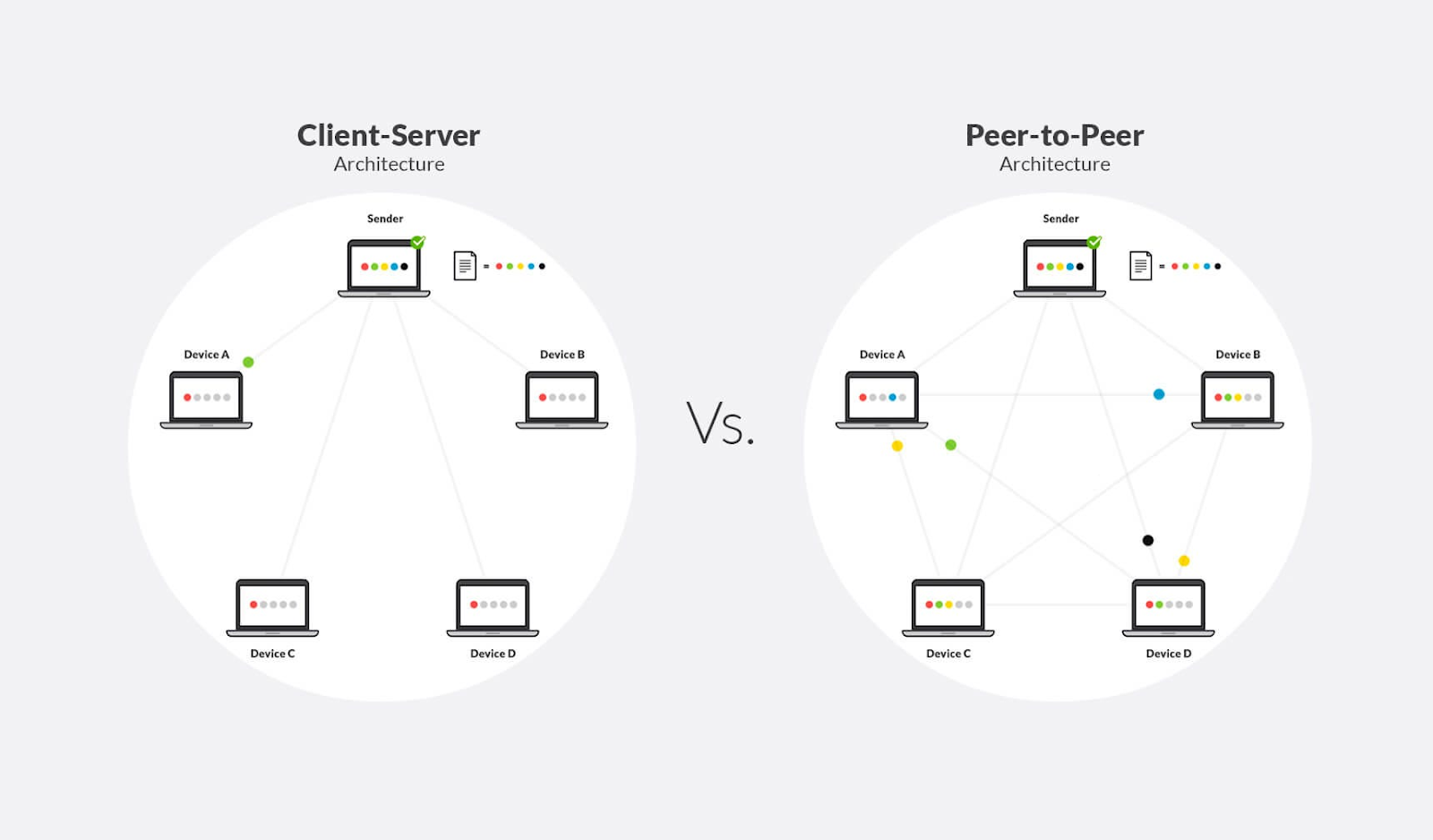
The peer-to-peer model runs on Bitcoin’s decentralized blockchain network. Transactions are verified by thousands of independent nodes. There is no central authority.
When Alice sends bitcoin to Bob:
- The transaction is broadcast to the network
- Miners include it in a block
- The blockchain records the transfer permanently
No bank approves or processes the payment.
This approach connects closely with broader Bitcoin banking alternatives. These systems challenge traditional financial infrastructure.
By removing intermediaries, Bitcoin peer-to-peer finance:
- Reduces costs
- Increases transaction speed
- Expands access for people excluded from traditional banking
Peer-to-Peer Finance:
A financial model where individuals transact directly with each other. It removes intermediaries like banks or payment processors and relies on decentralized networks for verification.
Learn more from the Bitcoin whitepaper
Peer-to-Peer vs Client-Server Networks
How Does Bitcoin Enable Direct Financial Transactions?
Bitcoin enables peer-to-peer transactions using blockchain technology and cryptographic security.
Each user controls two cryptographic keys:
- Public key: Similar to an account number. Others use it to send bitcoin.
- Private key: Similar to a password. It authorizes outgoing transactions.
Step-by-Step Transaction Process
- The sender creates a transaction in their Bitcoin wallet.
- They enter the recipient’s address and the amount.
- The transaction is signed with the sender’s private key.
- The signed transaction is broadcast to the network.
Bitcoin nodes then verify the transaction. They confirm:
- The digital signature is valid
- The sender has enough funds
Once verified, miners include the transaction in a block. That block is added to the blockchain.
The first confirmation usually takes about 10 minutes. For larger transactions, most services require 3–6 confirmations to ensure finality.
Key Components of Bitcoin P2P Transactions
- Cryptographic keys: Secure transactions without exposing sensitive data
- Digital signatures: Prove ownership without intermediaries
- Blockchain verification: Distributed consensus replaces central authorities
- Transaction finality: Each confirmation increases certainty
- Pseudonymous addresses: Public keys offer privacy, not full anonymity
Lightning Network Enhancements
The Lightning Network expands Bitcoin’s peer-to-peer capabilities. It enables instant microtransactions.
This Layer 2 system creates payment channels between users. Thousands of transactions can occur off-chain. Only the final result is settled on the main blockchain.
Platforms like Rhino Bitcoin integrate Lightning Network features. This makes instant peer-to-peer payments practical for everyday use.
Why Choose Peer-to-Peer Finance Over Traditional Banking?
Bitcoin peer-to-peer finance offers clear advantages over traditional banking. These benefits are most noticeable in cost, access, and control.
Traditional financial systems rely on intermediaries. These add fees, delays, and restrictions. Bitcoin’s direct transaction model removes many of these barriers.
Cost Differences
Traditional wire transfers often cost $25–50 per transaction. International remittances through services like Western Union average 6–7% in fees, according to World Bank data (2024).
By comparison:
- Bitcoin on-chain transactions usually cost $1–5 during normal conditions
- Lightning Network payments cost fractions of a penny
Access Differences
Traditional banks often require:
- Credit checks
- Minimum balances
- Proof of address
- Extensive documentation
These requirements exclude many people. The World Bank estimates that 1.4 billion adults remain unbanked.
Bitcoin only requires:
- Internet access
- A Bitcoin wallet
This makes financial participation possible for unbanked and underbanked populations.
Comparison: Bitcoin P2P vs Traditional Banking
Bitcoin Peer-to-Peer Finance
Pros
- No intermediary fees
- 24/7 availability
- Global access
- User-controlled funds
- Censorship resistant
- Fast settlement (especially Lightning)
- No minimum balances or credit checks
Cons
- Price volatility
- Learning curve
- Irreversible transactions
- Full user responsibility for security
- Limited merchant acceptance
Best For
- International transfers
- Unbanked populations
- Privacy-focused users
- Financial sovereignty
- Microtransactions
Traditional Banking Systems
Pros
- Stable fiat values
- Transaction reversibility
- Insurance protections (FDIC in the US)
- Familiar user experience
- Broad merchant acceptance
- Customer support
Cons
- High fees
- Limited hours and holiday closures
- Geographic restrictions
- Accounts can be frozen or denied
- Heavy documentation requirements
Best For
- Local fiat payments
- Users who prefer intermediaries
- Transactions needing reversibility
- Regulatory compliance
Control and Censorship Resistance
Banks can freeze accounts or reverse transactions. These actions may follow internal policies or government orders.
Bitcoin’s peer-to-peer model removes this control. Users manage their own funds. Transactions are permissionless and resistant to censorship.
Traditional Banking Vs Bitcoin
What Are Lightning Network Payment Channels?
Lightning Network payment channels enable instant Bitcoin peer-to-peer payments at scale.
A payment channel is a two-party agreement recorded on the Bitcoin blockchain. It allows unlimited transactions without broadcasting each one to the main network.
How Payment Channels Work
- Two users lock bitcoin into a multi-signature address
- This creates a payment channel
- Users exchange funds instantly by updating balances
- Only the final balance is recorded on-chain
When the channel closes, the net result is settled on the blockchain.
Network Routing
Lightning channels connect into a larger network. Payments can route through multiple channels.
For example:
- Alice has a channel with Bob
- Bob has a channel with Carol
- Alice can pay Carol through Bob
The network handles routing automatically.
Lightning Network Advantages
- Instant settlement: Milliseconds instead of minutes
- Minimal fees: Often 0.01%–0.1%
- High throughput: Thousands of transactions per second
- Better privacy: Payments are not broadcast to the entire network
- Micropayments: Economical for very small amounts
Our guide on Bitcoin Lightning wallets explains how to choose and use Lightning-compatible wallets.
How Does Bitcoin P2P Finance Serve the Unbanked?
Bitcoin peer-to-peer finance helps solve financial exclusion.
The World Bank estimates that 1.4 billion adults lack bank accounts. This problem is most common in developing regions with limited or costly banking infrastructure.
Why Traditional Banking Excludes People
Common barriers include:
- Missing identification documents
- No credit history
- Minimum balance requirements
- Long distances to bank branches
- High account fees
Bitcoin removes many of these barriers.
All that’s required is:
- A smartphone
- Internet access
Mobile internet adoption continues to grow. GSMA data (2023) shows 57% penetration in low- and middle-income countries.
Remittances and Cost Savings
Migrant workers sending money home often lose 6–7% in fees. These losses come from transfer charges and exchange rate markups.
Bitcoin and the Lightning Network reduce these costs. Transfers can happen instantly with fees under 1%.
Bitcoin P2P Solutions for Financial Inclusion
- No identity requirements: Wallet address only
- No minimum balances: Fractional ownership
- Mobile-first access: Phones act as banking tools
- Low remittance costs: Pennies instead of percentages
- Savings protection: Alternative to unstable local currencies
In countries facing inflation or capital controls, Bitcoin adoption grows faster. It provides a permissionless way to store and transfer value without relying on local institutions.
What Security Considerations Apply to Bitcoin P2P Transactions?
Bitcoin peer-to-peer finance shifts security responsibility to the user.
Unlike banks, Bitcoin transactions cannot be reversed. This means users must protect their private keys and verify transactions carefully.
Private Key Security
Private keys control access to bitcoin. Anyone with your private keys controls your funds.
Best practices include:
- Using hardware wallets for large amounts
- Enabling multi-signature wallets
- Never sharing seed phrases
Transaction Verification
Bitcoin addresses are long and complex. A single incorrect character can result in permanent loss.
To reduce errors:
- Use QR codes instead of manual entry
- Double-check the first and last characters of addresses
Common Security Risks in P2P Bitcoin Finance
Technical and Operational Risks
- Private key loss
- Address errors
- Malware and phishing attacks
- Bitcoin price volatility
Transaction-Specific Risks
- Zero-confirmation double-spending
- Incorrect fee estimates
- Lightning channel liquidity limits
- Counterparty risk in P2P markets
Understanding Bitcoin wallet security practices helps users protect their funds while maintaining usability.
Multi-Signature Security:
A wallet setup that requires multiple private keys to authorize transactions. This reduces single points of failure.
Learn more about multisig
How Do Bitcoin P2P Lending and Borrowing Work?
Bitcoin peer-to-peer lending brings direct finance into credit markets.
It allows individuals to lend or borrow without traditional intermediaries. These systems rely on collateral rather than credit history.
Overcollateralized Loans
Most Bitcoin P2P loans are overcollateralized. Borrowers deposit more value than they borrow.
Example:
- Deposit $15,000 in bitcoin
- Borrow $10,000
- Collateral ratio: 150%
This protects lenders without credit checks.
Automatic Risk Management
Loan-to-value ratios adjust as bitcoin prices change. If prices drop too much, platforms automatically liquidate collateral.
This protects lenders and allows borrowers to access liquidity without selling bitcoin.
Bitcoin-Backed Loan Characteristics
- No credit checks
- Fast approval
- Flexible repayment terms
- Continued Bitcoin exposure
- Real-time collateral monitoring
Platforms like Rhino Bitcoin offer Bitcoin-backed loans with competitive rates and no credit checks.
What Role Does Bitcoin P2P Play in Financial Sovereignty?
Bitcoin peer-to-peer finance supports financial sovereignty.
It gives individuals control over their money without permission from banks or governments. This aligns with Bitcoin’s original design.
Different Meanings of Sovereignty
- In stable economies: privacy and protection from freezes
- In unstable economies: survival during inflation or capital controls
How P2P Supports Sovereignty
- Self-custody removes counterparty risk
- Permissionless transactions prevent censorship
- Transparent rules enforce scarcity
True sovereignty also requires responsibility. Users must manage keys securely and accept transaction irreversibility.
The concept of Bitcoin self-custody banking explores how users balance control with convenience.
How Does Bitcoin P2P Finance Compare to DeFi?
Bitcoin P2P and DeFi both remove intermediaries. However, they differ in design and risk.
Bitcoin P2P focuses on:
- Direct value transfer
- Simple, secure contracts
- Long-term stability
The Lightning Network adds speed without sacrificing security.
DeFi platforms focus on:
- Complex smart contracts
- Automated trading and lending
- Rapid experimentation
This added complexity introduces new risks.
Choose Bitcoin P2P If You Want:
- Maximum security
- Simple payments
- Long operational history
- Minimal smart contract exposure
Consider DeFi If You Need:
- Advanced financial products
- Yield strategies
- Token creation
- Fast innovation
Many users combine both approaches. Bitcoin is used for savings, while DeFi serves specialized use cases.
Frequently Asked Questions
What equipment do I need to use Bitcoin peer-to-peer finance?
You need a smartphone or computer with internet access and a Bitcoin wallet. For larger amounts, a hardware wallet improves security.
Are Bitcoin peer-to-peer transactions anonymous?
Bitcoin is pseudonymous. Transactions are public, but wallet addresses are not directly tied to identities.
How long do Bitcoin P2P transactions take to confirm?
On-chain transactions usually confirm in about 10 minutes. Most services require 3–6 confirmations. Lightning transactions settle instantly.
Can I reverse a Bitcoin peer-to-peer transaction?
No. Once confirmed, Bitcoin transactions cannot be reversed.
What happens if I send bitcoin to the wrong address?
Funds are usually unrecoverable. See our guide on wrong address transactions.
How much do Bitcoin peer-to-peer transactions cost?
On-chain fees are typically $1–5. Lightning fees are fractions of a cent.
Do I need to report Bitcoin P2P transactions for taxes?
Yes. In most jurisdictions, Bitcoin transactions are taxable events.
Is Bitcoin peer-to-peer finance legal?
It is legal in most countries. Regulations vary by location.
How does Bitcoin P2P work for international transfers?
Bitcoin allows borderless transfers without conversion fees. Users can convert to local currency if needed.
What risks exist in Bitcoin P2P lending?
Key risks include volatility, liquidation, platform security, and regulatory uncertainty.
Conclusion
Bitcoin peer-to-peer finance changes how value moves. It removes intermediaries and enables direct financial relationships.
This model lowers costs, expands access, and gives users control. The Lightning Network adds instant payments, making Bitcoin useful for everyday transactions.
Key Considerations
- Practice strong security habits
- Start with small amounts
- Understand tax obligations
- Compare on-chain and Lightning fees
For those ready to use peer-to-peer Bitcoin with traditional conveniences, explore Rhino Bitcoin’s all-in-one platform for trading, Lightning payments, bill pay, and Bitcoin-backed loans.
References
- Nakamoto, Satoshi. Bitcoin: A Peer-to-Peer Electronic Cash System. bitcoin.org/bitcoin.pdf
- World Bank. The Global Findex Database 2021. worldbank.org
- World Bank. Remittance Prices Worldwide Quarterly. remittanceprices.worldbank.org
- GSMA. The State of Mobile Internet Connectivity 2023. gsma.com
- Bitcoin.org. Bitcoin Developer Documentation. bitcoin.org/en/developer-documentation
Important Disclaimers
Disclaimer: Educational information only. Not financial, legal, medical, or tax advice.
Risk Warnings: All investments carry risk, including loss of principal. Bitcoin is volatile and may not suit all investors.
Conflicts of Interest: Rhino Bitcoin provides Bitcoin financial services. This content is educational and may reference its products.
.png)
.png)