
Ultimate Bitcoin Passphrase Security Guide For Safe Custody
Bitcoin passphrase (BIP39) adds a “25th word” to your seed phrase, creating a hidden wallet that protects your bitcoin even if your recovery phrase is exposed.
Buy Bitcoin with Zero Fees with Rhino
The most secure way to stack sats. Simple, fast, and zero trading fees.
A Bitcoin passphrase (also called a BIP39 passphrase or "25th word") adds an extra layer of security to your seed phrase by creating an entirely new wallet that only you can access. This optional security feature protects your bitcoin even if someone discovers your 12 or 24-word seed phrase, making it one of the most powerful tools for securing long-term holdings.
Key Summary: Bitcoin passphrase protection extends your seed phrase with a custom word or phrase, creating a hidden wallet that remains secure even if your seed phrase is compromised.
Key Takeaways:
- Passphrases create entirely new wallets from the same seed phrase
- They protect against physical seed phrase theft and coercion
- Loss of your passphrase means permanent loss of bitcoin
- Every passphrase combination creates a valid wallet, even incorrect ones
What Is a Bitcoin Passphrase?
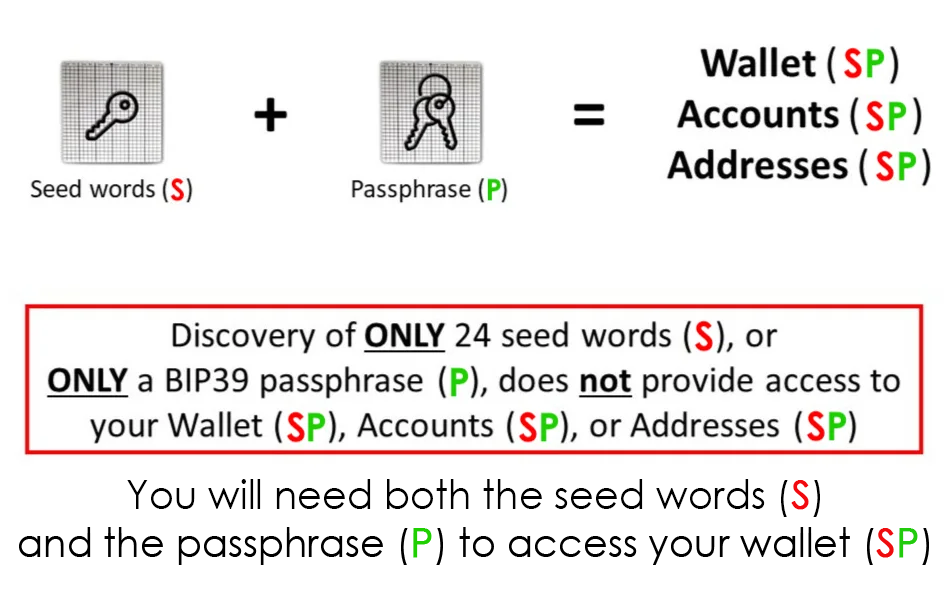
A Bitcoin passphrase is an optional extension to your recovery seed phrase that creates a completely different set of private keys and addresses. When you add a passphrase to your 12 or 24-word seed phrase, you generate a mathematically distinct wallet that cannot be accessed without both components.
This feature implements BIP39 (Bitcoin Improvement Proposal 39) specification standards. Think of your seed phrase as a master key and the passphrase as a combination lock, both are required to access your bitcoin. For comprehensive background on Bitcoin security fundamentals, see our complete Bitcoin security guide.
BIP39 Passphrase: An optional text string (word, phrase, or character sequence) added to a seed phrase that cryptographically generates a completely separate wallet. BIP39 specification
The passphrase differs fundamentally from a wallet PIN or password. A PIN simply locks your wallet app, while a passphrase mathematically alters the wallet derivation itself. Every different passphrase creates a valid wallet, which has important implications for both security and risk.
How BIP39 Passphrases Work
How Does Passphrase Protection Work?
Passphrase protection works through cryptographic derivation that combines your seed phrase entropy with your chosen passphrase. The wallet software concatenates these inputs and processes them through key derivation functions to generate a unique set of private keys.
Here's the technical process:
- Seed generation: Your 12 or 24-word seed phrase represents 128 or 256 bits of entropy
- Passphrase concatenation: Your custom passphrase appends to the seed as additional entropy
- Key derivation: PBKDF2 function processes the combined input 2,048 times
- Wallet creation: The output generates entirely new private keys and addresses
This means entering seed phrase "A" with passphrase "1" creates a completely different wallet than seed phrase "A" with passphrase "2". Both wallets are valid, functional, and completely separate. There is no way to determine which wallet contains your actual bitcoin without trying every possible passphrase.
The cryptographic strength comes from the computational difficulty of deriving all possible wallets. With millions of potential passphrases, an attacker with your seed phrase faces an impossible search problem.
Why Use a Bitcoin Passphrase?
Bitcoin passphrases address specific security scenarios that seed phrases alone cannot protect against. The most compelling use cases involve physical security threats and advanced operational security requirements.
Protection Against Physical Theft:
- If someone finds your seed phrase backup, they cannot access your bitcoin without the passphrase
- Stolen hardware wallets become useless without the memorized passphrase component
- Home invasions or physical searches cannot compromise properly configured passphrase wallets
Plausible Deniability:
- Create a small "decoy" wallet with no passphrase containing minimal bitcoin
- Store your main holdings in a passphrase-protected wallet
- Under coercion, reveal only the seed phrase and decoy wallet
- The attacker has no way to know additional wallets exist
Enhanced Operational Security:
- Separate storage of seed phrase (metal backup) and passphrase (memorized or separate location)
- Multiple inheritance scenarios with different passphrases
- Geographic distribution of security components
Major Bitcoin custody platforms including Trezor, Ledger, and Coldcard support passphrase protection, making this an industry-standard security practice. However, the feature adds complexity that requires careful planning and testing.
Setting Up Passphrase Protection
Setting up passphrase protection requires careful planning before implementation. The process varies slightly by wallet, but follows similar principles across hardware and software solutions.
Before You Begin:
- Choose a memorable but strong passphrase (8-20 characters recommended)
- Test the complete setup with a small amount before transferring significant bitcoin
- Document your backup strategy for both seed phrase and passphrase
- Understand that every character matters (passphrases are case-sensitive)
Hardware Wallet Setup Process:
For Trezor devices, navigate to Settings, Advanced, and enable Passphrase encryption. The device will then prompt for your passphrase each time you access the wallet. Ledger devices require enabling passphrase protection in device settings, after which you enter the passphrase on the device screen or through the Ledger Live app.
Coldcard offers the most sophisticated passphrase implementation, allowing you to store passphrases on the device's secure element or enter them each session. Coldcard also supports numeric-only passphrases for easier input on the device keypad.
Software Wallet Considerations:
Software wallets like Sparrow, Electrum, and BlueWallet support BIP39 passphrases during wallet creation or restoration. When creating a new wallet, you'll see an optional passphrase field after entering your seed phrase. Mobile wallets typically offer this feature in advanced settings.
After enabling passphrase protection, send a small test transaction to verify you can access the wallet. Write down one address from the passphrase-protected wallet and confirm you can restore access to that same address using your seed phrase plus passphrase combination.
Choosing a Strong Passphrase
Passphrase strength balances security against memorability. Unlike computer passwords, Bitcoin passphrases should be memorable enough to reliably recall years later while remaining resistant to guessing attacks.
Passphrase Strength Comparison:
Weak Passphrases (avoid these):
- Examples: "password", "12345", "bitcoin", single dictionary words
- Security: Vulnerable to dictionary attacks and basic guessing
- Risk: Provides minimal additional protection over seed phrase alone
Moderate Passphrases (acceptable for smaller amounts):
- Examples: "MyBitcoin2024", "blue_mountain_77", short memorable phrases
- Security: Resistant to casual attacks but vulnerable to targeted efforts
- Risk: May be guessable by someone who knows you well
Strong Passphrases (recommended for significant holdings):
- Examples: "correct-horse-battery-staple-97", "Tbh@1985-Secure!", memorable sentence first letters with numbers
- Security: High entropy combining multiple word types and characters
- Risk: Main risk is forgetting the passphrase itself
How to Make Strong Passwords
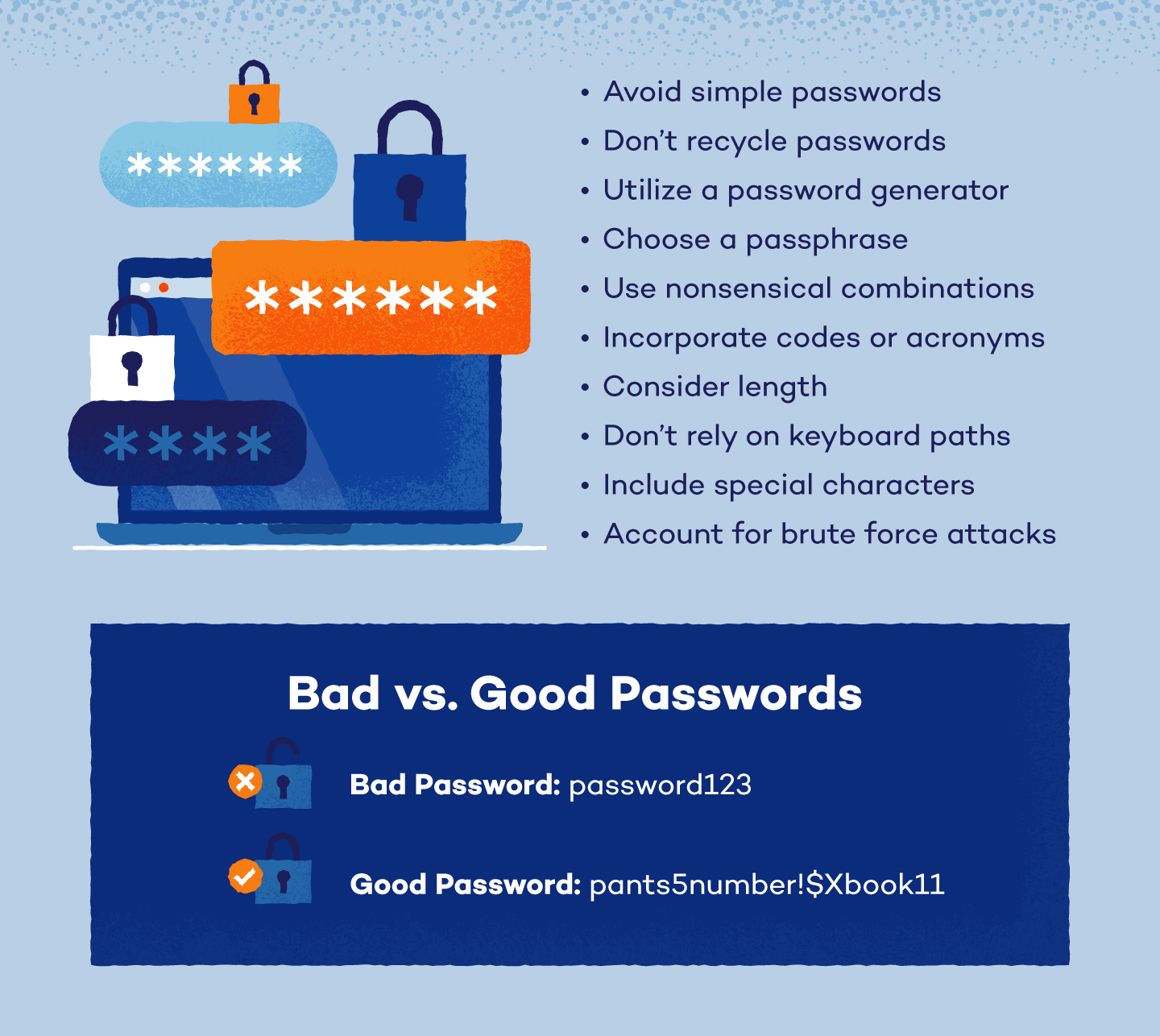
According to Bitcoin.org security recommendations, your passphrase should be unique and not reused from other services. The BIP39 specification allows any UTF-8 string up to 256 characters, but practical passphrases typically range from 8 to 30 characters.
Consider using a memorable sentence, song lyric, or personal phrase modified with numbers and symbols. The key is creating something you will remember in 5 or 10 years without external prompts, while ensuring others cannot easily guess it.
Backing Up Your Passphrase Safely
Backing up your passphrase presents unique challenges because the backup itself becomes a security liability. The entire point of passphrase protection is separating it from your seed phrase, so storing them together defeats the purpose.
Memory-Based Storage:
Memorizing your passphrase provides the highest security for passphrases you'll access regularly. This approach works best for shorter, meaningful phrases you can reliably recall. Practice entering your passphrase weekly to maintain memory reinforcement. However, memory alone carries risk if you suffer memory loss or unexpected incapacitation.
Physical Backup Methods:
- Separate location storage: Store passphrase backup in a different physical location than your seed phrase
- Split backup: Write half the passphrase in one location, half in another
- Trusted third party: Give passphrase to a family member or attorney who doesn't have seed phrase access
- Cryptographic split: Use Shamir's Secret Sharing to split the passphrase into multiple shares
What NOT to Do:
- Never store your passphrase in the same location as your seed phrase
- Avoid digital storage (password managers, encrypted files, cloud storage)
- Don't use passphrases that appear in your email, social media, or other digital footprints
- Never share your complete seed phrase and passphrase with the same person
For inheritance planning, consider a time-locked backup strategy where your executor receives instructions to combine separately stored components. Our guide on Bitcoin security best practices covers additional backup strategies for complex custody arrangements.
Common Passphrase Mistakes to Avoid
Passphrase protection introduces several failure modes that can result in permanent bitcoin loss. Understanding these risks before implementation helps avoid costly mistakes.
The "Every Passphrase Is Valid" Problem:
The most dangerous aspect of passphrases is that every possible passphrase creates a valid, functional wallet. If you enter the wrong passphrase, your wallet won't show an error, it will open a different, empty wallet. This means you cannot tell whether you've made a mistake until you realize your bitcoin isn't there.
Users commonly discover this problem after:
- Misremembering capitalization (passphrase "Bitcoin" differs from "bitcoin")
- Adding or omitting spaces (passphrase "my phrase" differs from "myphrase")
- Confusion about special characters or numbers
- Using similar but different passphrases for different wallets
Testing and Verification Errors:
Many users fail to properly test their backup before sending significant amounts. Always verify your complete recovery process: wipe your device, restore from seed phrase, add passphrase, and confirm you see the same addresses and balance. Test this process immediately after setup, not months later when memory has faded.
Incomplete Documentation:
Failing to document which wallets use passphrases creates confusion during recovery. Your backup documentation should clearly indicate: "This seed phrase requires a passphrase for access" without revealing the passphrase itself in the same document. Understanding Bitcoin private key management fundamentals helps avoid these organizational mistakes.
Overthinking Complexity:
Some users create excessively complex passphrases they struggle to remember or type accurately. A moderately strong passphrase you can reliably recall provides better security than an extremely complex one you might forget or mistype. Balance security with practical usability based on your specific threat model.
Passphrase Protection vs. Other Security Methods
Passphrases represent one tool in a comprehensive Bitcoin security strategy. Understanding when to use passphrases versus other protection methods helps build appropriate security for your situation.
Passphrase Protection:
- Best for: Protecting against physical seed phrase discovery, inheritance complexity, high-value cold storage
- Limitations: Adds recovery complexity, risk of forgotten passphrase, requires careful backup strategy
- Setup complexity: Moderate to high
Multi-Signature Wallets:
- Best for: Shared custody, business accounts, eliminating single points of failure
- Limitations: More complex setup and transaction signing, requires multiple devices
- Setup complexity: High
Hardware Wallet PIN Protection:
- Best for: Device-level security, protecting against theft of the physical device
- Limitations: Only protects the device, not the seed phrase backup
- Setup complexity: Low
Cold Storage (Air-Gapped):
- Best for: Long-term holdings, maximum security from network attacks
- Limitations: Inconvenient for regular transactions, requires technical knowledge
- Setup complexity: Moderate to high
Many users combine these approaches. A common configuration uses a hardware wallet with PIN protection, passphrase protection, and multi-signature requirements. This creates multiple security layers, each addressing different attack vectors. Platforms offering comprehensive security features like Rhino Bitcoin implement multiple protection layers while maintaining user-friendly access for everyday transactions.
Your optimal security configuration depends on factors including: bitcoin amount, frequency of access needed, technical expertise, threat model, and inheritance requirements. For holdings under $10,000, a standard hardware wallet with strong PIN may suffice. For six-figure amounts, passphrase protection or multi-signature becomes more appropriate.
Frequently Asked Questions
What happens if I forget my Bitcoin passphrase?
If you forget your passphrase, your bitcoin becomes permanently inaccessible. There is no password reset function or recovery mechanism, since every possible passphrase creates a valid wallet, making brute-force recovery impossible.
Can I add a passphrase to an existing wallet?
No, adding a passphrase creates a completely new wallet with different addresses. You would need to send your bitcoin from the old wallet to addresses in the new passphrase-protected wallet, which requires an on-chain transaction with associated fees.
How long should my Bitcoin passphrase be?
Passphrases between 8 and 20 characters offer good security while remaining memorable. Longer passphrases provide more security but increase the risk of entry errors or forgotten characters.
Does my passphrase need special characters and numbers?
Special characters and numbers increase passphrase strength but aren't mandatory. A longer passphrase using only letters and spaces can be equally secure and more memorable than a shorter one with complex characters.
Can I use the same passphrase on multiple wallets?
Technically yes, but this practice reduces security benefits. If your passphrase is compromised, all wallets using it become vulnerable. Use unique passphrases for different seed phrases, or use different passphrases with the same seed phrase to create separate wallets.
Will my hardware wallet show an error if I enter the wrong passphrase?
No, hardware wallets will accept any passphrase and open the corresponding wallet. Since every passphrase creates a valid wallet, the device has no way to determine which wallet you intended to access.
Should I write down hints for my passphrase?
Hints can help memory recall without compromising security, but they must be cryptic enough that only you understand them. Store hints separately from your seed phrase backup to maintain security separation.
Can I change my passphrase later?
You cannot change a passphrase on an existing wallet because the passphrase mathematically defines that wallet. To use a different passphrase, you must create a new wallet and transfer your bitcoin on-chain.
Is passphrase protection necessary for everyone?
No, passphrase protection adds complexity that isn't necessary for all users. Those with modest holdings, low-risk threat models, or concerns about forgetting passwords may prefer simpler security methods like PIN-protected hardware wallets in secure locations.
Conclusion
Bitcoin passphrase protection offers powerful security against physical seed phrase compromise, providing an additional layer that makes your bitcoin inaccessible even if someone discovers your 12 or 24-word recovery phrase. This feature works by mathematically creating entirely new wallets from the combination of your seed phrase and custom passphrase, with every different passphrase producing a valid but distinct wallet.
Key considerations for passphrase implementation:
- Choose memorable passphrases you can reliably recall years later
- Test your complete backup and recovery process before transferring significant amounts
- Store passphrases separately from seed phrases to maintain security benefits
- Understand that forgotten passphrases mean permanent bitcoin loss with no recovery option
For those seeking institutional-grade security with self-custody options and user-friendly access, explore how Rhino Bitcoin combines multi-signature protection with Lightning Network integration for comprehensive Bitcoin banking.
References
- Bitcoin.org. "Secure Your Wallet." https://bitcoin.org/en/secure-your-wallet
- Bitcoin Improvement Proposals. "BIP39: Mnemonic Code for Generating Deterministic Keys." https://github.com/bitcoin/bips/blob/master/bip-0039.mediawiki
- Trezor. "Passphrase Protection." https://wiki.trezor.io/Passphrase
- Ledger. "Passphrase: An Advanced Security Feature." https://www.ledger.com/academy/passphrase-an-advanced-security-feature
- Coldcard. "Passphrase Documentation." https://coldcard.com/docs/passphrase
Important Disclaimers
Disclaimer: Educational information only. Not financial, legal, medical, or tax advice.
Risk Warnings: All investments carry risk, including loss of principal. Past performance is not indicative of future results. Bitcoin is a volatile asset and may not be suitable for all investors.
Conflicts of Interest: Rhino Bitcoin provides Bitcoin financial services. This content is educational and may reference our products.
.png)
.png)