
Bitcoin Legal Fee Financing: Complete Guide To Bitcoin Attorney Loans
Bitcoin legal fee financing lets you borrow against BTC to cover attorney costs; no credit checks, no selling, and preserve upside potential.
Buy Bitcoin with Zero Fees with Rhino
The most secure way to stack sats. Simple, fast, and zero trading fees.
Bitcoin legal fee financing allows individuals and businesses to secure funding for attorney costs, court fees, and litigation expenses using bitcoin as collateral. This Bitcoin-backed lending approach provides access to legal representation without selling bitcoin holdings or undergoing traditional credit checks.
Legal expenses can arrive unexpectedly and require immediate action. For bitcoin holders facing substantial attorney fees or litigation costs, liquidating crypto assets during unfavorable market conditions creates financial pressure. Bitcoin legal fee financing offers an alternative: borrowing against bitcoin collateral while maintaining long-term investment positions and potential appreciation.
Key Summary: Bitcoin legal fee financing enables borrowers to fund attorney costs and litigation expenses using bitcoin as collateral, accessing capital without selling holdings or credit checks while preserving future appreciation potential.
Key Takeaways:
- Borrowers pledge bitcoin collateral to secure loans for legal expenses without credit checks
- Loan-to-value ratios typically range from 50–70% of collateral value
- Funds can cover attorney retainers, court fees, expert witnesses, and settlement costs
- Interest rates and terms vary based on collateral value and loan duration
This article explores bitcoin legal fee financing within the broader context of Bitcoin-backed lending. For a comprehensive overview of how Bitcoin-backed loans work, see our complete guide to Bitcoin loans and crypto lending:
https://www.rhinobitcoin.com/blog/guide-to-bitcoin-loans-crypto-lending
What Is Bitcoin Legal Fee Financing?
Bitcoin legal fee financing is a specialized form of Bitcoin-backed lending where borrowers use bitcoin as collateral to secure loans specifically for legal expenses. The bitcoin remains in custody (either with the lender or through multi-signature arrangements) while borrowers receive cash or stablecoin funding to pay attorneys, court costs, and related legal fees.
This financing method serves individuals facing unexpected legal challenges, businesses involved in commercial litigation, and anyone requiring legal representation but preferring not to liquidate bitcoin holdings. Legal matters often demand immediate funding, and traditional bank loans may take weeks to process or require extensive credit checks that delay proceedings.
Bitcoin legal fee financing addresses these constraints through several key features:
- No credit checks required: Collateral value determines approval, not credit history
- Fast approval and funding: Many platforms process applications within 24–48 hours
- Preserve bitcoin holdings: Borrowers maintain exposure to potential price appreciation
- Flexible repayment terms: Interest-only payments or structured repayment schedules
- Tax efficiency: Loans are not taxable events, unlike selling bitcoin for cash
Bitcoin-Backed Loan: A secured lending product where borrowers pledge bitcoin as collateral to receive fiat currency or stablecoin loans, maintaining bitcoin ownership while accessing liquidity.
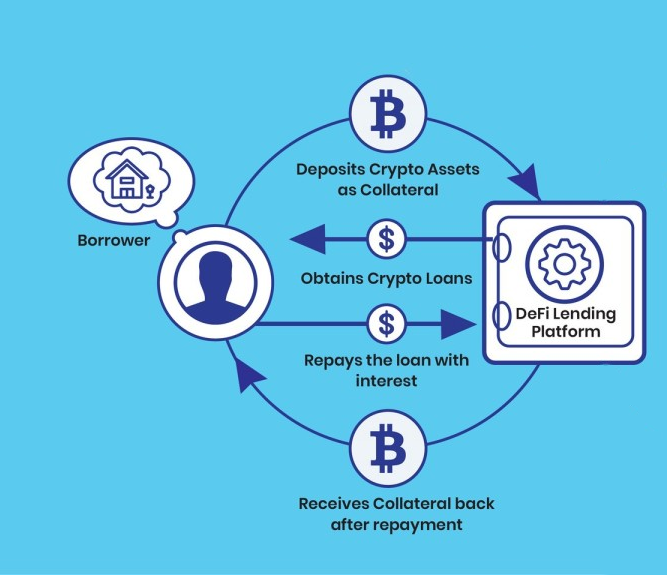
How Bitcoin-Backed Loans Work
Legal expenses vary widely. Attorney retainers for complex litigation can range from $10,000 to $100,000 or more. Expert witness fees, court filing costs, deposition expenses, and discovery costs add substantial amounts. Bitcoin legal fee financing provides capital access scaled to case requirements.
How Does Bitcoin Collateral Work for Legal Expenses?
Bitcoin collateral functions as security for the loan, giving lenders recourse if borrowers default. Borrowers transfer bitcoin to a custody arrangement (platform wallet, multi-signature wallet, or third-party custodian) where it remains locked until loan repayment.
The collateral management process typically follows these steps. First, borrowers submit a loan application specifying the required amount and purpose (legal fees). The lender evaluates current bitcoin market prices and calculates the loan-to-value ratio, determining how much they will lend against the collateral value. Once approved, borrowers transfer bitcoin to the designated custody wallet. The lender then disburses loan funds, usually via wire transfer, ACH, or stablecoin payment.
Throughout the loan term, the lender monitors bitcoin prices. If the collateral value drops significantly, the lender may issue a margin call requiring additional collateral or partial repayment. This protects the lender from collateral becoming insufficient to cover the outstanding loan balance.
Loan-to-Value Ratio Ranges:
- Conservative LTV (50–60%): Lower risk, more buffer against price drops, smaller loan amounts
- Standard LTV (60–70%): Balanced risk and borrowing power, most common for legal fee loans
- Aggressive LTV (70–80%): Higher liquidation risk, maximum borrowing capacity, requires active monitoring
For example, if you hold 2 bitcoin valued at $90,000 ($45,000 per bitcoin as of December 2024), a 60% LTV loan would provide $54,000 in funding. The lender holds your 2 bitcoin as collateral. If bitcoin prices drop to $30,000 per coin ($60,000 total), your collateral now covers $60,000 while you owe $54,000, still maintaining adequate coverage. However, a further drop might trigger liquidation procedures.
Loan-to-Value Ratio (LTV): The percentage of collateral value that a lender will advance as a loan, calculated as loan amount divided by collateral value. Lower LTV ratios provide greater protection against price volatility.
Why Use Bitcoin Loans for Attorney Fees?
Legal representation costs create immediate financial demands that traditional financing options struggle to address. Bitcoin loans for attorney fees solve multiple problems simultaneously, offering speed, accessibility, and tax efficiency.
Traditional bank loans require credit checks, income verification, and lengthy approval processes. Legal matters rarely allow this timeline. A lawsuit filing, regulatory investigation, or criminal defense situation may require immediate attorney engagement. Bitcoin-backed loans approve quickly because collateral value matters more than credit history.
Consider the alternative: selling bitcoin to raise legal fee capital. This creates a taxable event where capital gains taxes apply to any appreciation. If you purchased bitcoin at $20,000 and sell at $45,000, you recognize a $25,000 gain subject to federal and state taxes. A Bitcoin-backed loan avoids this tax burden entirely because borrowing is not a taxable event according to IRS guidance.
Advantages of Bitcoin Legal Fee Financing:
- Speed: Approval within 24–48 hours versus weeks for bank loans
- No credit checks: Past financial issues do not disqualify borrowers
- Tax efficiency: Loans avoid capital gains taxes on appreciated bitcoin
- Maintain exposure: Bitcoin remains yours, capturing future appreciation
- Flexible use: Funds cover any legal expense without restrictions
Bitcoin holders often view their assets as long-term investments, anticipating future appreciation. Selling bitcoin to cover legal expenses locks in current prices and forfeits potential gains. A Bitcoin-backed loan preserves this upside while providing necessary liquidity.
Why Use Bitcoin-Backed Loans Instead of Selling
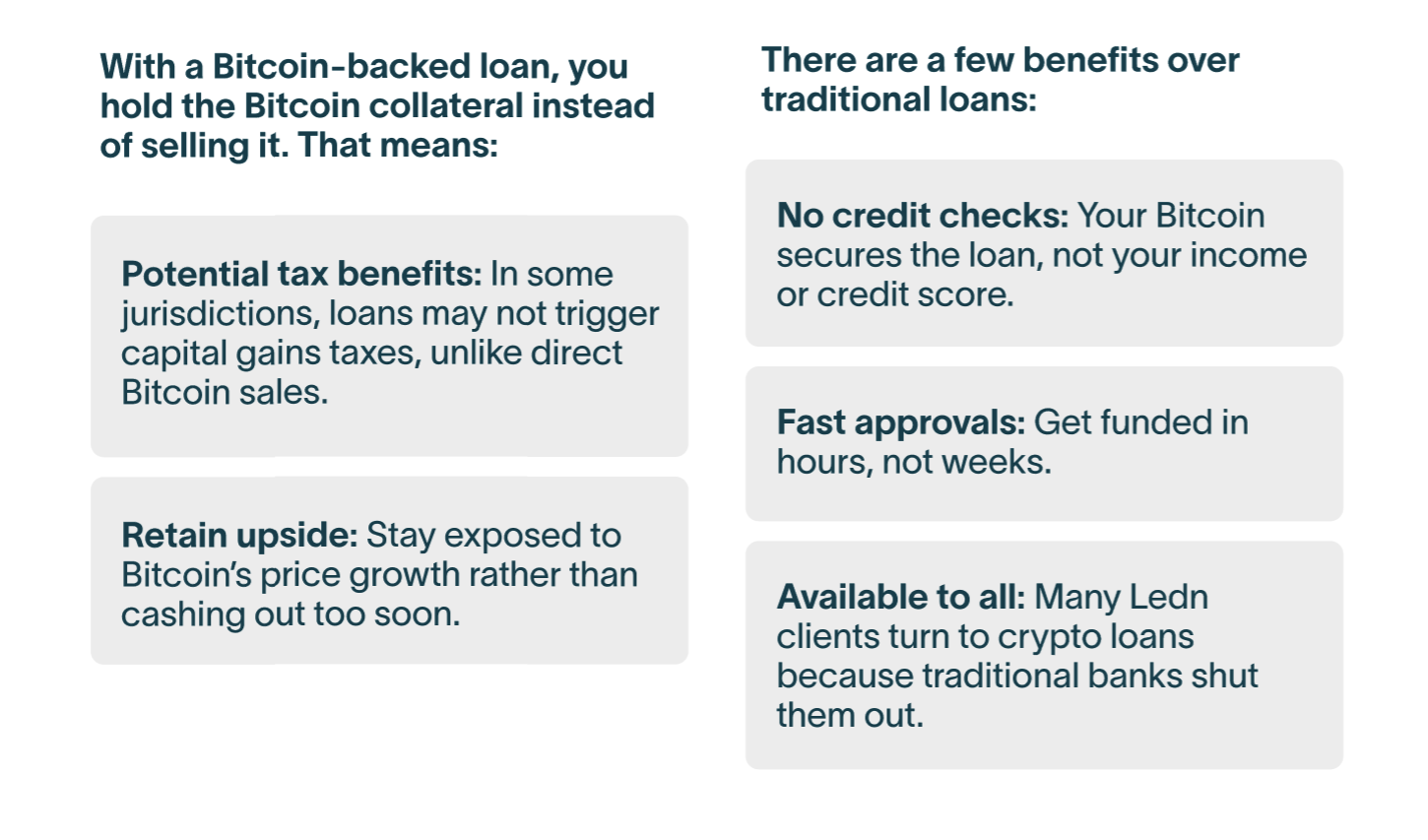
You might be wondering whether the interest costs justify this approach. This depends on your outlook for bitcoin prices and your tax situation. If you expect bitcoin to appreciate significantly, paying loan interest while maintaining your position may cost less than the opportunity cost and taxes from selling.
What Types of Legal Expenses Can Bitcoin Loans Cover?
Bitcoin legal fee financing covers the full spectrum of legal expenses, from initial attorney consultations through trial and appeals. Lenders typically impose no restrictions on specific legal fee uses, treating these loans like general-purpose secured lending.
Common legal expenses funded through Bitcoin-backed loans include attorney retainers (upfront fees securing legal representation), hourly legal fees (ongoing costs for attorney time), court filing fees (administrative costs for lawsuits and motions), expert witness fees (testimony and analysis from specialized professionals), discovery costs (document review, depositions, interrogatories), mediation and arbitration fees (alternative dispute resolution expenses), and appeal costs (continuing litigation beyond trial court).
Different legal matters create different expense profiles. Criminal defense often requires immediate substantial retainers. Civil litigation may involve extended hourly billing over months or years. Business disputes might demand expert testimony and extensive discovery. Bitcoin loans accommodate all these scenarios through flexible loan amounts and terms.
Criminal Defense Financing
Criminal defense situations demand immediate legal representation. Federal criminal defense attorneys often require $25,000 to $100,000 retainers for complex cases. State criminal matters vary but frequently require $10,000 to $50,000 upfront. Bitcoin legal fee financing provides rapid access to these funds without credit checks or lengthy applications.
Civil Litigation Funding
Civil lawsuits span months or years, creating ongoing expense streams. Plaintiffs and defendants both face substantial costs. Bitcoin-backed loans can fund either side, covering attorney fees, expert witnesses, and trial preparation. Some borrowers structure interest-only payments during litigation, then repay principal from settlement proceeds or trial awards.
Business and Commercial Disputes
Contract disputes, partnership disagreements, and intellectual property litigation generate significant legal expenses. Business owners often prefer Bitcoin-backed loans to preserve business capital and maintain cryptocurrency investment positions simultaneously.
How Do Interest Rates and Terms Work?
Interest rates for Bitcoin-backed legal fee loans typically range from 8% to 15% annually as of December 2024, varying based on loan size, term length, loan-to-value ratio, and platform policies. These rates reflect the secured nature of the loans (collateral reduces lender risk) while accounting for Bitcoin volatility management costs.
Loan terms range from several months to multiple years. Legal fee financing often structures terms around litigation timelines, with borrowers repaying from settlement proceeds, trial awards, or business income once legal matters resolve. Some platforms offer interest-only payments during the loan term with principal due at maturity, reducing cash flow pressure during expensive legal proceedings.
Rate Factors:
- LTV ratio: Lower ratios qualify for better rates (less liquidation risk)
- Loan amount: Larger loans may receive volume pricing advantages
- Term length: Longer terms typically carry higher rates (extended risk exposure)
- Collateral custody: Self-custody arrangements may affect pricing
Comparing rates requires understanding the full cost structure. Some platforms charge origination fees (typically 1–3% of loan amount), monthly maintenance fees, or early repayment penalties. Others use simple interest with no additional charges. Calculate total borrowing cost including all fees to make accurate comparisons.
The relationship between Bitcoin-backed loan rates and traditional loan rates is straightforward. Bitcoin loans generally cost more than secured bank loans (which might charge 5–8%) but significantly less than unsecured personal loans or credit cards (which often exceed 15–25%). For borrowers with poor credit or urgent timelines, Bitcoin-backed loans provide better terms than available alternatives.
Annual Percentage Rate (APR): The total yearly cost of borrowing including interest and fees, expressed as a percentage. APR enables direct comparison between loan products with different fee structures.
What Are the Risks and Liquidation Concerns?
Bitcoin price volatility creates the primary risk in Bitcoin-backed legal fee financing. If bitcoin prices drop significantly, collateral value may fall below the minimum threshold required by the loan-to-value ratio, triggering margin calls or liquidation.
Liquidation occurs when lenders sell collateral to recover outstanding loan balances. Most platforms establish liquidation thresholds (often 120–130% of loan value) where automatic selling begins. This protects lenders from collateral becoming insufficient but can force borrowers to realize losses during market downturns.
Here is how liquidation typically unfolds. Bitcoin prices decline, reducing collateral value. The loan-to-value ratio increases because the loan amount remains constant while collateral value drops. Once the LTV exceeds the platform's maximum (often 80–85%), the lender issues a margin call requesting additional collateral or partial loan repayment. If the borrower cannot or does not respond within the specified timeframe (usually 24–48 hours), liquidation begins.
Managing Liquidation Risk
Risk Mitigation Strategies:
- Conservative LTV selection: Borrow less than maximum availability (use 50–60% LTV instead of 70–80%)
- Maintain reserve collateral: Keep additional bitcoin available to respond to margin calls
- Set price alerts: Monitor bitcoin prices and add collateral proactively during declines
- Shorter loan terms: Reduce exposure to extended volatility periods
- Partial prepayments: Reduce principal during stable or rising price periods
Understanding your liquidation price is critical. Calculate this by determining the bitcoin price at which your collateral value equals the liquidation threshold. For example, with a $50,000 loan at 130% liquidation threshold, your collateral must maintain $65,000 value. If you pledged 2 bitcoin, liquidation begins when bitcoin drops to $32,500 per coin ($65,000 divided by 2).
Some borrowers time their Bitcoin-backed loans around legal expense schedules, minimizing the loan duration and volatility exposure. If you know a legal matter will require $50,000 over six months, you might borrow incrementally rather than taking the full amount upfront, reducing both interest costs and liquidation risk.
How Does This Compare to Traditional Legal Financing?
Bitcoin legal fee financing occupies a distinct position among legal funding options, offering unique advantages compared to traditional alternatives. Understanding these differences helps borrowers select appropriate financing for their situations.
Traditional Legal Financing Options:
Bank loans: Banks offer personal loans or lines of credit for legal expenses, typically requiring good credit scores (680+), income verification, and 1–3 week approval processes. Interest rates range from 6–12% for well-qualified borrowers. Banks may scrutinize loan purposes and impose restrictions on legal matter types.
Credit cards: Some people charge legal fees to credit cards, accessing funds immediately but paying 18–25% interest rates. Credit limits often prove insufficient for substantial legal matters, and high utilization harms credit scores.
Litigation funding companies: Specialized firms provide non-recourse funding for plaintiffs, taking percentages of eventual settlements or awards (often 30–50%). These arrangements involve no upfront repayment obligations but carry extremely high effective costs if cases succeed.
Home equity loans: Property owners can borrow against home equity at 5–9% rates, but approval requires extensive documentation, appraisals, and often 30–60 days processing time. Home equity loans also place primary residences at risk.
Bitcoin-Backed Legal Fee Financing Advantages:
- Speed: 24–48 hour approval versus weeks for traditional options
- No credit requirements: Collateral determines approval, not credit history
- Tax efficiency: Avoids capital gains from selling appreciated bitcoin
- Preserve investment position: Maintain bitcoin exposure during legal proceedings
- Flexible qualification: Works for self-employed, international clients, or those with credit challenges
Bitcoin-Backed Legal Fee Financing Disadvantages:
- Volatility risk: Bitcoin price drops can trigger margin calls or liquidation
- Higher rates than secured bank loans: Typically 8–15% versus 6–10% for traditional secured lending
- Requires bitcoin holdings: Not accessible to those without existing cryptocurrency
- Platform risk: Lending platforms vary in security, custody practices, and reliability
The best option depends on your specific circumstances. Bitcoin holders facing urgent legal matters with insufficient credit or documentation for bank loans often find Bitcoin-backed financing ideal. Those with excellent credit and time for traditional processes might secure lower rates through banks. Plaintiffs with strong cases but no assets might explore contingency arrangements or litigation funding.
What Should You Know About Tax Implications?
Bitcoin legal fee financing creates specific tax considerations that borrowers should understand before proceeding. Tax treatment affects the overall cost and strategy for using Bitcoin-backed loans.
According to IRS Notice 2014-21, bitcoin is treated as property for federal tax purposes. Selling bitcoin triggers capital gains taxes on any appreciation from purchase price to sale price. This applies whether you sell for cash or exchange for goods and services. Capital gains tax rates range from 0–20% for long-term holdings (over one year) plus potential 3.8% net investment income tax, or ordinary income rates up to 37% for short-term holdings.
Bitcoin-backed loans avoid these taxes because borrowing is not a taxable event. You retain ownership of your bitcoin (though pledged as collateral), and receiving loan proceeds does not constitute income. This tax efficiency becomes substantial for appreciated holdings.
Consider this example. You purchased 1 bitcoin for $20,000 in 2022. By December 2024, that bitcoin is worth $45,000. You need $30,000 for attorney fees. If you sell bitcoin to raise funds, you recognize a $25,000 capital gain. At 20% long-term capital gains rate plus 3.8% net investment income tax, you pay approximately $5,950 in federal taxes, requiring you to sell additional bitcoin to cover both legal fees and tax liability. Using a Bitcoin-backed loan instead, you borrow $30,000 with your bitcoin as collateral, pay interest on the loan, but avoid the immediate $5,950 tax bill.
Capital Gains Tax: Federal tax on profit from selling assets including bitcoin, calculated as sale price minus purchase price (cost basis). Long-term rates (holdings over one year) range from 0–20% depending on income level.
Interest payments on Bitcoin-backed loans may be tax-deductible depending on loan use. According to IRS Publication 535, business interest expenses are generally deductible. If you use loan proceeds for business legal expenses (defending a business lawsuit, resolving commercial disputes), the interest may qualify as a deductible business expense. Personal legal matters typically do not generate deductible interest. Consult a tax professional for guidance specific to your situation.
State tax considerations add another layer. Some states impose capital gains taxes aligned with federal treatment, while others have unique rules. California, for instance, taxes capital gains as ordinary income at rates up to 13.3%, making Bitcoin-backed loans particularly advantageous for California residents with appreciated holdings.
Our article on Bitcoin holdings strategies covers additional tax planning considerations for long-term bitcoin investors:
https://www.rhinobitcoin.com/blog/bitcoin-holdings
How to Choose a Bitcoin Lending Platform for Legal Fees
Selecting the right Bitcoin lending platform significantly impacts your borrowing experience, costs, and security. Platform differences include interest rates, loan terms, custody arrangements, security practices, and customer support quality.
Start by evaluating platform reputation and operational history. Established platforms with multi-year track records demonstrate stability and reliability. Research customer reviews, regulatory compliance, and any history of security incidents or customer disputes. Platforms operating in regulated jurisdictions generally provide better consumer protections than offshore or unregulated alternatives.
Platform Evaluation Criteria:
Security and custody: How does the platform secure collateral? Look for institutional-grade security including multi-signature wallets, cold storage, insurance coverage, and independent security audits. Verify whether platforms hold customer assets separately from company assets and whether they engage in rehypothecation (lending out customer collateral).
Rate competitiveness: Compare interest rates, origination fees, maintenance fees, and prepayment penalties across multiple platforms. Calculate total borrowing cost using APR to account for all charges. Some platforms advertise low rates but add substantial fees that increase true borrowing costs.
LTV flexibility: Evaluate maximum loan-to-value ratios and liquidation policies. Platforms offering conservative LTV options with clear liquidation procedures provide better risk management. Understand margin call processes, including notification methods and response timeframes.
Term options: Confirm available loan terms match your legal expense timeline. Some platforms specialize in short-term loans (3–12 months), while others accommodate multi-year terms. Interest-only payment options reduce cash flow requirements during expensive legal proceedings.
Customer support: Legal matters create stress, and responsive support becomes valuable during margin calls or account issues. Test platform responsiveness before committing significant collateral. Platforms offering 24/7 support provide better protection during Bitcoin price volatility.
Regulatory compliance: Platforms registered with FinCEN as Money Services Businesses and complying with state lending regulations demonstrate commitment to legal operations. This matters for consumer protections and platform longevity.
Platforms like Rhino Bitcoin offer comprehensive Bitcoin financial services including Bitcoin-backed lending, combining competitive rates with institutional security and Lightning Network integration for everyday Bitcoin transactions. When evaluating platforms, prioritize those with transparent terms, clear custody policies, and established reputations.
Frequently Asked Questions
Can I use a Bitcoin loan for any legal expense?
Yes, Bitcoin-backed loans for legal expenses typically impose no restrictions on specific legal matter types. Funds can cover criminal defense, civil litigation, business disputes, family law matters, or any other legal representation costs.
Do Bitcoin legal fee loans require credit checks?
Most Bitcoin-backed lending platforms do not require credit checks because collateral value determines approval rather than credit history. This makes these loans accessible to borrowers with poor credit, limited credit history, or unconventional income sources.
What happens if bitcoin prices drop during my loan?
If bitcoin prices decline significantly, your loan-to-value ratio increases, potentially triggering margin calls requiring additional collateral or partial repayment. Failure to respond may result in liquidation where the lender sells collateral to recover the loan balance.
How quickly can I receive loan funds?
Approval and funding timelines vary by platform but typically range from 24–48 hours after submitting required documentation and transferring collateral. Some platforms offer same-day funding for urgent situations, while others may require 3–5 business days.
Are Bitcoin loan interest payments tax-deductible?
Interest deductibility depends on loan use. Business legal expenses may generate deductible interest under IRS Publication 535, while personal legal matters typically do not. Consult a tax professional for guidance specific to your circumstances and jurisdiction.
Can I repay the loan early without penalties?
Prepayment policies vary by platform. Some allow penalty-free early repayment, while others charge prepayment fees to compensate for lost interest revenue. Review loan agreements carefully and calculate whether early repayment saves money after accounting for any penalties.
What loan-to-value ratio should I choose?
Conservative borrowers typically select 50–60% LTV ratios, providing substantial buffer against Bitcoin price volatility. This reduces liquidation risk but limits borrowing capacity. More aggressive borrowers might use 70–80% LTV for maximum funds but must actively monitor prices and maintain reserve collateral.
Do I maintain ownership of my bitcoin during the loan?
Yes, you retain legal ownership of bitcoin pledged as collateral, though the lender holds custody during the loan term. Upon full repayment, the lender returns your bitcoin. This structure preserves your exposure to price appreciation while providing liquidity access.
Can international clients access Bitcoin legal fee financing?
Many Bitcoin lending platforms serve international clients, though specific eligibility varies by platform and jurisdiction. Regulatory restrictions may limit service availability in certain countries. Bitcoin's borderless nature makes it particularly useful for international legal matters requiring cross-border funding.
What documents do I need to apply for a Bitcoin legal fee loan?
Documentation requirements vary but typically include identity verification (government-issued ID), proof of Bitcoin ownership, wallet addresses for collateral transfer, and loan application details specifying amount and purpose. Some platforms require additional documentation for larger loan amounts or specific jurisdictions.
Conclusion
Bitcoin legal fee financing provides bitcoin holders with rapid access to capital for attorney fees, litigation costs, and legal representation without selling appreciated holdings or enduring traditional credit checks. By pledging bitcoin as collateral, borrowers preserve long-term investment positions while securing funds within 24–48 hours to address urgent legal matters.
This approach offers distinct advantages including speed, accessibility regardless of credit history, tax efficiency compared to selling bitcoin, and maintaining exposure to potential price appreciation. However, Bitcoin volatility creates liquidation risks requiring careful loan-to-value ratio selection, price monitoring, and reserve collateral management.
Key considerations before proceeding:
- Calculate your liquidation price and maintain conservative LTV ratios (50–60%)
- Compare platform rates, fees, security practices, and custody arrangements
- Understand tax implications and potential interest deductibility for business matters
- Establish margin call response plans including reserve collateral availability
For those ready to access liquidity for legal expenses while preserving bitcoin holdings, explore Rhino Bitcoin's Bitcoin-backed lending solutions designed to provide fast funding with institutional-grade security:
https://www.rhinobitcoin.com
References
- Internal Revenue Service. “IRS Notice 2014-21: Virtual Currency Guidance.” IRS.gov. https://www.irs.gov/pub/irs-drop/n-14-21.pdf
- Internal Revenue Service. “Publication 535: Business Expenses.” IRS.gov. https://www.irs.gov/publications/p535
- Financial Crimes Enforcement Network. “Application of FinCEN's Regulations to Certain Business Models Involving Convertible Virtual Currencies.” FinCEN.gov. https://www.fincen.gov/resources/statutes-regulations/guidance/application-fincens-regulations-certain-business-models
- Bitcoin.org. “How Bitcoin Works.” Bitcoin.org. https://bitcoin.org/en/how-it-works
- Mempool.space. “Bitcoin Network Statistics.” Mempool.space. https://mempool.space
Important Disclaimers
Disclaimer: Educational information only. Not financial, legal, medical, or tax advice.
Risk Warnings: All investments carry risk, including loss of principal. Past performance is not indicative of future results. Bitcoin is a volatile asset and may not be suitable for all investors.
Conflicts of Interest: Rhino Bitcoin provides Bitcoin financial services. This content is educational and may reference our products.
.png)
.png)