
Bitcoin IRA Guide 2025: Complete Crypto Retirement Investing
Complete Bitcoin IRA guide covering setup, 401k rollovers, fees & tax benefits. Learn cryptocurrency retirement investing with professional custody solutions.
Buy Bitcoin with Zero Fees with Rhino
The most secure way to stack sats. Simple, fast, and zero trading fees.
Bitcoin IRA Guide 2025: Complete Bitcoin Retirement Investing
Bitcoin Individual Retirement Accounts (IRAs) allow Americans to hold Bitcoin and other cryptocurrencies in tax-advantaged retirement accounts, offering the potential for significant long-term wealth accumulation while also enjoying the same tax benefits as traditional retirement savings.
A Bitcoin IRA specifically, functions identically to a conventional IRA but holds digital assets instead of traditional stocks and bonds, enabling investors to diversify their retirement portfolios.
The approval of Bitcoin Exchange-Traded Funds (ETFs) in early 2024 has dramatically increased institutional acceptance and simplified Bitcoin retirement investing. This regulatory milestone has made Bitcoin IRAs more accessible and legitimate in the eyes of both traditional financial advisors and conservative investors, leading to a ~200% surge in interest over the past year.
Key Points:
- Bitcoin IRAs provide tax-deferred or tax-free growth depending on account type (Traditional vs Roth)
- Annual contribution limits match traditional IRAs: $7,000 in 2024 ($8,000 if age 50+)
- Self-directed IRA custodians are required to hold and secure the Bitcoin assets
- 401(k) to Bitcoin IRA rollovers are permitted without tax penalties when done correctly
- Qualified withdrawals from Roth Bitcoin IRAs are completely tax-free after age 59½
- Bitcoin IRAs require specialized custodians who understand crypto custody and security
- All IRA rules regarding Required Minimum Distributions (“RMD”s) also apply to Bitcoin holdings.
What Is a Bitcoin IRA?
A Bitcoin IRA is a self-directed Individual Retirement Account that holds Bitcoin as an investment asset instead of traditional stocks, bonds, or mutual funds. These accounts operate under the same Internal Revenue Service (IRS) rules as conventional IRAs but require specialized digital asset custodians who can securely store and manage these assets.
Self-Directed IRA: A retirement account that allows the account holder to make investment decisions and invest in a broader range of assets beyond traditional stocks and bonds, including real estate, precious metals, and cryptocurrencies.
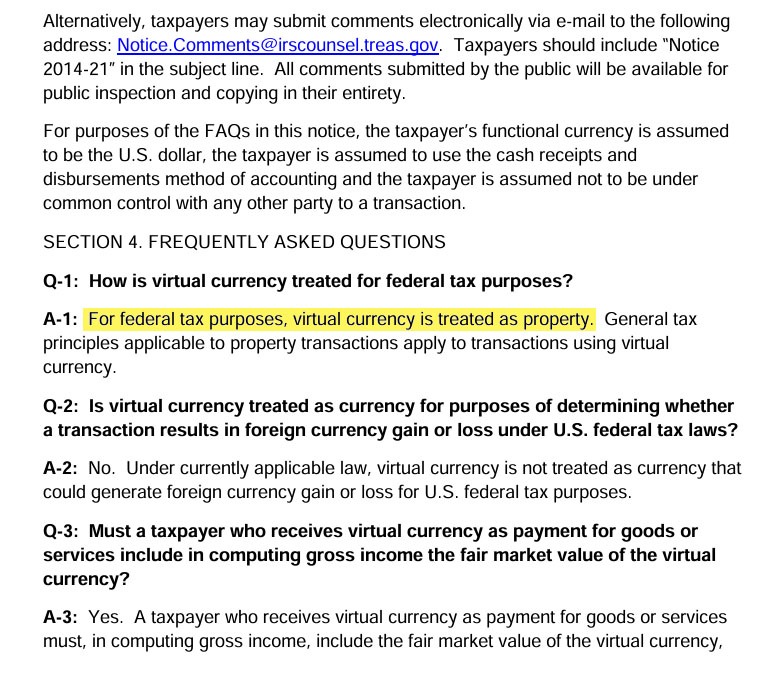
Bitcoin IRAs became possible after the IRS officially classified Bitcoin as ‘property’ in 2014, making it eligible for inclusion in retirement accounts. The account structure follows all standard IRA regulations, including contribution limits, distribution requirements, and prohibited transaction rules.
The primary difference lies in the underlying asset being held and the specialized infrastructure required for cryptocurrency custody.
IRS Recognized Virtual Currencies as “Property” in 2014
Source: IRS.gov
The growing acceptance of Bitcoin IRAs reflects a broader shift toward digital asset adoption in traditional finance. Major financial institutions now recognize Bitcoin as a legitimate asset class, and the approval of Bitcoin ETFs has provided additional validation for crypto retirement investing.
Key characteristics of Bitcoin IRAs include:
- Regulatory compliance: Full adherence to IRS retirement account rules and regulations
- Professional custody: Qualified custodians handle all Bitcoin storage and security
- Tax advantages: Same tax treatment as traditional IRAs based on account type
- Investment flexibility: Ability to hold Bitcoin alongside other permitted alternative assets
- Institutional-grade security: Multi-signature wallets and cold storage protection
- Audit trails: Complete transaction records for tax reporting and compliance purposes.
How Do Bitcoin IRAs Work?
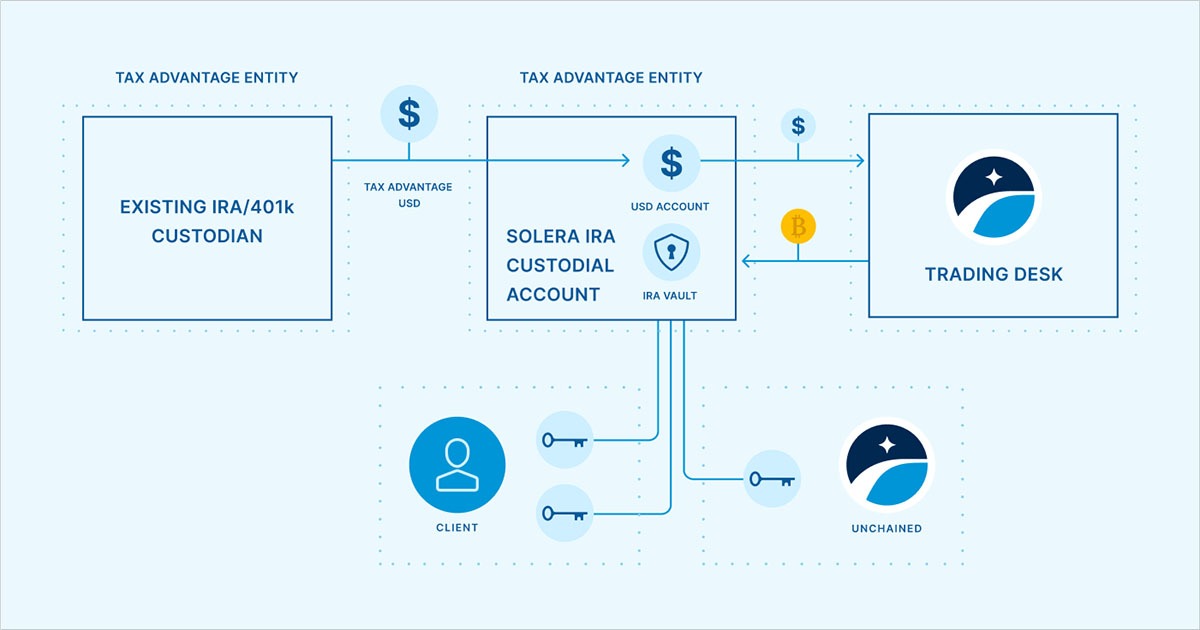
Bitcoin IRAs function through a three-party structure involving an account holder, a qualified custodian, and a secure storage provider. The custodian maintains legal ownership of the Bitcoin on behalf of the IRA, while the account holder directs investment decisions and the storage provider ensures asset security.
The process begins when an investor opens a self-directed IRA with a custodian that specifically supports their digital asset investment. The custodian must be approved by the IRS and typically partners with specialized Bitcoin storage companies that provide institutional-grade security. This partnership ensures compliance with IRS requirements while maintaining the highest standards of digital asset protection.
How Bitcoin IRAs Work
Source: Unchained
Qualified Custodian: A financial institution approved by the IRS to hold retirement account assets, responsible for maintaining accurate records, executing transactions, and ensuring regulatory compliance. For Bitcoin IRAs, custodians must also understand cryptocurrency regulations and security requirements.
Investment transactions occur through the custodian's platform, where account holders can direct purchases and sales of Bitcoin using funds within their IRA. The custodian coordinates with the storage provider to execute these transactions while maintaining detailed records for tax and compliance purposes. All Bitcoin remains in secure storage controlled by the custodian, ensuring the account holder never takes direct possession of the assets.
The operational workflow typically includes:
- Account funding: Contributions or rollover funds are deposited into the IRA
- Investment direction: Account holder instructs custodian to purchase Bitcoin
- Secure storage: Bitcoin is transferred to institutional custody storage
- Portfolio monitoring: Account holders track performance through custodian platforms
- Transaction recording: All activities are documented for IRS reporting requirements
- Distribution processing: Withdrawals are handled according to IRA rules and regulations
This structure ensures that Bitcoin IRAs maintain the same legal protections and tax advantages as traditional retirement accounts while providing the technological infrastructure necessary for secure digital asset investing.
Traditional vs Roth Bitcoin IRA
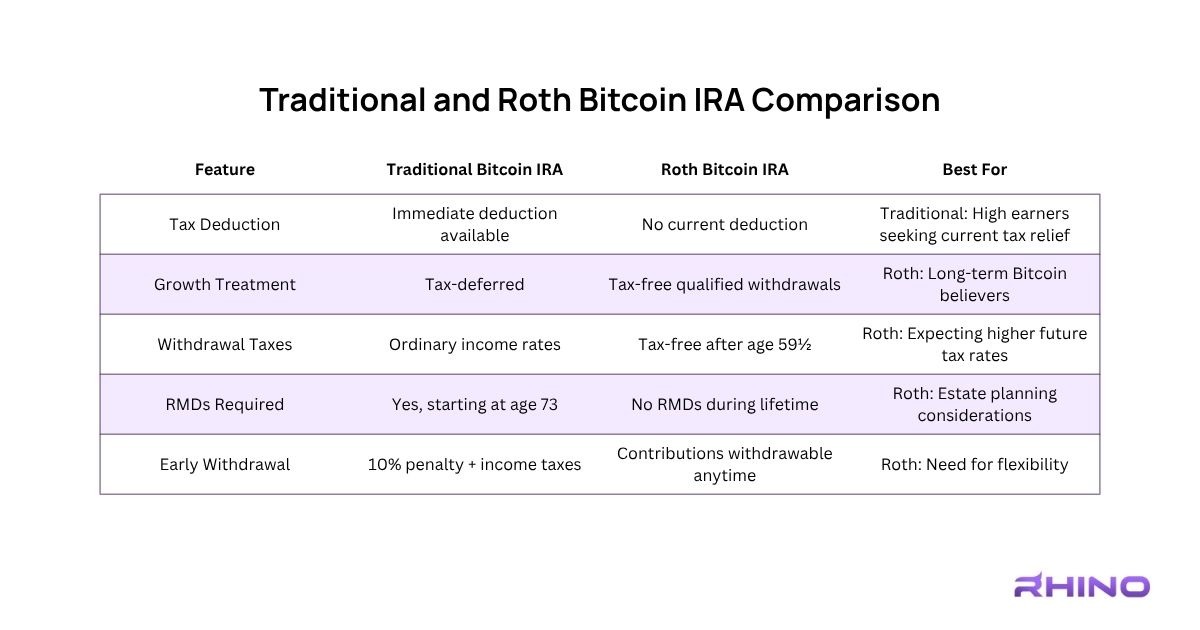
Bitcoin IRAs are available in both Traditional and Roth configurations, each offering distinct tax advantages that align with different investment strategies and financial situations. The choice between Traditional and Roth significantly impacts the long-term tax treatment of Bitcoin appreciation and withdrawals and as such, the decision on which to choose is critical for investors.
Traditional Bitcoin IRAs provide immediate tax deductions for contributions, allowing investors to reduce their current taxable income while deferring taxes until retirement withdrawals. This structure benefits individuals in higher tax brackets who expect to be in lower tax brackets during retirement. All Bitcoin appreciation grows tax-deferred, but both contributions and gains are taxed as ordinary income upon withdrawal.
Traditional vs Roth Bitcoin IRA

Source: AltoIRA
Tax-Deferred Growth: Investment appreciation that is not subject to capital gains taxes while held within a retirement account, allowing compound growth without annual tax obligations. Taxes are paid only when funds are withdrawn from the account.
Roth Bitcoin IRAs require after-tax contributions with no immediate tax deduction, but offer completely tax-free withdrawals of both contributions and gains after age 59½ and a five-year holding period. This structure is particularly attractive for Bitcoin investments due to the Bitcoin’s potential for substantial long-term appreciation. Young investors and those expecting higher tax rates in retirement often prefer Roth accounts.
Income limitations apply to Roth IRA contributions, with phase-outs beginning at $138,000 for single filers and $218,000 for married filing jointly in 2024. Traditional IRA deductibility may also be limited for high earners with workplace retirement plans. These limitations can influence the choice between Traditional and Roth Bitcoin IRAs.
Key decision factors include:
- Current vs future tax rates: Traditional IRAs benefit those expecting lower retirement tax rates
- Time horizon: Longer investment periods favor Roth accounts for tax-free growth
- Income levels: Roth eligibility restrictions may limit options for high earners
- Estate planning: Roth IRAs offer better wealth transfer benefits
- Cash flow: Traditional IRAs provide immediate tax relief for current expenses
- Investment beliefs: Strong Bitcoin conviction may favor tax-free Roth withdrawals
Bitcoin IRA Tax Benefits
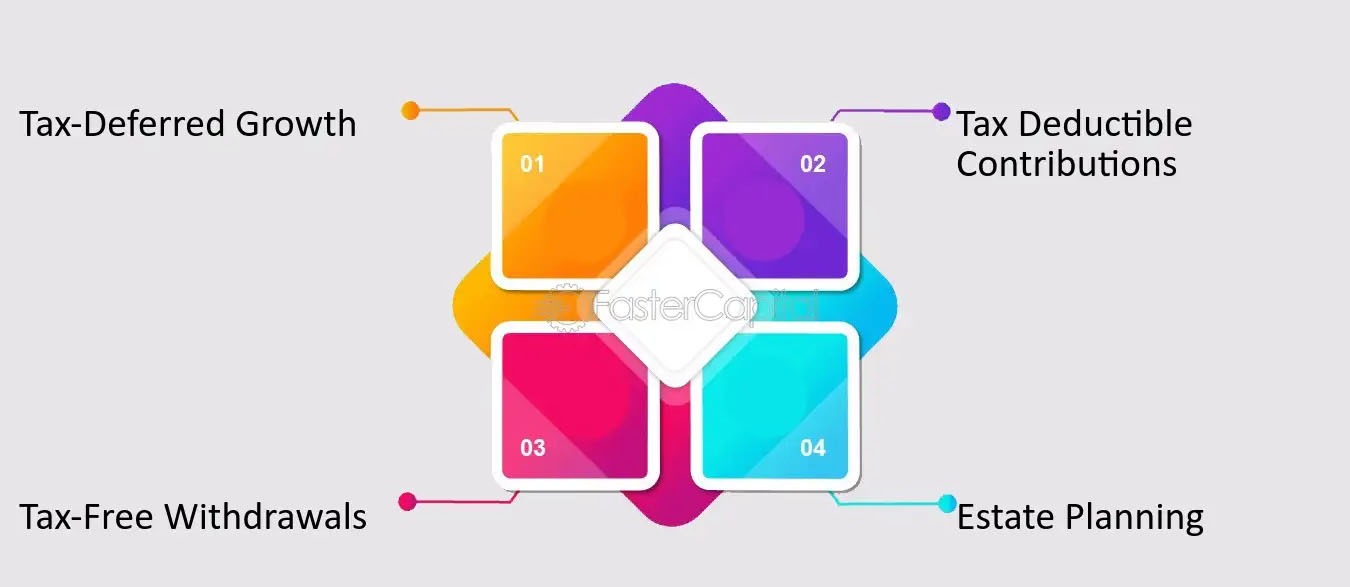
Bitcoin IRAs provide substantial tax advantages that can significantly enhance long-term wealth accumulation compared to taxable Bitcoin investing. These benefits become particularly valuable given Bitcoin's historical volatility and potential for dramatic price appreciation over extended time periods.
The primary tax benefit is the elimination of annual capital gains taxes on Bitcoin trading within the IRA. In taxable accounts, every Bitcoin sale triggers a taxable event requiring capital gains reporting, which can create significant tax obligations during periods of active trading or portfolio rebalancing. Bitcoin IRAs allow unlimited buying and selling without immediate tax consequences.
Tax Benefits of Bitcoin IRAs
Source: FasterCapital
Capital Gains Tax: A tax imposed on the profit realized from selling an asset for more than its purchase price. In taxable accounts, Bitcoin sales are subject to capital gains rates of 0%, 15%, or 20% depending on income level and holding period.
Dollar-cost averaging strategies become more tax-efficient within Bitcoin IRAs since regular purchases and periodic rebalancing don't generate taxable events. This allows investors to implement sophisticated investment strategies without worrying about tax implications, potentially improving long-term returns through more optimal position management.
For Traditional Bitcoin IRAs, contributions may be tax-deductible depending on income levels and participation in employer retirement plans. This immediate tax benefit effectively reduces the net cost of Bitcoin investments, allowing larger position sizes with the same after-tax contribution amount. The tax deferral on growth means that all Bitcoin appreciation compounds without annual tax drag.
Roth Bitcoin IRA benefits become especially powerful for long-term Bitcoin investors. Consider an investor who contributes $6,000 annually to a Roth Bitcoin IRA for 30 years. If Bitcoin appreciates significantly over this period, all gains are withdrawn completely tax-free after age 59½. This compares favorably to taxable investing where capital gains taxes would apply to the entire appreciation.
Tax benefit calculations demonstrate the potential impact:
- Taxable account: $100,000 Bitcoin gain taxed at 20% capital gains rate = $20,000 tax obligation
- Traditional IRA: Tax deferral allows full $100,000 to compound, but withdrawal taxed as ordinary income
- Roth IRA: Complete tax-free withdrawal of both principal and $100,000 gain
- Annual trading: Eliminates multiple taxable events that can reduce compound growth
- Rebalancing flexibility: No tax constraints on portfolio adjustments and optimization strategies
Additional tax benefits include the ability to pass Bitcoin IRAs to heirs with continued tax advantages, particularly beneficial for Roth accounts where beneficiaries can stretch tax-free withdrawals over their lifetimes. Estate planning becomes more efficient when Bitcoin appreciation occurs within retirement account structures.
How to Open a Bitcoin IRA
Opening a Bitcoin IRA requires selecting a qualified custodian that specializes in bitcoin retirement accounts and following a structured process to ensure regulatory compliance. The setup process typically takes 1-2 weeks and involves several important steps that must be completed in the proper sequence.
The first step involves researching and selecting an appropriate Bitcoin IRA custodian. Not all self-directed IRA custodians support cryptocurrency investments, so it's essential to choose one with specific Bitcoin expertise and proper regulatory approvals.
IRA Custodian: A financial institution legally responsible for holding retirement account assets, maintaining records, and ensuring compliance with IRS regulations. Bitcoin IRA custodians must also provide secure crypto storage and specialized reporting capabilities.

Source: FasterCapital
The account opening process follows these sequential steps:
Step 1: Choose Account Type and Custodian - Select between Traditional and Roth IRA based on tax strategy and income eligibility. Research custodians' fees, security measures, insurance coverage, and customer support quality. Verify the custodian's regulatory compliance and Bitcoin storage partnerships.
Step 2: Complete Application and Identity Verification - Submit the IRA application with required personal information and undergo identity verification procedures. This typically includes providing government-issued identification, Social Security number, and proof of address. Some custodians may require additional documentation for enhanced security.
Step 3: Fund the Account - Transfer funds through contributions, rollovers, or transfers from existing retirement accounts. New contributions are limited to annual IRA limits ($7,000 in 2024, $8,000 if age 50+). Rollover amounts from 401(k)s or other IRAs have no annual limitations but must be completed within 60 days for indirect rollovers.
Step 4: Direct Bitcoin Purchase - Once funds are available, direct the custodian to purchase Bitcoin according to your investment strategy. The custodian will execute the transaction and transfer the Bitcoin to secure custody storage. All purchases are recorded for tax reporting and compliance purposes.
Step 5: Ongoing Management Monitor your account through the custodian's platform and make additional investment decisions as desired. Continue regular contributions if implementing a dollar-cost averaging strategy, and review account performance periodically.
Documentation requirements typically include:
- Government-issued photo ID: Driver's license or passport for identity verification
- Social Security card or tax documentation: For tax reporting setup
- Proof of address: Utility bill or bank statement from the past 90 days
- Employment verification: Recent pay stub or employer letter for income verification
- Existing account statements: If completing rollovers or transfers from other retirement accounts
- Investment direction forms: Specific instructions for Bitcoin purchases and allocation preferences.
The entire process can be completed online with most custodians, though some may require mailed documentation for certain steps. Many providers offer customer support to assist with the setup process and answer questions about Bitcoin IRA regulations and procedures.
401(k) Rollover to Bitcoin IRA
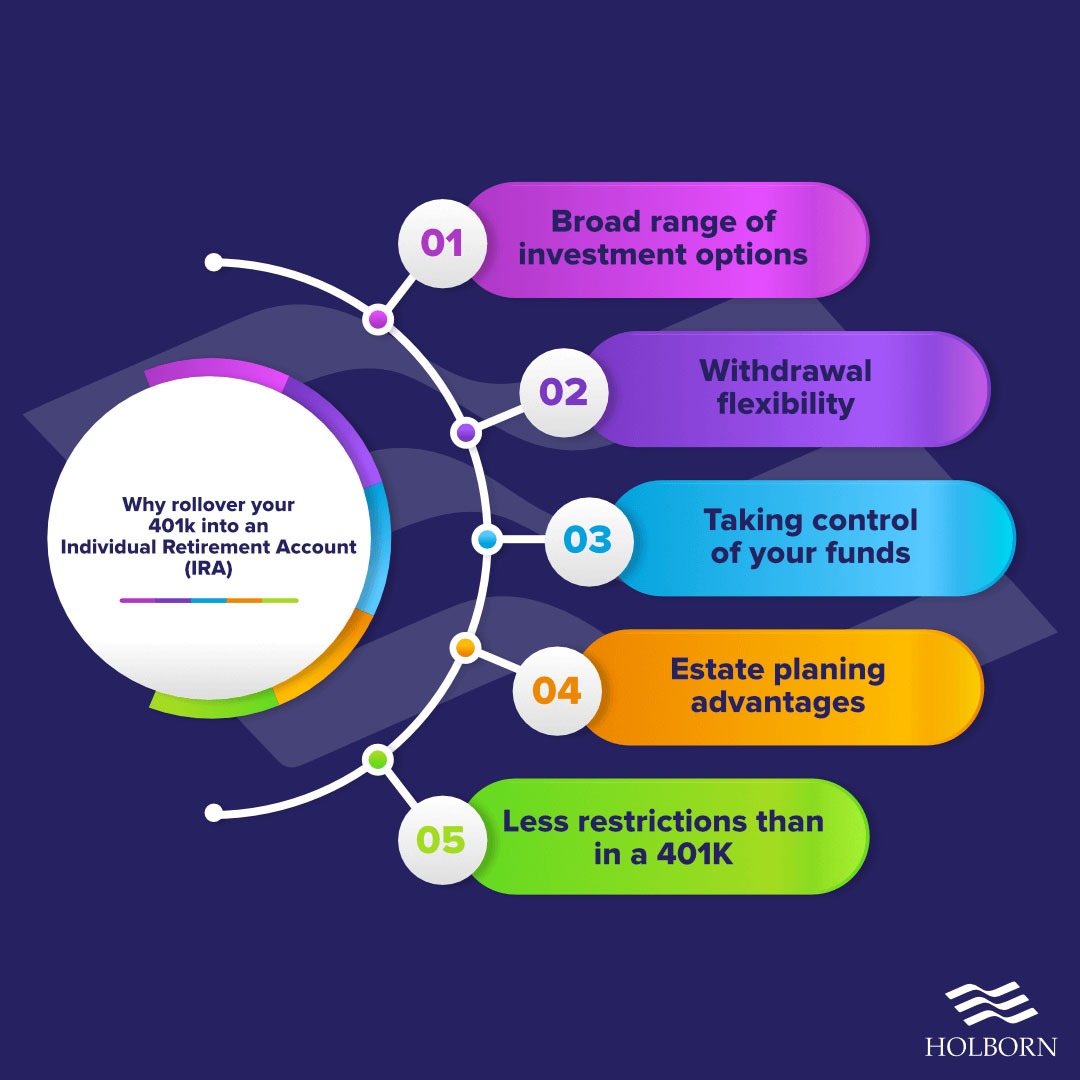
Rolling over a 401(k) to a Bitcoin IRA allows individuals to transfer existing retirement savings into crypto investments without incurring taxes or penalties when executed properly. This process provides access to larger investment amounts than annual contribution limits allow and can be particularly attractive for those seeking Bitcoin exposure in retirement accounts.
Direct rollovers represent the safest method for transferring 401(k) funds to a Bitcoin IRA. In a direct rollover, the 401(k) plan administrator sends funds directly to the new IRA custodian, eliminating the risk of missing deadlines or triggering unwanted tax consequences. The account holder never takes possession of the funds, ensuring the transaction maintains its tax-advantaged status.
Reasons to Rollover your 401k into an IRA
Source: Holborn Assets
Direct Rollover: A transfer of retirement funds directly from one qualified plan to another without the account holder taking possession of the money, eliminating the risk of taxes and penalties associated with 60-day rollover deadlines.
Indirect rollovers require more careful timing and execution but offer additional flexibility. The account holder receives a check from the 401(k) plan and has 60 days to deposit the funds into the new Bitcoin IRA. However, the 401(k) plan will withhold 20% for taxes, requiring the account holder to make up this amount from other sources to avoid penalties on the withheld portion.
Eligibility for 401(k) rollovers depends on employment status and plan provisions. Current employees can typically only roll over funds if their plan allows in-service distributions, usually limited to hardship situations or employees over age 59½. Former employees generally have full access to their 401(k) funds for rollover purposes once employment ends.
The rollover process involves several coordinated steps:
Step 1: Verify Rollover Eligibility - Contact the 401(k) plan administrator to confirm eligibility and available rollover options. Obtain necessary forms and instructions for initiating the transfer. Review any plan-specific restrictions or requirements that might affect the timing or process.
Step 2: Open Bitcoin IRA Account - Complete the Bitcoin IRA setup process with your chosen custodian before initiating the rollover. Ensure the account is fully established and ready to receive incoming funds to avoid delays that could jeopardize the 60-day deadline for indirect rollovers.
Step 3: Initiate the Transfer - Submit rollover paperwork to the 401(k) plan administrator with instructions for direct transfer to the Bitcoin IRA custodian. For direct rollovers, provide the custodian's receiving instructions and account information. For indirect rollovers, request a distribution check made payable to the account holder.
Step 4: Confirm Fund Receipt - Monitor the transfer progress and confirm that funds arrive at the Bitcoin IRA custodian within expected timeframes. Direct rollovers typically take 2-4 weeks, while indirect rollovers must be completed within 60 days of receiving the distribution check.
Step 5: Direct Bitcoin Investment Once funds are available in the Bitcoin IRA, provide investment instructions to the custodian for Bitcoin purchases. Consider implementing a dollar-cost averaging strategy over several weeks or months to reduce the impact of Bitcoin's price volatility on the large lump-sum investment.
Important rollover considerations include:
- One-per-year rule: Indirect rollovers from IRAs are limited to once per 12-month period, though 401(k) rollovers are not subject to this restriction
- Tax withholding: 401(k) plans withhold 20% from indirect rollovers, requiring makeup funds from other sources
- Timing requirements: 60-day deadline for indirect rollovers is strictly enforced with limited exceptions
- Plan restrictions: Some 401(k) plans may limit or prohibit certain types of distributions
- Investment timing: Consider Bitcoin market conditions when deciding whether to invest rollover funds immediately or gradually.
Bitcoin IRA Security and Custody
Bitcoin IRA security relies on institutional-grade custody solutions that exceed the security standards of individual Bitcoin storage while meeting regulatory requirements for retirement account asset protection. Professional custodians implement multiple layers of security to protect against both digital threats and physical risks that could compromise Bitcoin holdings.
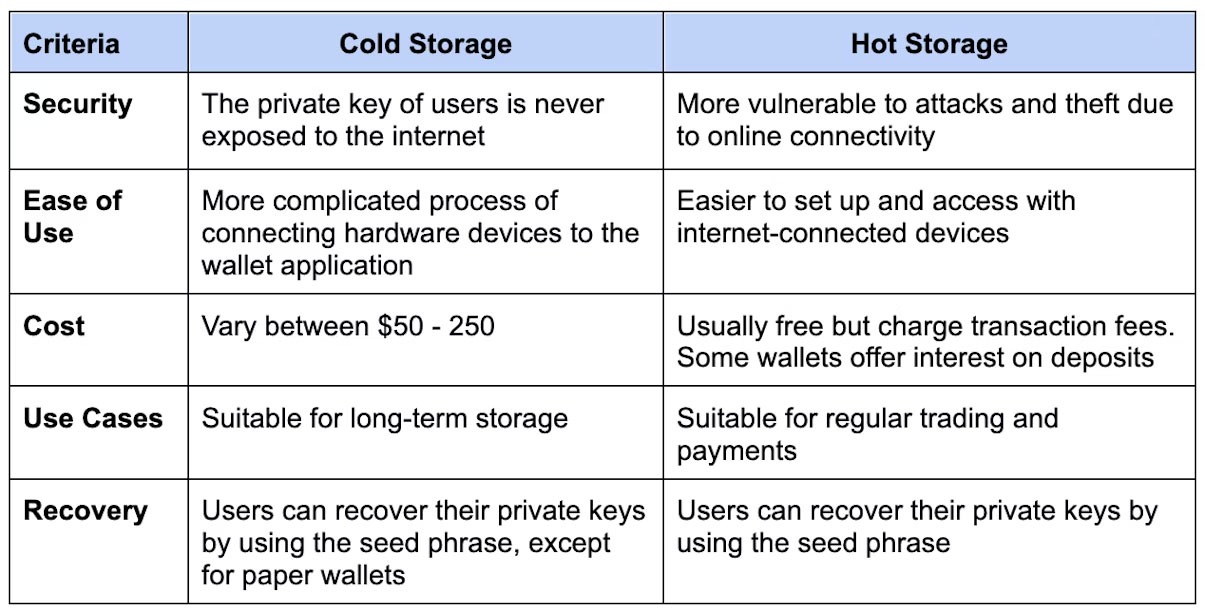
Qualified Bitcoin IRA custodians typically employ cold storage systems where the majority of Bitcoin is kept offline in hardware devices disconnected from the internet. This approach eliminates the risk of online hacking attempts while ensuring that funds remain accessible for legitimate transactions when properly authorized by account holders.
Cold Storage: A method of storing Bitcoin completely offline using hardware devices or paper wallets that are physically disconnected from the internet, providing maximum security against online threats and hacking attempts.
Cold vs Hot Storage
Source: Swan Bitcoin
Multi-signature technology provides an additional security layer where multiple cryptographic keys are required to authorize Bitcoin transactions. This distributed control ensures that no single individual or system can independently move funds, requiring collaboration between the custodian, storage provider, and sometimes the account holder to complete transactions.
Professional custody arrangements typically include comprehensive insurance coverage that protects against theft, loss, or custodial errors. This insurance provides additional protection beyond what individual Bitcoin holders can typically obtain, offering peace of mind for retirement investors who cannot afford to lose their long-term savings to security incidents.
Physical security measures complement digital protections through:
- Geographically distributed storage: Bitcoin keys stored in multiple secure locations to prevent single points of failure
- Bank-grade vaults: Physical storage in facilities with armed security, surveillance systems, and access controls
- Disaster recovery: Backup systems and procedures to ensure fund recovery in case of natural disasters or facility damage
- Regular audits: Third-party security assessments and compliance verification to maintain the highest standards
- Employee screening: Background checks and security clearances for all personnel with access to custody systems
- Segregated storage: Clear separation of individual account holdings to prevent commingling of assets.
The custody process maintains detailed audit trails that document every transaction and access event. These records support both regulatory compliance and provide transparency for account holders who want to verify the security and integrity of their Bitcoin holdings.
Regulatory oversight ensures that Bitcoin IRA custodians meet the same fiduciary standards as traditional retirement account providers. This includes requirements for proper asset segregation, regular reporting, and adherence to industry best practices for digital asset protection.
Account holders retain investment control while benefiting from professional security management. They can direct purchases and sales through secure platforms while the custodian handles all aspects of Bitcoin storage and protection. This arrangement provides the security benefits of institutional custody while maintaining the investment flexibility that makes Bitcoin IRAs attractive for retirement planning.
Bitcoin IRA Fees and Costs
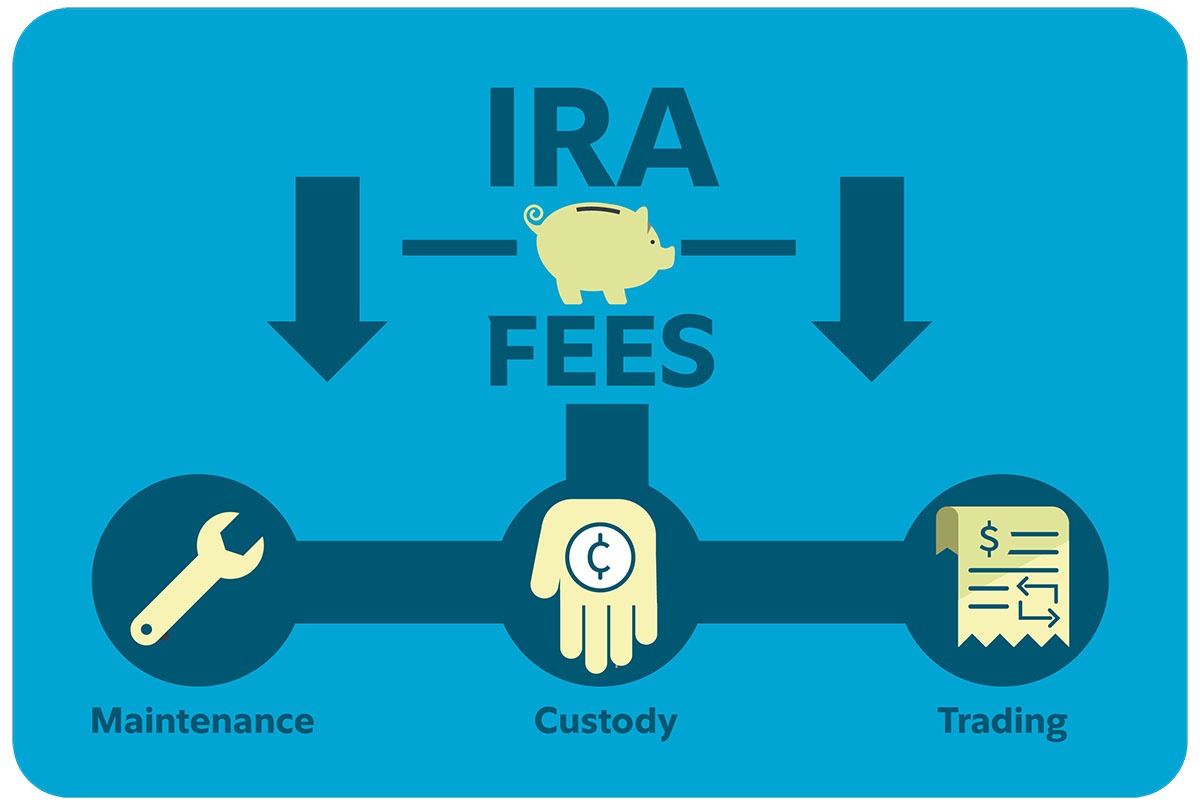
Bitcoin IRA fees typically include setup costs, annual maintenance fees, transaction charges, and storage fees that collectively range from 1-3% annually depending on account size and provider. Understanding the complete fee structure is essential for evaluating the long-term cost-effectiveness of Bitcoin retirement investing compared to alternatives.
Setup fees for Bitcoin IRAs generally range from $0-$300 and cover account establishment, identity verification, and initial documentation processing. Some custodians waive setup fees for larger initial investments or promotional periods, making it important to compare offers when selecting a provider.
Different Types of IRA Fees
Source: Fidelity Investments
Asset Under Management (AUM) Fee: An annual fee charged as a percentage of total account value, typically ranging from 0.5% to 2.5% for Bitcoin IRAs, covering custody services, security measures, and ongoing account administration.
Annual maintenance fees represent the largest ongoing cost component, typically structured as either flat annual fees ($100-$500) or percentage-based fees (0.5-2.5% of account value). Percentage-based fees become more cost-effective for smaller accounts, while flat fees benefit larger investors. Some providers offer sliding fee scales that reduce percentages as account values increase.
Transaction fees apply to Bitcoin purchases and sales within the IRA, usually ranging from 0.5-2% per transaction. These fees cover the costs of executing trades, coordinating with storage providers, and maintaining transaction records. High-frequency traders should carefully evaluate transaction costs, while long-term buy-and-hold investors face minimal impact from these charges.
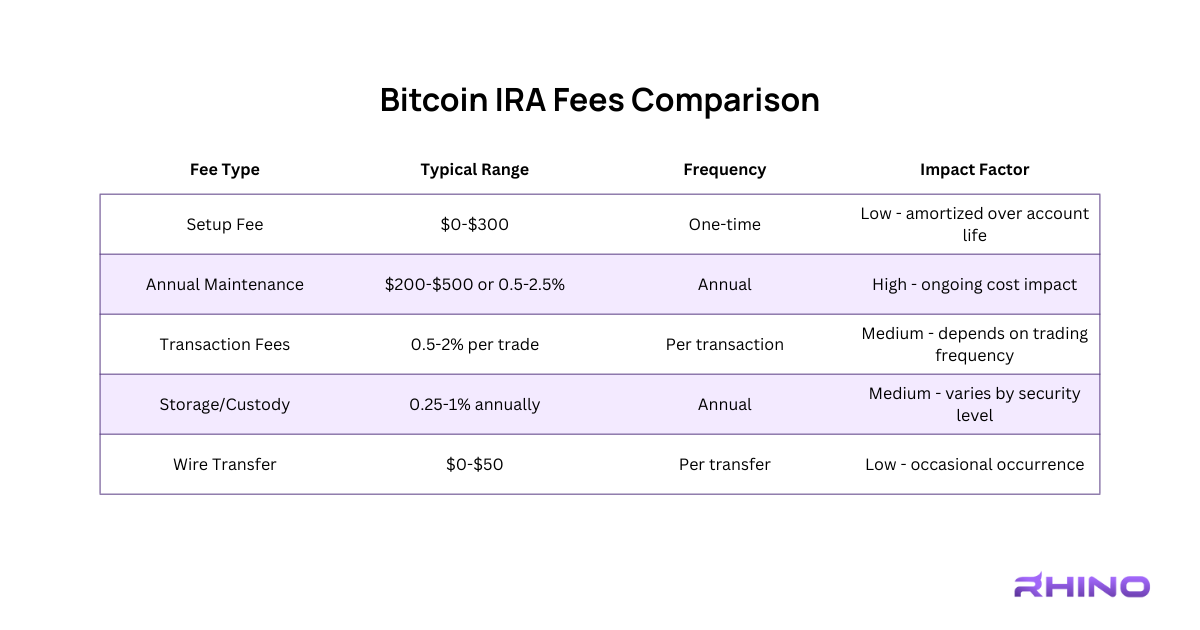
Storage and custody fees compensate for the specialized security infrastructure required to protect Bitcoin holdings. These fees typically range from 0.25-1% annually and cover cold storage systems, insurance coverage, and security monitoring. Higher fees often correlate with enhanced security measures and insurance coverage amounts.
Fee comparison strategies should consider total cost of ownership over extended time periods. A provider with lower annual fees but higher transaction costs might be more expensive for investors who plan to make regular contributions. Conversely, higher annual fees might be justified by superior security measures or customer service quality.
Additional costs to consider include:
- Wire transfer fees: $0-$50 for incoming or outgoing transfers, typically required for large transactions
- Paper statement fees: $5-$15 per statement for investors who prefer mailed documentation
- Account closure fees: $50-$200 if transferring to another custodian before minimum holding periods
- Expedited processing: Additional charges for rush transactions or priority customer service
- Insurance premiums: Some custodians charge separately for enhanced insurance coverage beyond standard protection
- Compliance reporting: Fees for additional tax documentation or regulatory reporting beyond standard requirements.
Fee negotiations may be possible for large account holders or those transferring substantial amounts from existing retirement accounts. Some custodians offer fee waivers or reductions for clients who commit to minimum holding periods or account values.
The relationship between fees and Bitcoin performance should inform decision-making. Higher fees become less significant if Bitcoin appreciates substantially, while fee savings become more important during periods of modest growth or market volatility. Long-term investors should focus on total value delivery rather than minimizing fees at the expense of security or service quality.
Bitcoin IRA vs Traditional IRA Comparison
Bitcoin IRAs and traditional IRAs share the same fundamental tax advantages and regulatory framework but differ significantly in investment options, risk profiles, and potential returns. Understanding these differences helps investors determine whether Bitcoin IRAs align with their retirement planning objectives and risk tolerance.
Traditional IRAs typically invest in diversified portfolios of stocks, bonds, and mutual funds that provide steady growth with moderate volatility over long time periods. These investments offer predictable income through dividends and interest payments, making them suitable for conservative retirement planning approaches that prioritize capital preservation and steady accumulation.
Bitcoin IRAs concentrate retirement savings in a single asset class known for extreme volatility and uncertain regulatory treatment. While Bitcoin has delivered exceptional returns over its history, it has also experienced periods of dramatic decline that could significantly impact retirement security if they occur near retirement age. This concentration risk requires careful consideration of portfolio allocation and risk management.
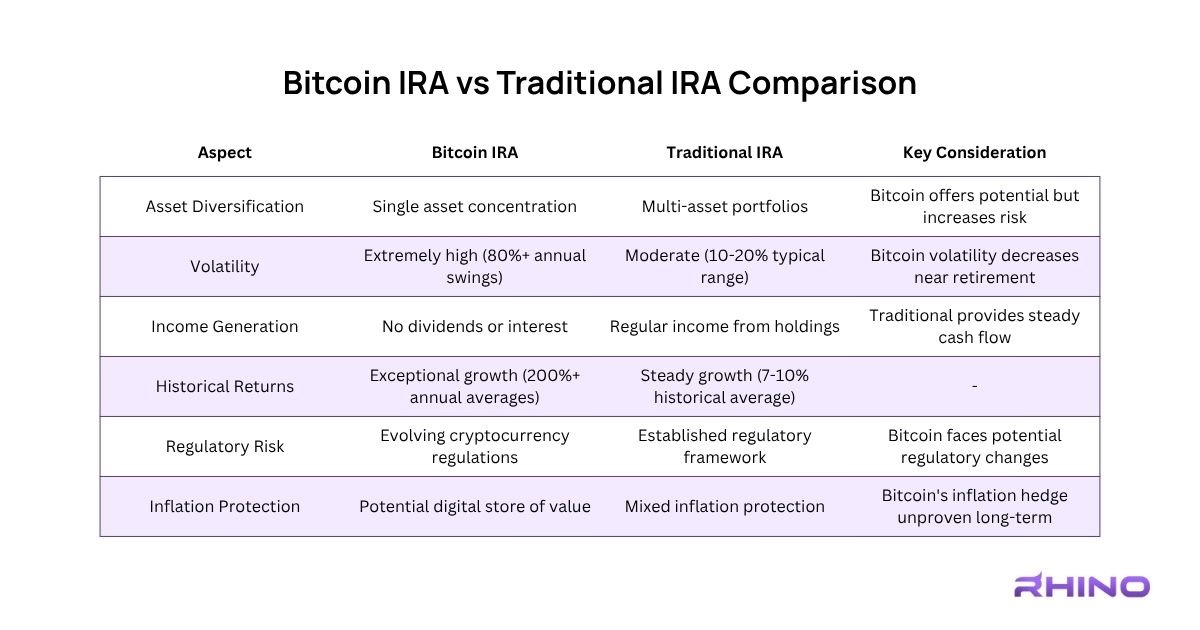
Investment time horizon significantly influences the appropriateness of Bitcoin versus traditional IRA investing. Young investors with 30-40 years until retirement can potentially weather Bitcoin's volatility and benefit from its growth potential, while those closer to retirement may find traditional investments more suitable for capital preservation.
Sequence of Returns Risk: The danger that poor investment returns in the years immediately before and after retirement can permanently reduce retirement income, making asset preservation critical as retirement approaches.
Diversification strategies can combine both approaches by maintaining traditional IRAs alongside Bitcoin IRAs or by allocating only a portion of retirement savings to Bitcoin. This balanced approach captures potential Bitcoin upside while maintaining the stability and income generation of traditional retirement investments.
Cost considerations favor traditional IRAs for fee-sensitive investors. Bitcoin IRAs typically charge higher fees due to specialized custody requirements and security measures, while traditional IRAs offer numerous low-cost index fund options with expense ratios below 0.1%. These fee differences compound over time and can significantly impact long-term wealth accumulation.
Liquidity and accessibility differ between the two approaches. Traditional IRAs offer immediate access to vast investment options and can be easily modified or rebalanced based on changing market conditions. Bitcoin IRAs require coordination with specialized custodians and may have limited flexibility for complex investment strategies.
Key decision factors include:
- Risk tolerance: Bitcoin's volatility requires comfort with significant account value fluctuations
- Investment timeline: Longer time horizons favor Bitcoin's growth potential despite volatility
- Portfolio allocation: Bitcoin works best as part of a diversified retirement strategy
- Market conviction: Strong belief in Bitcoin's long-term value proposition supports concentrated exposure
- Income needs: Traditional investments better serve investors requiring retirement income generation
- Regulatory comfort: Willingness to accept evolving cryptocurrency regulatory environment.
Both approaches can be combined through mixed portfolio strategies that capitalize on the strengths of each investment type while managing their respective limitations.
Bitcoin IRA Withdrawal Rules
Bitcoin IRA withdrawals follow the same IRS regulations as traditional retirement accounts, including age restrictions, penalty provisions, and required minimum distribution rules. However, the unique characteristics of Bitcoin as a digital asset create additional considerations for withdrawal timing and tax planning that require careful coordination with custodians.
Early withdrawals from Bitcoin IRAs before age 59½ generally trigger a 10% penalty plus ordinary income taxes on the withdrawn amount for Traditional IRAs, or penalties on earnings for Roth IRAs. The penalty applies to the dollar value of Bitcoin at the time of withdrawal, regardless of the original purchase price, making it essential to consider current market values when contemplating early access to funds.
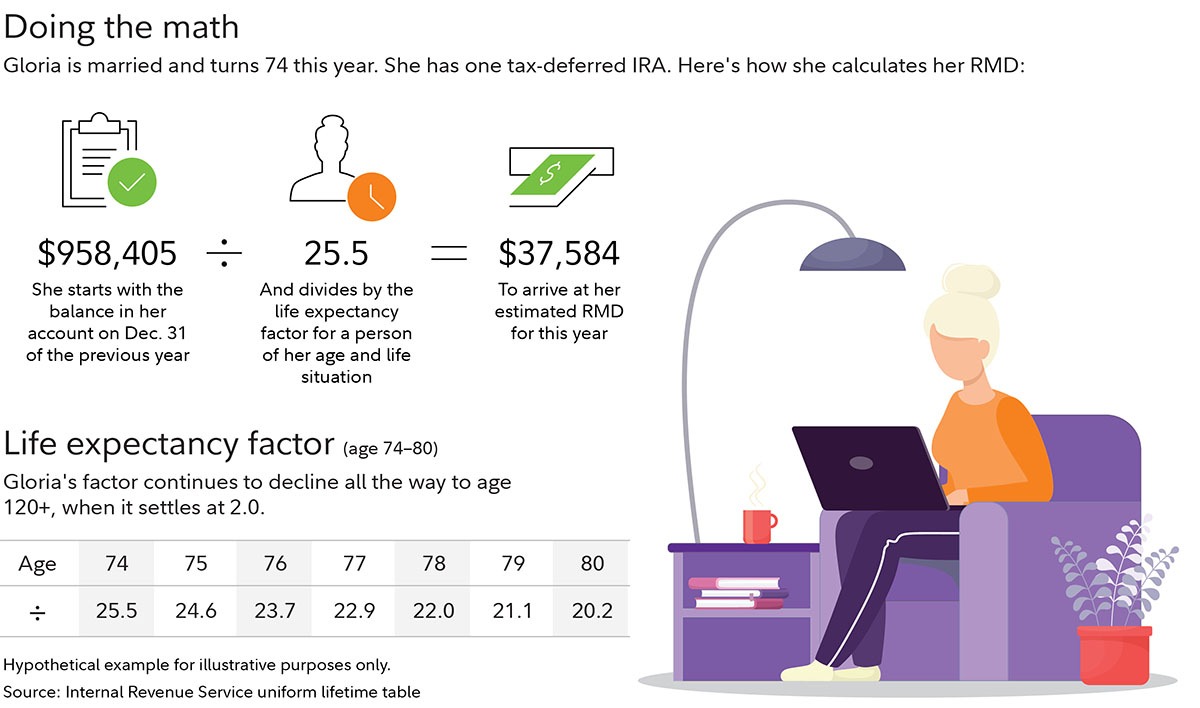
Required Minimum Distribution (RMD): Mandatory annual withdrawals from Traditional IRAs beginning at age 73, calculated based on life expectancy and account balance. Roth IRAs are not subject to RMDs during the account holder's lifetime.
Qualified distributions from Roth Bitcoin IRAs can be completely tax-free after age 59½, provided the account has been open for at least five years. This five-year rule applies separately to each Roth IRA conversion or contribution, creating potential complexity for account holders who have made multiple Roth contributions or conversions over time.
An Example of RMD Calculation
Source: Fidelity Investments
Traditional Bitcoin IRAs require minimum distributions beginning at age 73, with withdrawal amounts calculated based on IRS life expectancy tables and total account values. Since Bitcoin prices can fluctuate dramatically, the required distribution amount may vary significantly from year to year, requiring careful planning to avoid over-withdrawing during market peaks or under-withdrawing during market downturns.
The process of Bitcoin IRA withdrawals involves coordination between the account holder, custodian, and storage provider:
Step 1: Distribution Request - Submit withdrawal instructions to the custodian specifying the dollar amount or Bitcoin quantity desired. The custodian will calculate current market values and confirm the distribution amount based on real-time Bitcoin prices.
Step 2: Asset Liquidation - The custodian coordinates with storage providers to sell the necessary Bitcoin to meet distribution requirements. This sale occurs at current market prices, which may differ significantly from prices when the distribution was initially requested.
Step 3: Fund Transfer - Proceeds from Bitcoin sales are transferred to the account holder through wire transfer, check, or direct deposit according to their preferences. Processing time typically ranges from 3-7 business days depending on market conditions and custodian procedures.
Step 4: Tax Reporting - The custodian provides Form 1099-R documenting the distribution for tax reporting purposes. Account holders are responsible for calculating and paying any taxes owed based on the distribution amount and their individual tax situations.
Withdrawal timing strategies become particularly important for Bitcoin IRAs due to price volatility:
- Market timing considerations: Withdrawing during Bitcoin price peaks maximizes purchasing power but may not align with required distribution schedules
- Dollar-cost averaging: Spreading large withdrawals over multiple months can reduce the impact of price volatility
- Tax planning: Coordinating withdrawals with overall tax planning to optimize bracket management and minimize total tax burden
- Roth conversion opportunities: Converting Traditional IRA funds to Roth during Bitcoin price declines can reduce conversion tax costs
- Estate planning: Timing withdrawals to optimize inheritance benefits for beneficiaries.
Special withdrawal provisions apply in certain circumstances:
- First-time homebuyer: Up to $10,000 lifetime exemption from early withdrawal penalties for qualified home purchases
- Higher education expenses: Penalty-free withdrawals for qualified education costs for account holder or immediate family
- Medical expenses: Penalty exemption for unreimbursed medical expenses exceeding 7.5% of adjusted gross income
- Disability: Complete penalty exemption for account holders who become permanently disabled
- Substantially equal periodic payments: Structured withdrawal schedules that avoid penalties before age 59½.
Choosing a Bitcoin IRA Provider
Selecting the right Bitcoin IRA provider requires evaluating multiple factors including security measures, regulatory compliance, fee structures, and customer support quality. The provider choice significantly impacts both the safety of retirement funds and the overall investment experience over potentially decades of account management.
Security credentials represent the most critical evaluation factor since Bitcoin IRAs involve substantial amounts of irreversible digital assets. Leading providers should demonstrate institutional-grade security through cold storage systems, multi-signature technology, comprehensive insurance coverage, and regular third-party security audits.
SIPC Protection: Securities Investor Protection Corporation insurance that protects investors against broker-dealer failures up to $500,000, though this protection typically does not extend to cryptocurrency holdings in most Bitcoin IRA arrangements.
Regulatory compliance verification ensures that providers maintain proper licensing and adhere to applicable financial regulations. Bitcoin IRA custodians should be properly registered with relevant regulatory bodies and demonstrate ongoing compliance with evolving cryptocurrency regulations. This compliance protects investors from potential legal issues and ensures that retirement accounts maintain their tax-advantaged status.
Fee transparency and competitiveness directly impact long-term investment returns. Providers should clearly disclose all costs including setup fees, annual maintenance charges, transaction costs, and any additional fees for services like expedited processing or enhanced security features. Fee comparison should consider total cost of ownership over expected account lifespans rather than focusing solely on individual fee components.
Customer support quality becomes essential for navigating the complexities of Bitcoin retirement investing. Providers should offer knowledgeable support teams that understand both retirement account regulations and cryptocurrency technology. This expertise helps account holders make informed decisions and resolve issues efficiently when they arise.
Provider evaluation criteria should include:
Security and Insurance
- Multi-signature cold storage systems with geographic redundancy
- Comprehensive insurance coverage for both cybersecurity and custodial risks
- Regular third-party security audits and penetration testing
- Clear procedures for incident response and fund recovery
- Segregated storage ensuring individual account asset separation.
Regulatory Standing
- Proper licensing as qualified IRA custodian with regulatory authorities
- Demonstrated compliance with cryptocurrency regulations in operating jurisdictions
- Clear policies for handling regulatory changes and customer notification procedures
- Transparent reporting capabilities for tax compliance and account monitoring.
Technology Platform
- User-friendly interface for account monitoring and transaction management
- Real-time pricing and portfolio tracking capabilities
- Secure authentication systems with multi-factor authentication options
- Mobile access and responsive customer support channels
- Integration with tax preparation software and reporting tools.
Business Stability
- Established operating history with demonstrated financial stability
- Clear business model and revenue sustainability
- Management team experience in both financial services and cryptocurrency sectors
- Customer testimonials and industry reputation assessments
- Contingency plans for business continuity and asset protection
Service Offerings
- Support for both Traditional and Roth IRA configurations
- Rollover assistance from existing retirement accounts
- Educational resources and investment guidance appropriate for retirement planning
- Flexible contribution and withdrawal options aligned with IRS regulations
- Additional services such as estate planning support and beneficiary management
Due diligence should include verification of provider claims through independent research and regulatory database searches. Potential customers should review recent customer complaints, regulatory actions, and security incidents that might indicate provider weaknesses or areas of concern.
The provider selection process should also consider long-term relationship factors since Bitcoin IRAs are typically held for decades. Providers should demonstrate commitment to the Bitcoin IRA market segment and ongoing investment in technology and security improvements that will benefit long-term customers.
Bitcoin IRA Risks and Considerations
Bitcoin IRA investing involves significant risks that extend beyond traditional retirement account considerations, requiring careful evaluation of cryptocurrency-specific factors that could impact long-term retirement security. Understanding these risks helps investors make informed decisions about appropriate allocation levels and risk management strategies.
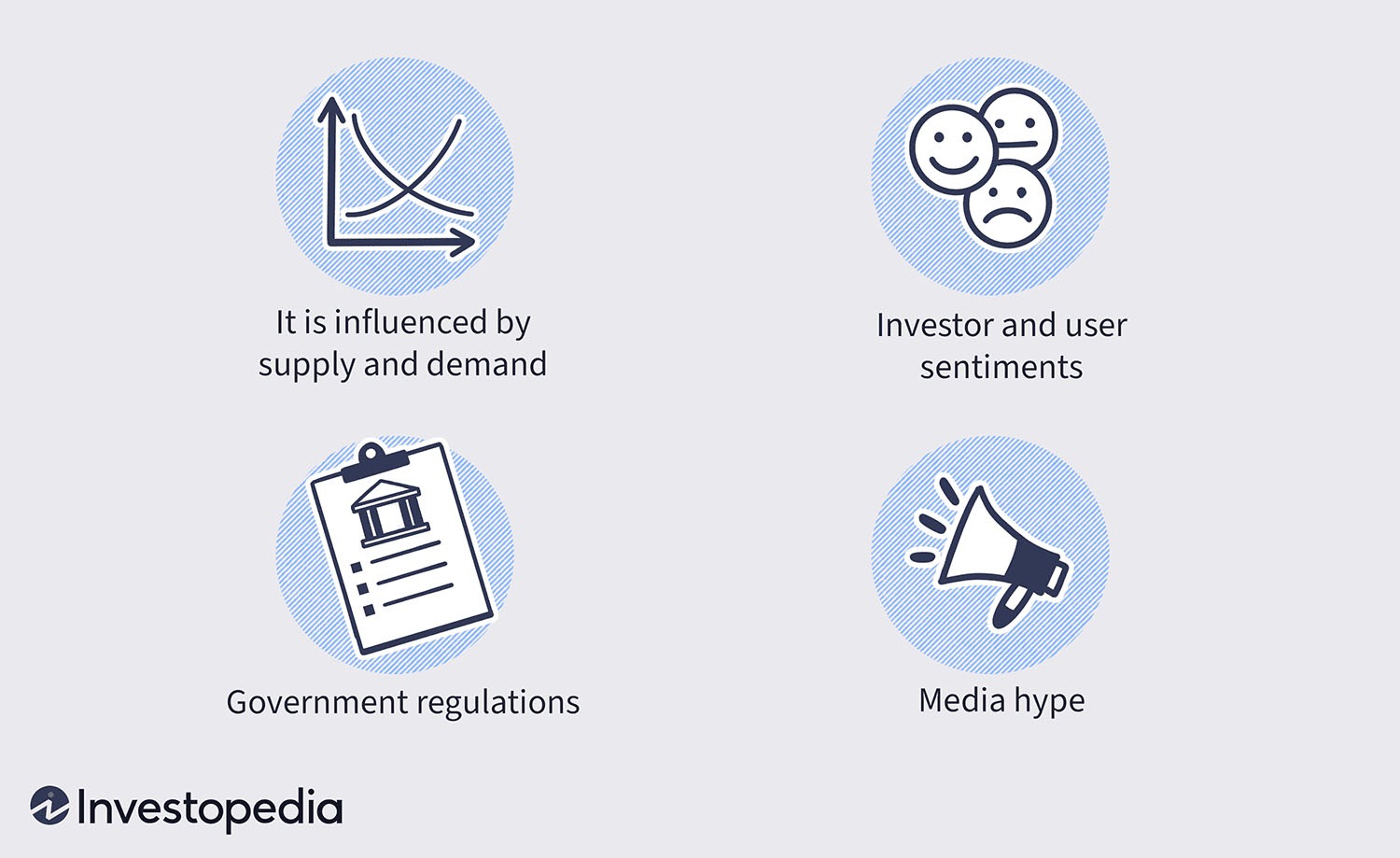
Price volatility represents the most immediate risk for Bitcoin IRA investors, with historical price swings exceeding 80% in single years and occasional declines of 50% or more during market downturns.
This volatility can dramatically impact retirement account values, particularly problematic for investors approaching retirement who have limited time to recover from significant losses.
Volatility Risk: The potential for significant price fluctuations in an investment that can result in substantial gains or losses over short time periods, measured by standard deviation of returns over historical periods.
Factors Affecting Bitcoin Volatility
Source: Investopedia
Regulatory risk poses ongoing uncertainty as governments worldwide continue developing cryptocurrency policies and enforcement frameworks. Potential regulatory changes could restrict Bitcoin IRA eligibility, impose additional taxes, or create compliance burdens that increase costs or limit investment flexibility. The evolving regulatory landscape requires ongoing monitoring and potential strategy adjustments.
Technology risks include potential security breaches, software vulnerabilities, or protocol changes that could affect Bitcoin's functionality or value. While professional custody mitigates many individual security risks, systemic technology issues could still impact all Bitcoin holders regardless of storage methods. These risks are unique to digital assets and don't affect traditional retirement investments.
Concentration risk results from holding a single asset class within retirement accounts rather than maintaining diversified portfolios. Bitcoin's price movements may not correlate with traditional economic cycles, potentially leaving investors vulnerable to losses that coincide with other financial stress or retirement needs. This concentration amplifies the impact of Bitcoin-specific negative events.
Key risk categories include:
Market and Financial Risks
- Extreme price volatility potentially exceeding 100% annual fluctuations
- Liquidity constraints during market stress that could delay withdrawals
- Market manipulation by large holders that could artificially influence prices
- Correlation changes during financial crises when Bitcoin may decline with other assets
- Inflation protection uncertainty despite theoretical digital scarcity properties
Regulatory and Legal Risks
- Potential prohibition or restriction of Bitcoin ownership or transactions
- Tax law changes that could eliminate IRA tax advantages for cryptocurrency holdings
- Compliance costs increasing due to enhanced reporting or regulatory requirements
- International regulatory conflicts affecting Bitcoin's global accessibility
- Legal uncertainties around Bitcoin's classification and treatment under securities laws
Technology and Security Risks
- Custodial security breaches despite institutional-grade protection measures
- Bitcoin protocol changes or network disruptions affecting functionality
- Quantum computing threats to Bitcoin's cryptographic security foundations
- Technological obsolescence if superior digital currencies gain market dominance
- Human error in custody or transaction processing leading to permanent loss
Operational and Provider Risks
- Custodian business failure or bankruptcy affecting asset accessibility
- Service disruptions preventing account access or transaction processing
- Fee increases that reduce long-term investment returns
- Provider consolidation limiting competition and service options
- Inadequate insurance coverage failing to protect against all potential loss scenarios
Risk mitigation strategies can help manage Bitcoin IRA exposure:
- Portfolio allocation limits: Restricting Bitcoin to 5-20% of total retirement savings to maintain diversification
- Time horizon considerations: Ensuring sufficient time for potential recovery from major price declines
- Dollar-cost averaging: Spreading investments over time to reduce impact of purchase timing
- Regular rebalancing: Maintaining target allocations despite Bitcoin price movements
- Provider diversification: Using multiple custodians or combining with traditional retirement accounts
- Stay informed: Monitoring regulatory developments and technology changes that could affect investments.
Understanding the risk-return profile helps investors determine appropriate Bitcoin IRA allocation levels. While Bitcoin has delivered exceptional historical returns, future performance remains uncertain and could include extended periods of poor performance that test investor conviction and retirement planning assumptions.
Risk tolerance assessment should consider personal financial situations, retirement timelines, and ability to absorb potential losses without compromising retirement security. Conservative investors may prefer minimal Bitcoin allocations or traditional retirement investments exclusively, while those with higher risk tolerance and longer time horizons may justify larger Bitcoin IRA positions.
Frequently Asked Questions
1. What happens if my Bitcoin IRA custodian goes out of business?
If a Bitcoin IRA custodian fails, your Bitcoin holdings remain legally separate from the custodian's business assets due to segregated storage requirements. The custodian's creditors cannot claim your retirement funds, and arrangements typically exist to transfer accounts to successor custodians. However, temporary access restrictions may occur during transition periods, emphasizing the importance of choosing financially stable custodians with established contingency plans.
2. How long does it take to set up a Bitcoin IRA and make my first investment?
Bitcoin IRA setup typically takes 1-2 weeks from application submission to first investment capability. The process includes identity verification, account establishment, funding coordination, and custody arrangement setup. Direct rollovers from existing retirement accounts may take additional time due to coordination requirements with previous custodians, while new contributions can be invested more quickly once accounts are established.
3. Can I convert my traditional IRA to a Bitcoin IRA without tax consequences?
Converting a Traditional IRA to a Bitcoin IRA is actually a transfer of assets within the same account type and doesn't trigger tax consequences. However, converting a Traditional IRA to a Roth Bitcoin IRA does create a taxable event requiring income tax payment on the converted amount. The conversion strategy should consider current tax rates, expected future rates, and available cash to pay conversion taxes.
4. What are the minimum and maximum amounts I can invest in a Bitcoin IRA?
Bitcoin IRA contribution limits match traditional IRA limits: $7,000 annually in 2024 ($8,000 if age 50+). Many custodians require minimum account balances ranging from $1,000-$10,000 for account establishment. No maximum limits apply to rollover amounts from existing retirement accounts, allowing substantial Bitcoin IRA positions through 401(k) or other IRA transfers.
5. How is Bitcoin stored in my IRA, and do I have direct access to it?
Bitcoin in IRAs is held by qualified custodians using institutional cold storage systems with multi-signature security. Account holders cannot take direct possession of the Bitcoin, as this would violate IRA regulations and trigger taxable distributions. All Bitcoin remains under custodial control, but account holders direct investment decisions through secure custodian platforms while benefiting from professional security measures.
6. Can I use my Bitcoin IRA to pay bills or make purchases?
Bitcoin IRAs cannot be used for direct bill payments or purchases, as this would constitute prohibited self-dealing under IRA regulations. However, account holders can take distributions from their Bitcoin IRAs and use those funds for any purpose, subject to applicable taxes and penalties. Bitcoin debit cards from other accounts could provide spending functionality while maintaining IRA compliance.
7. What tax forms do I need to file for my Bitcoin IRA?
Bitcoin IRAs require the same tax reporting as traditional retirement accounts. Custodians provide Form 1099-R for distributions and Form 5498 for contributions. The account holder doesn't report Bitcoin price fluctuations or trading activity within the IRA, as these don't create taxable events. Only contributions (for deduction eligibility) and distributions need to be reported on annual tax returns.
8. Is there insurance protection for Bitcoin held in my IRA?
Reputable Bitcoin IRA custodians typically provide insurance coverage for cybersecurity breaches and custodial errors, though coverage amounts and terms vary by provider. This insurance generally exceeds what individual Bitcoin holders can obtain independently. However, Bitcoin IRAs don't qualify for SIPC protection that covers traditional securities, making insurance verification an important provider selection criterion.
9. Can I inherit a Bitcoin IRA, and what are the tax implications?
Bitcoin IRAs can be inherited with similar rules to traditional retirement accounts. Spousal beneficiaries can treat inherited Bitcoin IRAs as their own accounts, while non-spouse beneficiaries must generally distribute the entire account within 10 years under current regulations. Inherited Roth Bitcoin IRAs provide tax-free distributions to beneficiaries, while Traditional Bitcoin IRA inheritances are taxable as ordinary income when distributed.
10. What happens to my Bitcoin IRA if Bitcoin becomes illegal or heavily regulated?
While outright Bitcoin prohibition seems unlikely in the United States, increased regulation could affect Bitcoin IRA operations. Most scenarios would likely grandfather existing accounts while potentially restricting new investments. Custodians typically maintain compliance procedures for regulatory changes, and account holders might have options to transfer to other permitted investments or take distributions if necessary, though this could trigger tax consequences.
Conclusion
Bitcoin IRAs represent a powerful convergence of cryptocurrency innovation and traditional retirement planning, offering Americans the opportunity to include the world's leading digital asset in their tax-advantaged retirement savings. The combination of Bitcoin's potential for long-term appreciation with the tax benefits of IRA structures creates compelling opportunities for building retirement wealth, particularly for investors with extended time horizons and appropriate risk tolerance.
The rapid growth in Bitcoin IRA adoption following ETF approvals demonstrates increasing mainstream acceptance of crypto (Bitcoin in particular) as a legitimate retirement investment option.
Professional custody solutions have matured to provide institutional-grade security that exceeds what individual investors can achieve independently, while regulatory frameworks continue evolving to provide clearer guidance for retirement cryptocurrency investing.
However, Bitcoin IRA investing requires careful consideration of unique risks including extreme price volatility, regulatory uncertainty, and technology risks that don't affect traditional retirement investments. These considerations suggest that Bitcoin IRAs work best as part of diversified retirement strategies rather than as complete replacement for conventional retirement planning approaches.
The optimal allocation depends on individual circumstances including age, risk tolerance, retirement timeline, and overall financial security.
The decision to include Bitcoin in retirement accounts should be based on thorough understanding of both the opportunities and risks involved. While Bitcoin has delivered exceptional historical returns, its future performance remains uncertain and could include extended periods of poor performance that test investor conviction.
Successful Bitcoin IRA investing requires strong conviction in Bitcoin's long-term value proposition, comfort with significant volatility, and commitment to long-term holding strategies that can weather market cycles.
For investors who determine that Bitcoin aligns with their retirement objectives and risk profile, Bitcoin IRAs provide an efficient vehicle for cryptocurrency exposure within tax-advantaged accounts.
The key to success lies in appropriate portfolio allocation, provider selection, and ongoing monitoring of the evolving regulatory and technology landscape that influences Bitcoin retirement investing.
References
- Internal Revenue Service. "Retirement Plans FAQs on Designated Roth Accounts." https://www.irs.gov/retirement-plans/retirement-plans-faqs-on-designated-roth-accounts
- Internal Revenue Service. "IRA Contribution Limits." https://www.irs.gov/retirement-plans/plan-participant-employee/retirement-topics-ira-contribution-limits
- Internal Revenue Service. "Notice 2014-21: Virtual Currency Guidance." https://www.irs.gov/pub/irs-drop/n-14-21.pdf
- U.S. Securities and Exchange Commission. "Bitcoin ETF Approval Documentation." https://www.sec.gov/rules/sro.shtml
- Congressional Research Service. "Bitcoin and Other Virtual Currencies: Legal Issues." https://crsreports.congress.gov/product/pdf/R/R46669
- Financial Crimes Enforcement Network. "Guidance on Virtual Currency Activities." https://www.fincen.gov/resources/statutes-regulations/guidance
- Federal Deposit Insurance Corporation. "Digital Assets Policy Statement." https://www.fdic.gov/news/financial-institution-letters/2022/fil22018.html
- Department of Labor. "Employee Benefits Security Administration Guidance on Cryptocurrency." https://www.dol.gov/agencies/ebsa/about-ebsa/our-activities/resource-center/fact-sheets
Disclaimer: This content is for educational and informational purposes only and should not be construed as financial, investment, legal, or tax advice. Bitcoin IRA investing involves risks including price volatility, technical complexity, and regulatory uncertainty. Always conduct your own research and consult with qualified professionals before making financial decisions.
Risk Warning: Bitcoin and Bitcoin IRA services involve significant risks including total loss of funds, extreme price volatility, and market instability. Bitcoin IRAs are subject to custodial risks, technological failures, security vulnerabilities, and regulatory changes. Users should only invest amounts they can afford to lose and should understand the requirements and limitations of cryptocurrency retirement investing before proceeding.
Disclosure: This content may contain references to Rhino Bitcoin, a Bitcoin IRA service provider. The author may have business relationships with companies mentioned in this article. All information presented is believed to be accurate but is not guaranteed. Past performance does not indicate future results.
.png)
.png)