
Bitcoin IRA Calculator: Estimate Your Retirement Bitcoin Savings Growth
Bitcoin IRA calculators estimate how bitcoin investments could grow inside tax-advantaged retirement accounts, helping investors plan long-term strategies.

Buy Bitcoin with Zero Fees with Rhino
The most secure way to stack sats. Simple, fast, and zero trading fees.
A Bitcoin IRA calculator helps you estimate potential retirement savings when investing in bitcoin within a tax-advantaged retirement account. These calculators project how bitcoin holdings might grow over time while accounting for IRA contribution limits, tax benefits, and historical bitcoin performance patterns.
Key Summary: Bitcoin IRA calculators estimate retirement savings by projecting bitcoin's potential growth within tax-advantaged accounts, helping investors understand how cryptocurrency fits into long-term retirement planning strategies.
Key Takeaways:
- Bitcoin IRA calculators project potential retirement savings based on contribution amounts and time horizons
- These tools account for IRA contribution limits and tax advantages specific to retirement accounts
- Calculators use historical bitcoin performance data, though past results don't guarantee future outcomes
- Understanding calculator inputs helps investors make informed decisions about cryptocurrency retirement investing
What Is a Bitcoin IRA Calculator?
A Bitcoin IRA calculator is a financial planning tool that estimates potential retirement account growth when investing in bitcoin. The calculator combines standard retirement account variables like contribution amounts and time horizons with bitcoin-specific factors like historical volatility and price appreciation.
These calculators differ from traditional retirement calculators by incorporating cryptocurrency's unique characteristics. Bitcoin's historical volatility means projections can vary significantly based on assumptions about future performance. Most calculators allow users to adjust variables including initial investment amount, monthly contributions, investment timeline, and expected annual return rates.
Self-Directed IRA: A retirement account that allows investors to hold alternative assets like bitcoin, real estate, or precious metals beyond traditional stocks and bonds.
Self-Directed IRA vs Traditional IRA
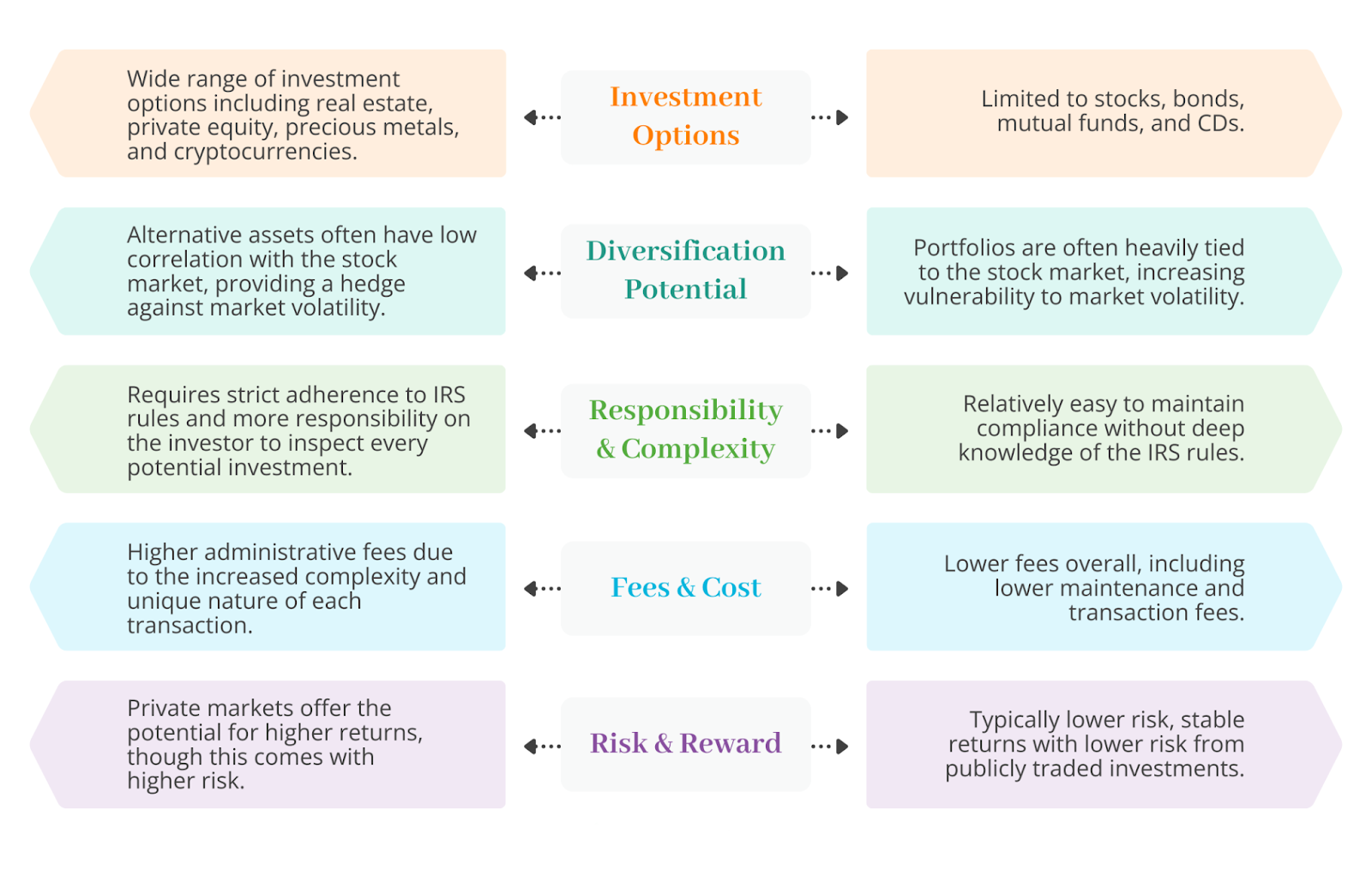
For a comprehensive overview of bitcoin retirement investing, see our complete Bitcoin IRA investing guide.
How Bitcoin IRA Calculators Work
Bitcoin IRA calculators use compound growth formulas to project account values over time. The basic calculation multiplies your contributions by expected growth rates, compounding annually to show potential future account balances.
The standard formula incorporates several key variables. Your initial investment serves as the starting principal. Regular contributions add to the account balance at specified intervals, typically monthly or annually. The expected rate of return reflects bitcoin's potential appreciation, often based on historical averages. The time horizon represents years until retirement or withdrawal.
Most calculators also factor in IRA-specific elements:
- Contribution limits: Annual IRA contribution caps set by the IRS (as of 2024, $7,000 for those under 50, $8,000 for those 50 and older)
- Tax treatment: Traditional IRA tax deductions versus Roth IRA tax-free growth
- Account fees: Custodian fees and platform charges that reduce net returns
- Required minimum distributions: Mandatory withdrawals starting at age 73 for traditional IRAs
The calculator outputs typically show projected account balance at retirement, total contributions made over time, and estimated gains from bitcoin appreciation.
Key Variables in Bitcoin IRA Calculations
Understanding calculator inputs helps you create realistic retirement projections. Each variable significantly impacts your estimated final account balance.
Initial Investment Amount
Your starting contribution establishes the baseline for compound growth. Larger initial investments benefit more from compounding over time. Many investors start with amounts between $1,000 and $10,000, depending on financial circumstances and risk tolerance.
Regular Contribution Schedule
Consistent monthly or annual contributions leverage dollar-cost averaging, potentially reducing volatility impact. The maximum annual IRA contribution for 2024 is $7,000 for individuals under age 50, with a $1,000 catch-up provision for those 50 and older.
Expected Rate of Return
This variable creates the widest range of outcomes. Bitcoin's historical returns vary dramatically based on the time period selected. Conservative estimates might use 15–20% annual returns, moderate projections 25–35%, and aggressive scenarios 40% or higher. However, past performance doesn't guarantee future results, and bitcoin has experienced multiple drawdown periods exceeding 50%.
Investment Timeline
Longer time horizons typically smooth out bitcoin's volatility through multiple market cycles. A 20–30 year retirement timeline provides more opportunities for recovery from market downturns compared to shorter 5–10 year periods.
Fee Structure
Bitcoin IRA custodians charge various fees including setup costs, annual maintenance fees, and transaction fees. These fees compound negatively over time, reducing net returns. Annual fees typically range from 1% to 3% of account value.
Why do Bitcoin IRA Custodians Charge Fees?
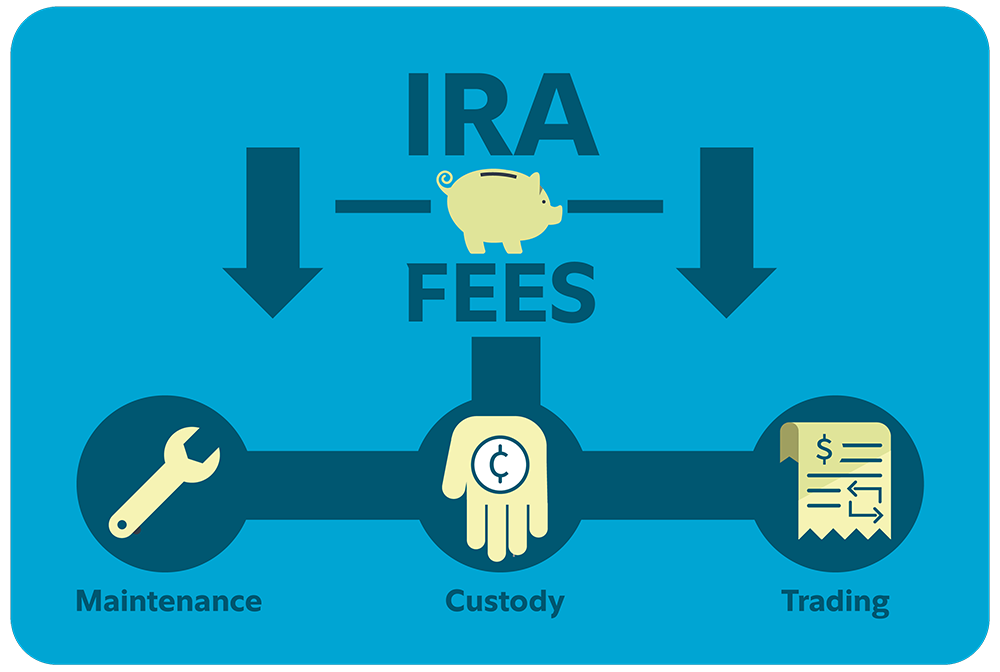
Using a Bitcoin IRA Calculator Effectively
Effective calculator use requires understanding both the tool's capabilities and limitations. Start by gathering accurate information about your current financial situation and retirement goals.
Begin with conservative assumptions to establish a baseline scenario. Use historical bitcoin returns from longer time periods rather than peak bull market years. Many financial advisors suggest using 10–15 year historical averages rather than shorter timeframes that might overstate potential gains.
Run multiple scenarios to understand outcome ranges:
- Conservative scenario: Lower return assumptions with higher fee estimates
- Moderate scenario: Mid-range returns based on longer historical averages
- Aggressive scenario: Higher returns with favorable market conditions
Compare results against your retirement income needs. Calculate how much monthly income your projected bitcoin IRA might generate during retirement, accounting for potential volatility and withdrawal strategies.
Consider running parallel calculations for diversified retirement portfolios. Bitcoin IRAs work best as part of a broader retirement strategy rather than representing your entire retirement savings.
Bitcoin IRA Calculator Limitations and Considerations
Bitcoin IRA calculators provide estimates, not guarantees. Understanding their limitations helps set realistic expectations for retirement planning.
The primary limitation involves bitcoin's unpredictable future performance. Historical returns don't predict future results, especially for an asset that has only existed since 2009. Bitcoin has experienced multiple 80%+ drawdowns during its history, and similar volatility could occur during your investment timeline.
Volatility: The statistical measure of price fluctuations over time. Bitcoin exhibits significantly higher volatility than traditional assets like stocks or bonds. Learn more
Calculators typically assume steady growth rates, but bitcoin doesn't appreciate linearly. Real-world returns include dramatic ups and downs that might not align with your retirement timeline. Someone retiring during a bitcoin bear market faces very different outcomes than someone retiring during a bull market.
Tax implications add complexity that basic calculators may not fully capture:
- Traditional IRA withdrawals: Taxed as ordinary income at your retirement tax rate
- Roth IRA qualified distributions: Tax-free if account is at least five years old and you're over 59½
- Early withdrawal penalties: 10% penalty plus taxes for distributions before age 59½
- Required minimum distributions: Force traditional IRA withdrawals starting at age 73
Custodian requirements and fees vary significantly between providers. Some calculators use generic fee assumptions that might not match actual costs from specific Bitcoin IRA custodians.
Comparing Bitcoin IRA Calculators to Traditional Retirement Calculators
Bitcoin IRA calculators share similarities with traditional retirement calculators but incorporate cryptocurrency-specific variables. Understanding these differences helps you evaluate whether bitcoin fits your retirement strategy.
Volatility Modeling
Traditional calculators typically assume 6–10% annual stock market returns with relatively predictable variance. Bitcoin calculators must account for much wider outcome ranges, from significant losses to dramatic gains within single years.
Historical Data Limitations
Stock market calculators draw from 100+ years of historical data spanning multiple economic cycles. Bitcoin's 15-year history provides limited data points, especially for understanding behavior during economic recessions or extended bear markets.
Regulatory Uncertainty
Traditional retirement assets operate within well-established regulatory frameworks. Bitcoin faces evolving regulations that could impact custody requirements, tax treatment, or investment accessibility. Calculators can't easily model regulatory risk.
Correlation Factors
Traditional portfolios benefit from asset diversification when stocks, bonds, and real estate don't move in lockstep. Bitcoin's correlation with other assets remains uncertain and has varied over time, making portfolio-level projections more complex.
Bitcoin IRA Calculator Best Practices
Maximize calculator usefulness by following structured approaches to retirement planning with bitcoin.
Document your assumptions for each calculation scenario. Record the expected return rate, fee structure, contribution schedule, and timeline you used. This documentation helps you revisit and adjust projections as market conditions and personal circumstances change.
Update projections annually based on actual account performance. Compare your real results against calculator projections to refine future estimates. If bitcoin significantly outperforms or underperforms expectations, adjust future assumptions accordingly.
Consider these practical guidelines:
- Allocation limits: Most financial advisors suggest limiting bitcoin exposure to 5–10% of retirement portfolios
- Rebalancing schedules: Plan periodic rebalancing if bitcoin grows to oversized portfolio percentage
- Exit strategies: Define conditions that would trigger reducing bitcoin allocation
- Diversification targets: Maintain meaningful positions in traditional assets
Consult with qualified financial advisors who understand both retirement planning and cryptocurrency investing. Calculators provide estimates, but personalized advice accounts for your complete financial picture including other retirement accounts, Social Security benefits, pension plans, and spending needs.
Frequently Asked Questions
How accurate are Bitcoin IRA calculator projections?
Calculator projections represent estimates based on assumptions, not guarantees. Bitcoin's volatility and limited historical data make long-term accuracy challenging, so treat results as planning tools rather than predictions.
What return rate should I use in a Bitcoin IRA calculator?
Conservative investors might use 10–15% annual returns, while moderate scenarios could assume 20–30%. Use multiple scenarios rather than relying on single projections, and understand that bitcoin has experienced both 200%+ gain years and 70%+ loss years.
Do Bitcoin IRA calculators account for fees?
Quality calculators include fee inputs, but you must enter accurate custodian-specific fees. Annual fees typically range from 1–3% of account value, plus potential setup and transaction costs that reduce net returns.
Can I use a Bitcoin IRA calculator for Roth and traditional IRAs?
Yes, most calculators work for both account types. The primary difference affects tax treatment: traditional IRA projections should account for ordinary income tax on withdrawals, while qualified Roth distributions are tax-free.
How often should I recalculate my Bitcoin IRA projections?
Annual reviews make sense for most investors, with additional recalculations after major bitcoin price movements or changes to your financial situation. Regular updates help you stay on track toward retirement goals.
What happens if bitcoin performs worse than calculator projections?
Underperformance requires adjusting expectations and potentially increasing contributions to other retirement accounts. This highlights why financial advisors recommend limiting bitcoin to a small percentage of total retirement savings.
Do calculators account for required minimum distributions?
Advanced calculators may include RMD calculations for traditional IRAs, which require withdrawals starting at age 73. Roth IRAs don't have RMDs during the account owner's lifetime, making them preferable for long-term bitcoin holdings.
Can Bitcoin IRA calculators help with 401k rollover decisions?
Calculators can project potential outcomes when rolling 401k funds into a Bitcoin IRA, but can't capture all rollover considerations including creditor protection differences, loan availability, and required minimum distribution timing. Consult a tax professional before executing rollovers.
Conclusion
Bitcoin IRA calculators provide valuable estimates for retirement planning with cryptocurrency. These tools help investors understand how bitcoin might fit within tax-advantaged retirement accounts by projecting growth based on contribution amounts, timelines, and expected returns.
However, calculator projections represent scenarios rather than guarantees. Bitcoin's volatility, limited historical data, and regulatory uncertainty create wide outcome ranges. Effective use requires running multiple scenarios with conservative assumptions, understanding fee impacts, and treating bitcoin as one component of a diversified retirement strategy.
Key considerations when using Bitcoin IRA calculators:
- Start with conservative return assumptions based on longer historical periods
- Account for custodian fees that compound negatively over time
- Consider tax implications specific to traditional versus Roth IRAs
- Limit bitcoin allocation to manageable portfolio percentages
For those looking to add bitcoin to their retirement strategy with tax advantages and institutional-grade security, discover Rhino Bitcoin's self-directed Bitcoin IRA options with comprehensive support and Lightning Network integration.
References
- Internal Revenue Service. “Retirement Topics - IRA Contribution Limits.”
https://www.irs.gov/retirement-plans/plan-participant-employee/retirement-topics-ira-contribution-limits - Internal Revenue Service. “Self-Directed Plans.”
- Internal Revenue Service. “Retirement Topics - Required Minimum Distributions.”
https://www.irs.gov/retirement-plans/plan-participant-employee/retirement-topics-required-minimum-distributions-rmds - Bitcoin.org. “How does Bitcoin work?”
https://bitcoin.org/en/how-it-works - U.S. Securities and Exchange Commission. “Individual Retirement Accounts.”
Important Disclaimers
Disclaimer: Educational information only. Not financial, legal, medical, or tax advice.
Risk Warnings: All investments carry risk, including loss of principal. Past performance is not indicative of future results. Bitcoin is a volatile asset and may not be suitable for all investors.
Conflicts of Interest: Rhino Bitcoin provides Bitcoin financial services. This content is educational and may reference our products.
.png)
.png)