
Bitcoin IRA 457 Rollover: Complete Tax-Free Transfer Guide For Government Employees
Learn how public employees can roll a 457 plan into a Bitcoin IRA for tax-advantaged bitcoin exposure and retirement diversification.
Buy Bitcoin with Zero Fees with Rhino
The most secure way to stack sats. Simple, fast, and zero trading fees.
A 457 rollover to a Bitcoin IRA allows public sector employees to transfer retirement funds from their 457(b) plan into a self-directed IRA that holds bitcoin.
This process provides tax-advantaged bitcoin exposure. It also maintains the retirement account’s qualified status.
Key Summary:
Rolling a 457 plan into a Bitcoin IRA allows government and non-profit employees to convert traditional retirement savings into bitcoin holdings. The rollover preserves tax benefits and avoids immediate taxation when completed correctly.
Key Takeaways
- 457 plans can roll into self-directed IRAs that hold bitcoin without triggering taxes
- Direct rollovers help avoid the 20% mandatory withholding
- Bitcoin IRAs require a qualified custodian and proper documentation
- Tax treatment depends on whether the 457 plan is governmental or non-governmental
What Is a 457 Plan Rollover?
A 457 rollover transfers retirement assets from a 457(b) deferred compensation plan into another qualified retirement account.
Government employees and non-profit workers commonly use rollovers to consolidate accounts. Others use them to access investment options that are not available inside their current plan.
The IRS allows eligible 457 plan participants who separate from service to roll funds into:
- Traditional IRAs
- Roth IRAs
- 401(k) plans
- Other eligible retirement accounts
For investors seeking bitcoin exposure, a self-directed IRA allows cryptocurrency investments inside the retirement account.
For more detailed guidance, see our complete Bitcoin IRA investing guide.
Types of 457 Plans
There are several types of 457 plans, and each follows different rollover rules.
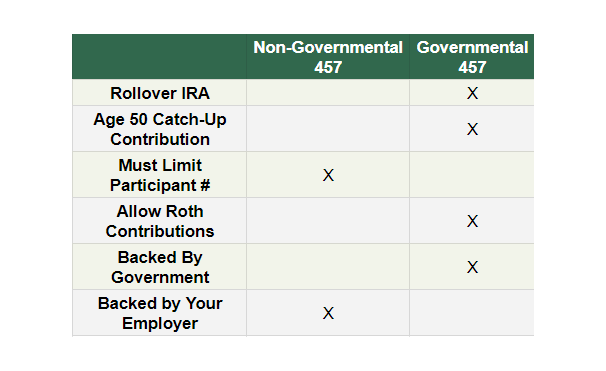
- Governmental 457(b): Offered by state and local government employers. These plans allow the most flexible rollover options.
- Non-governmental 457(b): Provided by tax-exempt organizations. These plans have stricter distribution and rollover rules.
- 457(f): Non-qualified plans for highly compensated employees with limited rollover eligibility.
457(b) Plan:
A tax-deferred retirement savings plan available to government and certain non-profit employees. Contributions are made pre-tax and grow tax-deferred until withdrawal.
IRS 457(b) guidance
Governmental vs Non-governmental 457 Plan
Why Roll a 457 Into a Bitcoin IRA?
Rolling a 457 into a Bitcoin IRA provides exposure to bitcoin’s potential appreciation inside a tax-advantaged structure.
This strategy often appeals to long-term investors. Many view bitcoin as a store of value and a way to diversify retirement portfolios beyond traditional assets.
Public sector employees usually face limited investment options within their 457 plans. Most plans restrict participants to mutual funds, target-date funds, and similar investments.
A rollover to a self-directed IRA removes these restrictions. It allows direct bitcoin ownership inside the retirement account.
Primary Reasons Investors Choose This Strategy
- Portfolio diversification: Bitcoin has historically shown low correlation with stocks and bonds
- Inflation hedge: Bitcoin’s fixed supply appeals to investors concerned about currency debasement
- Long-term appreciation potential: Exposure to an emerging asset class
- Tax efficiency: Gains grow tax-deferred in traditional IRAs or tax-free in Roth IRAs
- Control and flexibility: Self-directed accounts offer greater investment autonomy
IRS Notice 2014-21 classifies bitcoin as property for federal tax purposes. Because of this classification, bitcoin can be held in IRAs when managed through a qualified custodian.
Inside a retirement account, bitcoin receives the same tax treatment as stocks, bonds, or real estate.
How Does a 457 to Bitcoin IRA Rollover Work?
The rollover process involves three parties:
- Your current 457 plan administrator
- A new IRA custodian that supports alternative assets
- You, as the account owner
Each step must follow IRS rules to avoid taxes and penalties.
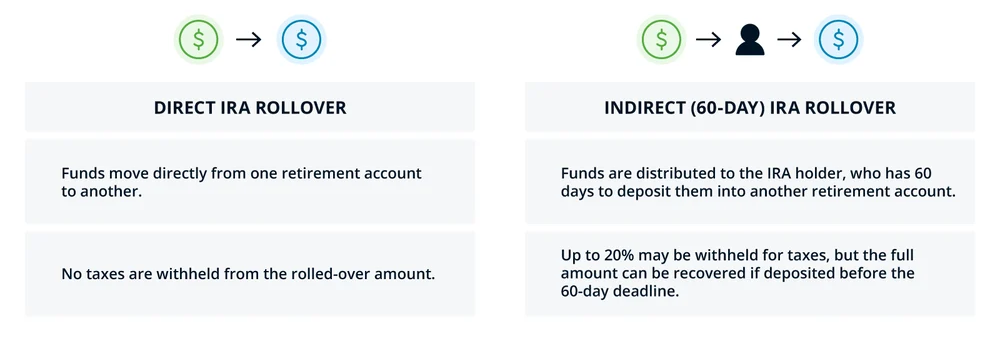
A direct rollover moves funds directly from your 457 plan to the IRA custodian. You never take possession of the money.
This method avoids the 20% mandatory withholding. It also removes the 60-day deadline that applies to indirect rollovers.
Step-by-Step Rollover Process
- Verify eligibility: Confirm you have separated from service or that your plan allows in-service rollovers
- Select a custodian: Choose an IRA provider with experience holding bitcoin
- Open the IRA: Complete the required account paperwork
- Initiate the rollover: Request a trustee-to-trustee transfer from your 457 administrator
- Confirm the transfer: Verify that funds arrive in the IRA, usually within 2–4 weeks
- Purchase bitcoin: Instruct the custodian to buy bitcoin using the rolled funds
Platforms like Rhino Bitcoin offer Bitcoin IRA services with qualified custodians. These services help simplify compliance and documentation.
Direct vs. Indirect Rollovers
Direct rollovers transfer funds between institutions without the money passing through your hands.
Indirect rollovers send the funds to you first. You must deposit the money into the new IRA within 60 days.
Direct Rollover (Recommended)
- Pros: No withholding, no 60-day deadline, simpler paperwork, lower risk of tax issues
- Cons: Requires coordination between institutions and may take 2–4 weeks
- Best for: Most rollover situations, especially larger balances
Indirect Rollover
- Pros: Temporary access to funds and faster initial receipt
- Cons:
- 20% mandatory withholding
- 60-day completion deadline
- Only one indirect rollover allowed every 12 months
- Must replace the withheld amount using other funds
- Best for: Rare situations requiring short-term access to cash
The IRS limits indirect IRA-to-IRA rollovers to one per year. This rule does not apply to direct rollovers or rollovers from employer plans such as 457 plans.
Direct vs Indirect IRA Rollover
What Are the Tax Implications?
When done correctly, a 457 rollover to a traditional IRA is not a taxable event.
The IRS treats properly executed rollovers as non-taxable. This preserves the tax-deferred status of your retirement savings.
Tax treatment depends on the type of 457 plan and the receiving account. Governmental 457(b) plans can roll into traditional IRAs without triggering taxes.
Non-governmental 457(b) plans follow stricter rules. Funds may not be eligible for rollover until specific distribution events occur.
Tax-Deferred Growth
Tax-deferred growth refers to investment gains that are not taxed each year. Taxes are paid only when funds are withdrawn.
Traditional IRAs and 457 plans both offer tax-deferred growth. This allows assets to compound without annual tax drag.
IRS IRA guidance
Traditional IRA vs. Roth IRA Rollovers
You may roll a 457 into either a traditional IRA or a Roth IRA. The tax treatment differs significantly.
Traditional IRA rollovers preserve tax deferral. Roth IRA conversions trigger taxes immediately.
Choose a Traditional IRA If:
- You want to avoid paying taxes during the rollover
- Your current tax rate is higher than your expected retirement rate
- You want to preserve cash for near-term expenses
Choose a Roth IRA If:
- You expect higher tax rates in retirement
- You want bitcoin gains to grow tax-free
- You can pay conversion taxes using non-retirement funds
- You value having no required minimum distributions (RMDs)
Roth conversions require paying income tax on the full converted amount in the year of conversion. After conversion, bitcoin appreciation grows tax-free.
Qualified withdrawals after age 59½ are not taxed. This strategy can be valuable if bitcoin appreciates significantly over time.
What Are the Rollover Restrictions and Limits?
The IRS does not impose dollar limits on 457-to-IRA rollovers. You may transfer your entire 457 balance, regardless of size.
This differs from annual IRA contribution limits. For 2024, contributions are limited to $7,000, or $8,000 if you are age 50 or older.
Governmental 457(b) plans offer the most flexibility. After separating from service, participants may roll funds into:
- Traditional IRAs
- Roth IRAs
- 401(k) plans
- 403(b) plans
- Other governmental 457 plans
In-service rollovers are usually not allowed unless the plan specifically permits them.
Key Restrictions to Understand
- Separation requirement: Most plans require termination of employment
- Non-governmental limits: Stricter rules apply to non-profit employer plans
- Loan balances: Outstanding loans often must be repaid before rollover
- After-tax contributions: Track cost basis carefully if applicable
- Timing windows: Some plans limit when rollovers can occur
Non-governmental 457(b) plans typically allow rollovers only after qualifying distribution events. These may include separation from service, plan termination, or financial hardship.
Always review your plan document to confirm eligibility.
Do You Pay Penalties on 457 Rollovers?
Direct rollovers from 457 plans do not trigger the 10% early withdrawal penalty. This applies regardless of your age.
Once funds are inside an IRA, standard IRA distribution rules apply. Withdrawals before age 59½ usually incur a 10% penalty unless an exception applies.
This differs from 457 plans. After separation from service, 457 plans allow penalty-free withdrawals at any age.
If you may need early access to funds, this difference is important to consider.
How Do You Choose a Bitcoin IRA Custodian?
IRS rules require all IRAs, including Bitcoin IRAs, to use a qualified custodian.
You cannot personally hold bitcoin inside an IRA. A third-party custodian must administer and safeguard the assets.
Qualified custodians include banks, trust companies, and IRS-approved non-bank custodians. Not all IRA providers support bitcoin, so specialization matters.
IRA Custodian Definition
An IRA custodian is a financial institution approved by the IRS to hold and administer IRA assets. Custodians ensure compliance with tax laws and reporting requirements.
Key Custodian Selection Criteria
- Bitcoin experience: Proven history with cryptocurrency custody
- Security measures: Cold storage, multi-signature wallets, insurance coverage
- Fee structure: Setup fees, annual fees, transaction costs, and storage fees
- Regulatory compliance: Proper licensing and IRS approval
- Customer support: Responsive assistance for account needs
- Storage options: Multiple security tiers when available
Fee structures vary widely. Annual costs may range from 1% to 1.5% of assets under management, plus transaction fees. Some custodians charge flat annual fees instead.
Security Considerations for Bitcoin IRAs
Custodian security directly affects the safety of retirement assets.
Bitcoin transactions are irreversible. Lost or stolen private keys can result in permanent loss.
Reputable custodians use institutional-grade security measures. These often include cold storage, multi-signature authorization, and comprehensive insurance coverage.
Some providers, including Rhino Bitcoin, combine strong security with user-friendly account access.
Standard FDIC insurance does not cover cryptocurrency losses. Always confirm that your custodian carries crypto-specific custody insurance.
What Investment Strategies Work for Bitcoin IRAs?
Bitcoin IRA strategies should align with your retirement timeline and risk tolerance.
Bitcoin is volatile. A long-term approach is usually more appropriate for retirement accounts that will not be accessed for many years.
IRAs offer tax advantages that can benefit volatile assets. Gains compound tax-deferred in traditional IRAs or tax-free in Roth IRAs.
Common Bitcoin IRA Strategies
- Buy-and-hold: Purchase bitcoin and maintain a long-term position
- Dollar-cost averaging: Buy bitcoin at regular intervals over time
- Allocation sizing: Limit bitcoin exposure to 5–10% of the total portfolio
- Rebalancing discipline: Adjust allocations as values change
Many financial advisors recommend limiting bitcoin exposure due to volatility. Allocations of 5% to 10% can provide diversification without excessive concentration risk.
Bitcoin has experienced drawdowns of 50% or more. In 2022, prices fell from nearly $69,000 to below $16,000.
Retirement portfolios should be structured to withstand such volatility.
Should You Time Your Rollover?
Trying to time a rollover based on bitcoin’s price is difficult and often counterproductive.
For most investors, initiating the rollover as soon as eligibility allows is more practical.
Because rollovers typically take 2–4 weeks, the purchase price depends on market conditions at completion, not at initiation.
If timing is a concern, consider dollar-cost averaging after the rollover. Purchasing bitcoin in stages over 6–12 months can reduce the risk of buying at a temporary price peak.
What Are the Ongoing Compliance Requirements?
Bitcoin IRAs follow the same prohibited transaction rules as traditional IRAs.
You may not use IRA-held bitcoin for personal benefit. Self-dealing transactions can disqualify the entire IRA.
Assets must remain under custodian control and used solely for retirement purposes.
Prohibited Transaction Examples
- Using IRA bitcoin for personal purchases
- Transferring IRA bitcoin to personal wallets
- Receiving services funded by IRA bitcoin
- Borrowing from the IRA or using it as collateral
- Buying or selling property between you and the IRA
Custodians report IRA values annually using Form 5498. Distributions are reported on Form 1099-R.
Bitcoin’s price volatility can cause large year-to-year value changes. These fluctuations do not trigger taxes inside traditional IRAs.
Taxes apply only when distributions occur.
What Happens at Retirement?
Traditional IRAs require required minimum distributions (RMDs) starting at age 73.
Bitcoin IRAs add complexity. You may need to sell bitcoin or take in-kind distributions to satisfy RMDs.
Most custodians support both options.
Roth IRAs do not require RMDs during the original owner’s lifetime. This makes Roth accounts attractive for long-term bitcoin holdings.
Distribution Options at Retirement
- Cash distributions: Bitcoin is sold and proceeds are distributed
- In-kind distributions: Bitcoin is transferred to personal wallets
- Systematic withdrawals: Scheduled distributions over time
- Lump-sum withdrawals: Full account distribution with significant tax impact
In-kind distributions are taxed based on bitcoin’s fair market value at the time of transfer.
Frequently Asked Questions
Can I roll my entire 457 balance into bitcoin?
Yes. You may allocate your entire rollover to bitcoin. However, many advisors recommend limiting cryptocurrency exposure to 5–10% of total retirement assets.
How long does a 457 to Bitcoin IRA rollover take?
Direct rollovers typically take 2–4 weeks, depending on plan administrator processing times.
Do I need to report a 457 rollover on my tax return?
Yes. Rollovers appear on your tax return for reporting purposes but are marked as non-taxable when done correctly.
Can I roll over a 457 while still employed?
Most plans do not allow in-service rollovers. Separation from service is usually required.
What happens if I miss the 60-day indirect rollover deadline?
The distribution becomes taxable and may be subject to a 10% penalty. Direct rollovers avoid this risk.
Are Bitcoin IRA fees tax-deductible?
No. Fees paid from IRA assets are not deductible on your personal tax return.
Can I transfer bitcoin I already own into an IRA?
No. IRA contributions must be made in cash, which the custodian then uses to purchase bitcoin.
What if my 457 plan does not allow rollovers?
Some plans restrict rollovers until qualifying events occur. Review your plan document or contact your administrator.
Making Your Decision
Rolling a 457 plan into a Bitcoin IRA gives public sector employees access to bitcoin within a tax-advantaged retirement structure.
This strategy works best for investors with long time horizons, tolerance for volatility, and confidence in bitcoin’s long-term value.
Key Decision Factors
- Confirm your 457 plan allows rollovers after separation from service
- Research qualified custodians with strong security and reasonable fees
- Determine appropriate bitcoin allocation within your overall portfolio
- Compare traditional and Roth IRA tax implications
For those ready to explore Bitcoin IRA options,
discover how Rhino Bitcoin’s self-directed Bitcoin IRA platform combines qualified custodianship with intuitive account management.
References
- Internal Revenue Service. “IRC 457(b) Deferred Compensation Plans.”
https://www.irs.gov/retirement-plans/irc-457b-deferred-compensation-plans - Internal Revenue Service. “IRS Notice 2014-21: Virtual Currency Guidance.”
https://www.irs.gov/pub/irs-drop/n-14-21.pdf - Internal Revenue Service. “Retirement Topics – IRA Contribution Limits.”
https://www.irs.gov/retirement-plans/plan-participant-employee/retirement-topics-ira-contribution-limits - Internal Revenue Service. “Rollovers of Retirement Plan and IRA Distributions.”
https://www.irs.gov/retirement-plans/plan-participant-employee/rollovers-of-retirement-plan-and-ira-distributions - Internal Revenue Service. “Retirement Plans FAQs regarding IRAs – Custodial Accounts.”
https://www.irs.gov/retirement-plans/retirement-plans-faqs-regarding-iras-custodial-accounts
Important Disclaimers
Disclaimer: Educational information only. Not financial, legal, medical, or tax advice.
Risk Warnings: All investments carry risk, including loss of principal. Past performance does not guarantee future results. Bitcoin is volatile and may not be suitable for all investors.
Conflicts of Interest: Rhino Bitcoin provides Bitcoin financial services. This content is educational and may reference company products.
.png)
.png)