
Bitcoin Inheritance Planning: Secure Setup For Cryptocurrency Custody
Without a plan, bitcoin can be lost forever. Learn how secure custody, backups, and legal steps ensure your bitcoin reaches your heirs.
Buy Bitcoin with Zero Fees with Rhino
The most secure way to stack sats. Simple, fast, and zero trading fees.
Bitcoin inheritance planning ensures your bitcoin holdings transfer to your intended beneficiaries after your death. Unlike traditional assets, bitcoin does not rely on banks or institutions. This means careful planning is essential. If private keys are lost, the funds are lost forever.
A strong inheritance plan balances two goals. First, it keeps your bitcoin secure during your lifetime. Second, it ensures reliable access for heirs when the time comes.
Key Summary:
Bitcoin inheritance planning combines secure key management, legal documentation, and clear instructions. The goal is to transfer bitcoin to heirs without weakening security while you are alive.
Key Takeaways
- Bitcoin inheritance requires both technical security and legal planning
- Multiple backups reduce the risk of permanent loss
- Clear instructions help non-technical heirs recover funds
- Regular updates keep the plan accurate and secure
Bitcoin creates unique inheritance challenges because it operates outside traditional banking systems. For a broader overview of Bitcoin security basics, see our complete Bitcoin security guide:
https://www.rhinobitcoin.com/blog/bitcoin-security-guide
This article focuses on specific strategies to help your bitcoin pass safely and efficiently to your heirs.
Why Bitcoin Inheritance Planning Differs from Traditional Estate Planning
Bitcoin inheritance works differently from traditional estate planning. Assets like bank accounts, real estate, and stocks rely on institutions. These intermediaries can verify ownership and process transfers through legal systems.
Bitcoin does not work this way. It relies entirely on cryptographic proof. Ownership is controlled by private keys, not institutions.
The main challenge is private key management. Private keys are the only way to access bitcoin. No court, bank, or government can recover them if they are lost.
This creates a difficult balance. You must keep keys secure enough to prevent theft during your lifetime. At the same time, you must ensure heirs can access them after your death.
Private Keys:
Private keys are cryptographic codes that prove ownership and allow spending of bitcoin. Anyone who has access to them has full control over the funds. This makes secure storage and inheritance planning critical.
Learn more about private key security: https://bitcoin.org/en/secure-your-wallet
Bitcoin Public Keys are Derived from Private Keys

Traditional estate planning tools often fall short with bitcoin. Simply listing bitcoin in a will does not provide access. Without private keys or a seed phrase, heirs cannot recover funds.
Executors also face technical challenges that do not exist with traditional assets. Many early Bitcoin holders permanently lost bitcoin because they died without a clear inheritance plan.
Essential Components of a Bitcoin Inheritance Plan
A complete bitcoin inheritance plan has four core components. Each one addresses a specific risk while maintaining security during your lifetime.
Technical Security Foundation
- Hardware wallet or multi-signature setup for primary holdings
- Multiple seed phrase backups stored in separate secure locations
- Clear records of wallet types, addresses, and approximate balances
- Step-by-step recovery instructions written for non-technical users
Legal Documentation
- An updated will that explicitly mentions bitcoin and digital assets
- Durable power of attorney for incapacity scenarios
- A letter of instruction with technical details, stored separately from the will
- Trust structures for complex estates or tax planning needs
Access Mechanisms
- A trusted contact or attorney holding sealed instructions
- Time-locked multi-signature arrangements
- Professional custody services with inheritance features
- Dead man’s switch systems for automated execution
Multi-Signature Wallet:
A multi-signature wallet requires more than one private key to approve transactions. Common setups include 2-of-3 or 3-of-5 configurations. These wallets reduce single points of failure and work well for inheritance planning.
The fourth component is education. Even with good instructions, heirs need basic knowledge of Bitcoin security. It helps to document trusted advisors or technical experts who can assist during recovery.
How to Create Secure Backup Systems for Heirs
Good backup systems balance security and accessibility. The goal is to prevent loss without increasing theft risk during your lifetime.
For hardware wallets, the 24-word seed phrase is the master backup. This phrase should never be stored digitally or in the cloud.
Physical backups should exist in at least three separate locations. These locations should be geographically spread out. Common options include bank safe deposit boxes, home safes rated for documents, and professional vault services.
Comparison: Seed Phrase Storage Methods
Metal Backup Plates
- Pros: Fire-resistant, water-resistant, highly durable, no degradation over decades
- Cons: Higher cost, manual engraving required, harder to update
- Best For: Long-term storage in safes or safe deposit boxes
Laminated Paper Backups
- Pros: Low cost, easy to create, simple to duplicate
- Cons: Vulnerable to fire and water, degrades over time
- Best For: Short-term or secondary backups in controlled environments
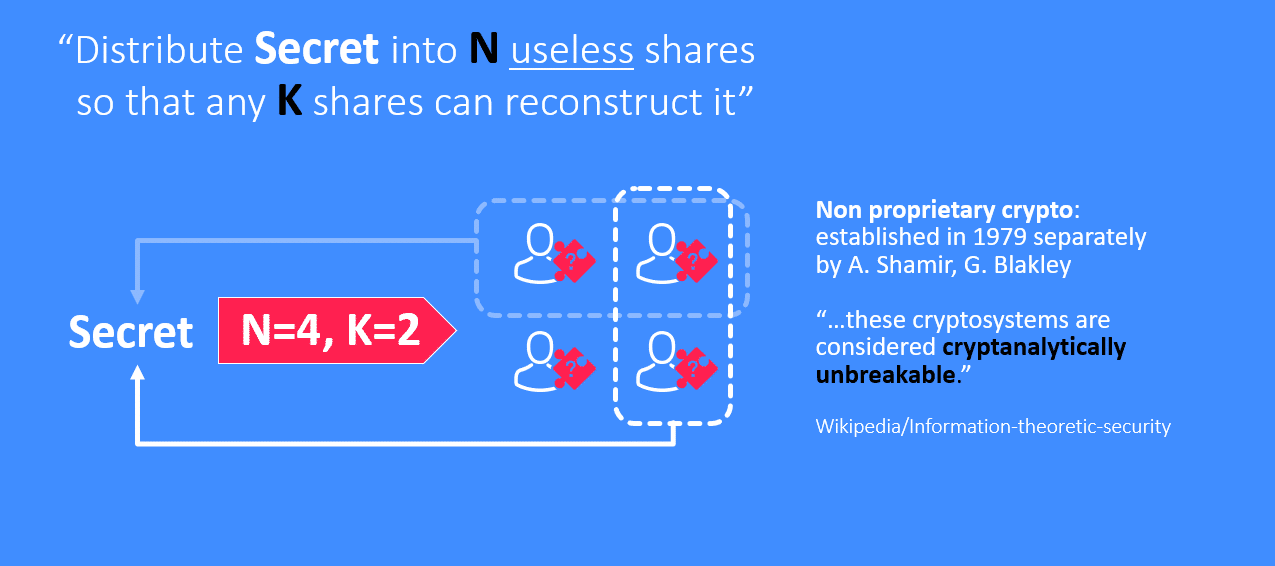
Cryptographic Splitting (Shamir Backup)
- Pros: No single backup holds the full seed, customizable recovery thresholds
- Cons: More complex setup, harder for non-technical heirs
- Best For: High-value holdings where maximum security is needed
How Shamir Secret Sharing Works
Using different backup methods adds redundancy. For example, metal plates in two safe deposit boxes and a paper copy held by a trusted attorney create three independent recovery paths.
Multi-Signature Arrangements for Inheritance Security
Multi-signature wallets offer flexible and secure inheritance options for larger bitcoin holdings. These wallets require multiple signatures to move funds.
A common inheritance setup uses a 2-of-3 configuration. You hold one key. A trusted family member or advisor holds the second. The third key is stored securely and accessed through legal processes.
During your lifetime, you can transact using your key and one other. After your death, the remaining two keys allow heirs to access the funds.
This setup solves several problems:
- It prevents theft by a single party
- It protects against loss if one key disappears
- It creates a clear inheritance path
- It preserves your control while alive
Key Sharding:
Key sharding involves splitting cryptographic keys or seed phrases into multiple parts. These parts are stored with different people or locations. When done correctly, no single party can access funds alone, but recovery remains possible.
More complex estates may use 3-of-5 arrangements. These can involve additional family members, trustees, or custody services. Regardless of structure, clear documentation is essential.
Professional custody platforms such as Casa and Unchained Capital specialize in collaborative custody. They hold one key while you control the others, offering both security and inheritance support.
Legal Documentation Requirements for Bitcoin Estates
Legal documents provide structure for bitcoin inheritance, even though courts cannot access funds directly.
Your will should clearly mention bitcoin and digital assets. It should also name specific beneficiaries.
A letter of instruction supplements the will. It contains technical details that are too sensitive for public probate records. This letter is usually sealed and stored with an attorney or in a safe deposit box.
The letter of instruction should include:
- A list of all wallets, devices, and software used
- Locations of seed backups and multi-signature keys
- Approximate balances for each wallet
- Contact details for trusted technical advisors
- Step-by-step recovery instructions
- Warnings about scams and common mistakes
The IRS treats bitcoin as property for tax purposes. Estate tax rules apply. Heirs receive a stepped-up cost basis equal to the market value at the date of death. Good records help reduce future tax issues.
Some bitcoin holders use trusts, especially for large or complex estates. Trusts can control timing, protect minors, and offer creditor protection. However, they increase complexity and require trustees who understand digital assets.
How to Test Your Bitcoin Inheritance Plan
Testing ensures your plan works when it is needed.
Run a tabletop exercise with a trusted person. Walk through the recovery steps without sharing real seed phrases. Ask them to explain the process back to you. This helps identify unclear instructions.
Test backups at least once a year. Check that seed phrases are readable. Confirm safe deposit boxes are accessible. Verify that co-signers still have their keys and understand their roles.
Hardware wallet users should perform a full recovery test on a separate device. Restore the wallet using the backup seed phrase and confirm funds appear correctly. Never enter seed phrases on internet-connected devices.
Update your plan after major life changes. Marriage, divorce, births, deaths, relocations, or changes in holdings all require updates. Review everything at least once per year.
Common Bitcoin Inheritance Mistakes to Avoid
Many inheritance plans fail due to common mistakes.
Security and Access Failures
- Single backup location: One disaster can cause permanent loss
- Overly complex setups: Grieving heirs may struggle to execute them
- No instructions: Seed phrases alone are not enough
- Digital-only storage: Cloud or password manager failures can lock funds
Legal and Family Issues
- Keeping executors uninformed: Assets cannot be transferred if no one knows they exist
- Trusting the wrong people: Poor key holders increase theft risk
- Incomplete legal documents: Missing digital asset language causes confusion
- No tax planning: Heirs may need to sell quickly to cover taxes
Technical Complications
- Obsolete wallet software: Old tools may no longer work
- Undocumented passphrases: Extra protection can become a permanent lock
- Lost exchange accounts: Exchange-held bitcoin requires separate credentials
Mixing multiple inheritance approaches without documentation is especially risky. Heirs may recover some funds while missing others entirely.
Professional Services and Third-Party Solutions
Specialized inheritance services now exist for bitcoin estate planning. These services offer varying levels of support.
Collaborative custody platforms like Casa and Unchained Capital provide inheritance-focused multi-signature setups. You retain control of most keys while the provider holds one. After death, heirs follow a defined succession process.
Estate planning attorneys may also assist with digital assets. Some can hold sealed instructions or act as neutral third parties. However, not all attorneys understand Bitcoin, so verify experience first.
Some users choose services like Casa’s Inheritance Protocol or Trust & Will’s crypto planning tools. These services help create plans, store instructions, and guide heirs. Costs typically range from $120–$300 per year or higher for complex estates.
All-in-one platforms such as Rhino Bitcoin offer Bitcoin-focused financial services with self-custody and multi-signature security. When choosing providers, prioritize Bitcoin-only platforms over general crypto services.
Third-party services add costs and counterparty risk. They may also require identity verification. However, they can greatly simplify inheritance for non-technical heirs. The right choice depends on your comfort level and estate complexity.
Frequently Asked Questions
What happens to bitcoin if someone dies without a plan?
Without private keys or seed phrases, bitcoin becomes permanently inaccessible. No authority can recover it.
Should heirs know where the seed phrase is stored?
Multi-signature setups or trusted intermediaries are safer than direct disclosure. Full secrecy also creates risk.
How do I include bitcoin in my will?
Explicitly mention bitcoin and reference a separate letter of instruction. Work with an attorney familiar with digital assets.
Can a trust hold bitcoin?
Yes, but trustees must understand digital asset security. Trusts add control but increase complexity and cost.
What if heirs are not technical?
Provide detailed instructions, name a technical advisor, or use professional custody services.
How often should the plan be updated?
Review annually and after major life or technology changes.
Do I need to report bitcoin for estate purposes?
Yes. Bitcoin is taxable property, and heirs receive a stepped-up cost basis.
What is the safest multi-signature setup?
A 2-of-3 arrangement works well for most people and avoids single points of failure.
Conclusion
Bitcoin inheritance planning requires both technical and legal preparation. Traditional estate planning alone is not enough.
Effective plans combine secure key management, clear recovery instructions, multi-signature structures, and proper documentation.
Essential Considerations
- Maintain multiple geographically separated backups
- Keep technical details in sealed letters of instruction
- Use multi-signature wallets to reduce risk
- Test and update the plan regularly
For comprehensive Bitcoin security and inheritance planning features, explore Rhino Bitcoin’s multi-signature custody solutions:
https://www.rhinobitcoin.com
References
- Bitcoin.org — Secure Your Wallet
https://bitcoin.org/en/secure-your-wallet - Internal Revenue Service — Notice 2014-21
https://www.irs.gov/pub/irs-drop/n-14-21.pdf - Casa — Inheritance Protocol Documentation
https://casa.io/inheritance - Unchained Capital — Collaborative Custody Model
https://unchained.com/collaborative-custody - Bitcoin Wiki — Multi-signature Transactions
https://en.bitcoin.it/wiki/Multisignature
Important Disclaimers
Disclaimer: Educational information only. Not financial, legal, medical, or tax advice.
Risk Warnings: All investments carry risk, including loss of principal. Bitcoin is volatile and may not suit all investors.
Conflicts of Interest: Rhino Bitcoin provides Bitcoin financial services. This content may reference its products.
.png)
.png)