
Bitcoin Cold Storage Guide: Complete Security Setup & Best Practices
Secure your bitcoin offline with cold storage: hardware wallets, paper wallets, and multi-signature setups protect against hacks and loss.
Buy Bitcoin with Zero Fees with Rhino
The most secure way to stack sats. Simple, fast, and zero trading fees.
Bitcoin cold storage refers to keeping your bitcoin private keys completely offline, away from internet-connected devices. This method provides the highest level of security against hacks, malware, and remote attacks. Cold storage is essential for anyone holding significant amounts of bitcoin long-term.
Key Summary: Cold storage keeps your bitcoin private keys offline using hardware wallets, paper wallets, or air-gapped devices, providing maximum protection against online threats while requiring careful backup and recovery planning.
Key Takeaways
- Cold storage eliminates online attack vectors by keeping keys offline
- Hardware wallets offer the best balance of security and usability
- Proper backup strategies are critical to prevent permanent loss
- Multi-signature setups add institutional-grade protection
This guide explores cold storage within the broader context of Bitcoin security best practices. Understanding cold storage is fundamental to protecting your bitcoin holdings.
What Is Bitcoin Cold Storage?
Cold storage is any method of holding bitcoin private keys completely offline. Unlike hot wallets that connect to the internet, cold storage devices never expose your keys to online threats.
The term "cold" refers to the temperature metaphor. Hot wallets are active and connected, while cold wallets remain dormant and isolated. This isolation provides protection against the most common attack vectors including exchange hacks, phishing attempts, and malware infections.
Cold Storage: A method of securing bitcoin by keeping private keys on devices that never connect to the internet, eliminating remote attack vectors. Learn more from Bitcoin.org
Differences Between Cold and Hot Storage
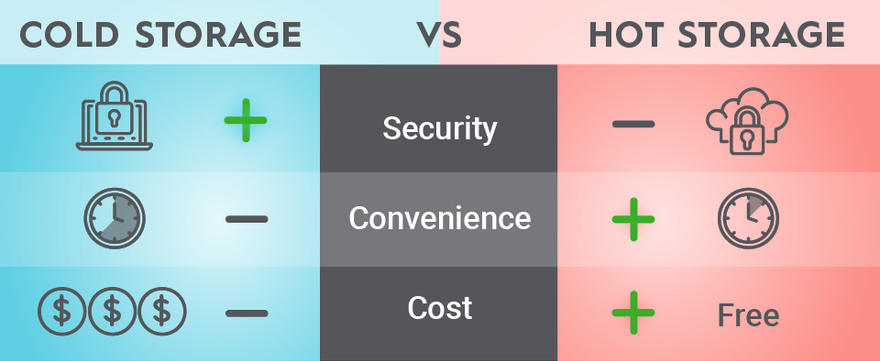
Source: The Motley Fool
Cold storage works by generating and storing private keys on offline devices. When you need to send bitcoin, you create an unsigned transaction on an online device, transfer it to your cold storage device for signing, then broadcast the signed transaction. Your keys never touch an internet-connected machine.
Why Cold Storage Matters for Bitcoin Security
Cold storage addresses the fundamental security challenge in Bitcoin. While the Bitcoin network itself is extremely secure, individual users face risks at the private key management level.
According to blockchain analysis, over four million bitcoin may be permanently lost due to poor key management and security practices. Cold storage significantly reduces these risks by eliminating the most common attack vectors.
Key security benefits:
- Eliminates remote attacks: Hackers cannot access keys that never touch the internet
- Protects against malware: Keyloggers and trojans cannot capture offline keys
- Prevents exchange hacks: Self-custody means you control your bitcoin
- Reduces phishing risk: Offline keys cannot be stolen through social engineering
- Enables inheritance planning: Physical devices can be secured and transferred
For amounts exceeding what you would comfortably carry in a physical wallet, cold storage provides essential protection. The inconvenience of offline key management becomes worthwhile when securing substantial value.
Hardware Wallets: The Practical Cold Storage Solution
Hardware wallets are purpose-built devices for cold storage. They generate and store private keys in secure elements that never expose keys to connected computers or phones.
Leading hardware wallets include Ledger, Trezor, Coldcard, and Foundation devices. These devices range from consumer-friendly options with touchscreens to advanced models designed for maximum security and air-gapped operation.
Hardware wallet advantages:
- Secure element chips: Military-grade components protect against physical attacks
- User-friendly interfaces: Screens and buttons simplify transaction verification
- Backup and recovery: Standardized seed phrases enable wallet restoration
- Regular updates: Firmware improvements address emerging threats
- Multi-currency support: Most support Bitcoin and other assets
When selecting a hardware wallet, prioritize open-source firmware, secure element chips, and active development communities. Avoid devices with Bluetooth connectivity or closed-source code that could hide vulnerabilities.
Setting Up Your Hardware Wallet
Proper setup is crucial for hardware wallet security. Never use a pre-initialized device or one that arrives with a seed phrase already generated.
Setup steps:
- Purchase directly from the manufacturer to avoid tampering
- Verify security seals and packaging integrity
- Initialize the device and generate a new seed phrase
- Write down your 12 or 24-word seed phrase on paper
- Verify the seed phrase by entering it back into the device
- Set a strong PIN to protect against physical theft
- Store seed phrase backups in secure, separate locations
Never photograph your seed phrase, store it digitally, or share it with anyone. The seed phrase is your bitcoin. Anyone with access can steal your funds.
Paper Wallets and Air-Gapped Storage
Paper wallets represent the simplest form of cold storage. They consist of printed private keys and addresses, typically with QR codes for easy scanning.
While paper wallets eliminate electronic attack vectors, they introduce physical vulnerabilities. Paper degrades over time, can be damaged by water or fire, and offers no protection against physical theft beyond obscurity.
Air-Gapped: A security measure where a device is physically isolated from all networks, preventing any remote access or data transmission. Air-gapped devices never connect to the internet or Bluetooth.
Airgapped Networks and Devices are Segregated from the Internet
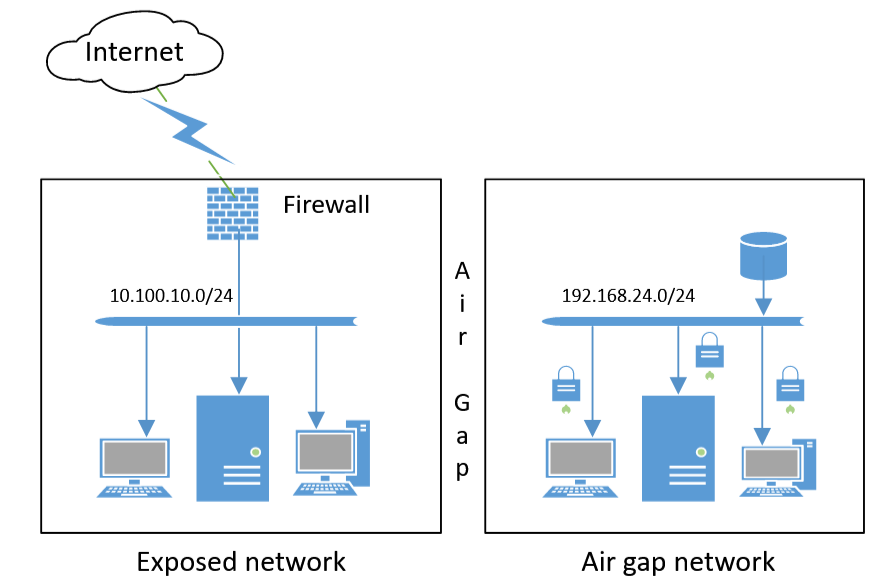
Source: Air gap (networking) on Wikipedia
Paper wallet considerations:
- Generation security: Create using trusted, offline software on clean computers
- Printing risks: Use non-networked printers to prevent key exposure
- Physical durability: Paper degrades, consider lamination or metal backups
- No spending convenience: Must sweep entire balance to spend any amount
- Address reuse: Spending from paper wallets often leaks privacy
For long-term storage exceeding five years, consider metal backup plates that stamp or engrave seed phrases. These survive fire, water, and corrosion better than paper or electronic media.
Multi-Signature Cold Storage for Maximum Security
Multi-signature wallets require multiple private keys to authorize transactions. This setup distributes trust and eliminates single points of failure.
A common configuration uses 2-of-3 multi-signature, requiring any two of three keys to spend bitcoin. You might keep one key on a hardware wallet, one in a safe deposit box, and one with a trusted family member or attorney.
Multi-signature advantages:
- Eliminates single points of failure: Losing one key does not lose your bitcoin
- Protects against theft: Thieves need multiple keys from different locations
- Enables inheritance: Heirs can access funds without your daily-use key
- Reduces insider risk: No single person or service controls your funds
Platforms like Unchained Capital, Casa, and Nunchuk offer coordinated multi-signature services. For maximum security without relying on third parties, learn to set up multi-signature manually using Bitcoin Core or Sparrow Wallet.
Multi-Signature Setup Considerations
Multi-signature adds complexity that requires careful planning. Each key should be backed up independently, and you must document your signing configuration.
Key distribution strategies:
- Geographic distribution: Store keys in different cities or countries
- Institutional storage: Use bank safe deposit boxes for backup keys
- Trusted parties: Distribute keys to family, attorneys, or fiduciaries
- Redundant backups: Create multiple backups of each key in different formats
Document your multi-signature configuration clearly. Include the number of signatures required, key locations, and recovery procedures. Store this documentation separately from the keys themselves.
Backup and Recovery Strategies
Your backup strategy determines whether you recover your bitcoin after device loss, damage, or death. Without proper backups, cold storage becomes a liability rather than protection.
The seed phrase is your ultimate backup. These 12 or 24 words can regenerate all your private keys and addresses. Treat seed phrases with the same security as the bitcoin they protect.
Backup best practices:
- Multiple locations: Store copies in at least two geographically separate places
- Durable media: Use metal plates for long-term storage, paper for accessibility
- Passphrase protection: Add a 25th word passphrase for additional security
- Inheritance planning: Ensure heirs can access backups after your death
- Regular verification: Test recovery annually to confirm backups work
Seed Phrase: A sequence of 12 or 24 words that encodes all the information needed to recover a Bitcoin wallet. Also called a recovery phrase or mnemonic phrase.
Consider using passphrases as an additional security layer. A passphrase acts as a 25th word that creates an entirely new wallet from the same seed. Without the passphrase, someone finding your seed phrase cannot access your bitcoin.
Common Cold Storage Mistakes to Avoid
Even experienced users make critical errors in cold storage implementation. Understanding these mistakes helps you avoid devastating losses.
Critical errors:
- Single backup location: Fire, flood, or theft can destroy your only copy
- Digital seed storage: Storing seeds in photos, emails, or cloud drives defeats cold storage
- Untested recovery: Many users discover their backups do not work when it is too late
- Overly complex setups: Sophisticated schemes you cannot remember or execute fail during recovery
- No inheritance planning: Heirs cannot access bitcoin without proper documentation
- Trusting pre-configured devices: Always generate new seeds on devices you initialize
The balance between security and recoverability requires careful thought. Maximum security means nothing if you cannot recover your bitcoin when needed. Test your recovery process with small amounts before committing substantial holdings.
Transitioning Between Hot and Cold Storage
Most users need both hot and cold storage. Hot wallets provide convenience for daily spending, while cold storage protects long-term holdings.
A practical approach keeps spending money in hot wallets and savings in cold storage. Think of hot wallets like your physical wallet with cash for daily expenses, and cold storage like a home safe or bank account for larger amounts.
Practical allocation strategy:
- Hot wallet: 1–5% of holdings for regular transactions
- Hardware wallet: 15–30% for accessible savings
- Multi-signature cold storage: 65–85% for long-term holdings
Bitcoin-only platforms like Rhino Bitcoin offer Lightning Network integration for instant transactions while maintaining security through self-custody options.
When moving bitcoin into cold storage, send a small test transaction first. Verify you can receive the bitcoin and see it in your wallet. Only after confirming everything works should you transfer larger amounts.
Frequently Asked Questions
What Is the Safest Type of Cold Storage?
Multi-signature setups using multiple hardware wallets stored in different locations provide the highest security. This eliminates single points of failure while maintaining recoverability.
How Much Bitcoin Warrants Cold Storage?
Any amount you cannot afford to lose completely should be in cold storage. Many users apply the rule that anything exceeding one month's expenses belongs in cold storage rather than exchange or hot wallet custody.
Can Cold Storage Wallets Be Hacked?
Cold storage devices themselves are extremely difficult to hack remotely since they never connect to the internet. Physical attacks require possession of the device and usually fail against secure element chips and proper PIN protection.
How Often Should I Check My Cold Storage?
Verify your cold storage works at least once per year. Check that you can sign transactions, your backups are intact, and you remember all passphrases or PINs required for recovery.
What Happens If My Hardware Wallet Breaks?
Your bitcoin remains safe if you have your seed phrase backup. Purchase a replacement wallet from any compatible manufacturer, restore using your seed phrase, and your bitcoin reappears with full access.
Should I Keep My Seed Phrase in a Bank Safe Deposit Box?
Bank safe deposit boxes provide good security for one copy of your seed phrase, but not your only copy. Banks can restrict access, boxes can flood, and banks occasionally misplace contents. Use multiple backup locations.
Do I Need to Update Cold Storage Wallets?
Hardware wallets benefit from firmware updates that fix vulnerabilities and add features. Update periodically, but always verify update authenticity from manufacturer websites to avoid malicious firmware attacks.
Can I Use Cold Storage for Lightning Network?
Lightning Network requires hot wallets since channels need to respond to the network in real-time. Use cold storage for your main bitcoin holdings and maintain a smaller Lightning balance in a hot wallet for instant transactions and bill payments.
Conclusion
Cold storage provides essential security for bitcoin holdings by keeping private keys completely offline. Hardware wallets offer the best balance of security and usability for most users, while multi-signature setups provide institutional-grade protection.
Key implementation steps:
- Purchase hardware wallets directly from manufacturers
- Generate new seed phrases and never reuse pre-configured devices
- Create multiple backups stored in geographically separate locations
- Test recovery procedures before committing large amounts
- Consider multi-signature for holdings exceeding comfortable loss thresholds
The inconvenience of cold storage becomes worthwhile when protecting substantial value. Start with small amounts, verify your setup works, then gradually transition larger holdings as you gain confidence in your security practices.
For users who want institutional-grade security without sacrificing convenient access to spending balances, explore how Rhino Bitcoin combines cold storage principles with Lightning Network integration for comprehensive bitcoin banking.
References
- Bitcoin.org. "Secure Your Wallet." https://bitcoin.org/en/secure-your-wallet
- Bitcoin.org. "HD Wallet Seed." https://bitcoin.org/en/glossary/hd-wallet-seed
- Antonopoulos, Andreas M. Mastering Bitcoin: Programming the Open Blockchain. O'Reilly Media, 2017.
- Mempool.space. "Bitcoin Network Statistics." https://mempool.space
- Bitcoin Wiki. "Cold Storage." https://en.bitcoin.it/wiki/Cold_storage
Important Disclaimers
Disclaimer: Educational information only. Not financial, legal, medical, or tax advice.
Risk Warnings: All investments carry risk, including loss of principal. Past performance is not indicative of future results. Bitcoin is a volatile asset and may not be suitable for all investors.
Conflicts of Interest: Rhino Bitcoin provides Bitcoin financial services. This content is educational and may reference our products.
.png)
.png)