
Bitcoin Bank Run Protection: Security of Bitcoin as a Banking Alternative
Bitcoin’s full-reserve design and self-custody eliminate bank run risk, giving users cryptographic control without fractional reserve vulnerabilities.
Buy Bitcoin with Zero Fees with Rhino
The most secure way to stack sats. Simple, fast, and zero trading fees.
Bitcoin bank run protection refers to the inherent design features of the Bitcoin network that eliminate the fractional reserve vulnerabilities that make traditional banks susceptible to bank runs. Unlike conventional banks that hold only a fraction of depositor funds in reserve, Bitcoin operates on a full-reserve system where ownership is cryptographically verified on the blockchain, making bank runs mathematically impossible for users practicing self-custody.
This article explores bitcoin bank run protection within the broader context of Bitcoin banking alternatives. Traditional banking institutions face systemic risks during financial crises when depositors rush to withdraw funds simultaneously, but Bitcoin's decentralized architecture eliminates this vulnerability entirely.
Key Summary: Bitcoin eliminates bank run risk through cryptographic proof of ownership and full-reserve architecture, giving users direct control over their funds without relying on fractional reserve banking institutions.
Key Takeaways:
- Bitcoin's blockchain provides cryptographic proof of ownership, eliminating fractional reserve vulnerabilities
- Self-custody removes counterparty risk that causes traditional bank runs
- Bitcoin users can verify their holdings instantly without trusting third parties
- Exchanges and custodians may still face bank run risks if they operate fractional reserves
What Causes Traditional Bank Runs?
Bank runs occur when large numbers of customers simultaneously attempt to withdraw deposits from a financial institution due to concerns about the bank's solvency. Traditional banks operate on fractional reserve systems, holding only 10% or less of total deposits in liquid reserves while lending out the remainder.
When depositors lose confidence in a bank's ability to return their funds, they rush to withdraw before the institution runs out of reserves. This creates a self-fulfilling crisis where the bank cannot meet withdrawal demands and may collapse, even if it was fundamentally solvent before the panic began.
Historical examples illustrate the severity of bank run risks:
- 2008 Financial Crisis: Washington Mutual experienced the largest bank run in U.S. history with $16.7 billion withdrawn in 10 days
- Cyprus 2013: Banks imposed withdrawal limits and confiscated depositor funds to prevent systemic collapse
- Silicon Valley Bank 2023: $42 billion withdrawn in a single day led to FDIC seizure
- Great Depression era: Over 9,000 U.S. banks failed between 1930–1933
According to Federal Deposit Insurance Corporation data, bank failures continue to occur regularly despite modern regulatory frameworks designed to prevent them.
How Bitcoin Eliminates Fractional Reserve Vulnerabilities
Bitcoin's architecture fundamentally prevents bank run scenarios through its full-reserve model and cryptographic verification system. Every bitcoin unit exists as a verifiable entry on the blockchain, and ownership is controlled exclusively by whoever holds the corresponding private keys.
Fractional Reserve Banking: A banking system where institutions hold only a fraction of depositor funds as reserves while lending out the majority. This creates systemic vulnerability when many depositors request withdrawals simultaneously. Learn more
The Basic Fractional Reserve Banking Cycle
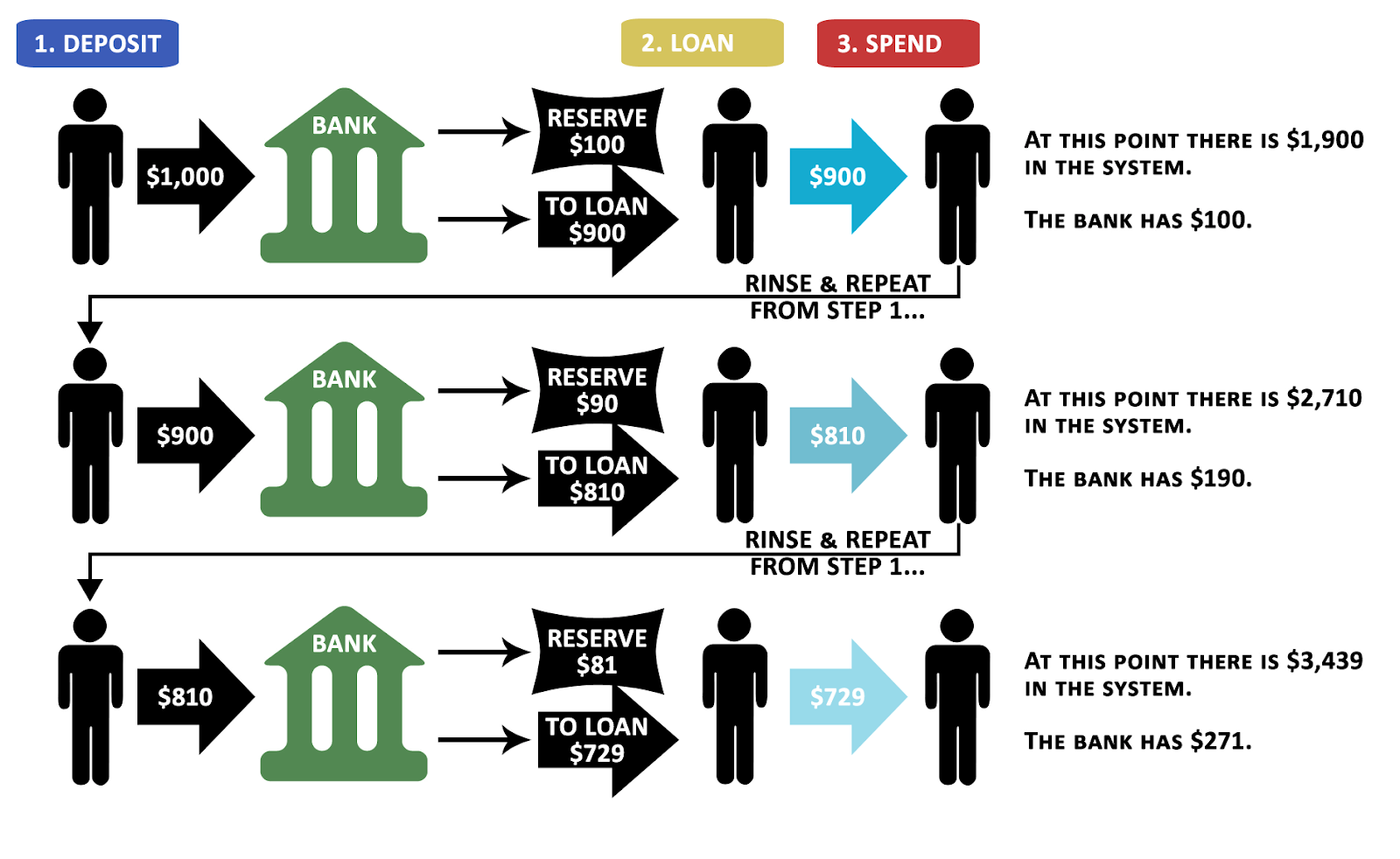
The Bitcoin network operates on several principles that eliminate traditional banking vulnerabilities:
Cryptographic Proof of Ownership
- Private keys provide mathematical proof of bitcoin ownership
- Users can verify their holdings instantly without requesting information from third parties
- No institution can claim ownership of bitcoin without possessing the corresponding keys
Transparent Verification
- The blockchain provides a public ledger of all bitcoin transactions and holdings
- Anyone can verify total supply and distribution at any time
- No hidden liabilities or off-balance-sheet risks exist within the protocol
Fixed Supply Economics
- Bitcoin's 21 million coin limit prevents monetary inflation
- No central authority can create additional units to cover shortfalls
- Supply is algorithmically enforced by network consensus rules
Self-Custody vs. Custodial Risk in Bitcoin
Self-custody means directly controlling the private keys that grant access to your bitcoin, eliminating reliance on third-party institutions. This practice provides absolute protection from bank run scenarios because your bitcoin cannot be rehypothecated, lent out, or confiscated by a failing institution.
However, many Bitcoin users choose custodial services like exchanges for convenience. These services introduce counterparty risk that can create bank run vulnerabilities similar to traditional banks.
Self-Custody Benefits:
- Complete ownership: You alone control access to your bitcoin
- No counterparty risk: Immune to exchange failures or insolvency
- Censorship resistance: No third party can freeze or confiscate your funds
- Best for: Long-term holders and users prioritizing security over convenience
Custodial Services:
- Convenience: Easier to use for beginners and frequent traders
- Recovery options: Account recovery possible if you forget passwords
- Counterparty exposure: You rely on the custodian's solvency and security practices
- Best for: Active traders and users comfortable with exchange risk
Self-Custody: The practice of directly controlling the private keys that provide access to your bitcoin, rather than trusting a third-party custodian. Self-custody eliminates counterparty risk but requires responsible key management. Learn more
Platforms like Rhino Bitcoin offer hybrid solutions combining convenience with self-custody options, allowing users to maintain control while accessing features like Lightning Network payments and bill pay.
Why Bitcoin Exchanges Can Still Experience Runs
Bitcoin exchanges and custodial platforms can experience bank run dynamics because they often operate with fractional reserves, despite holding a fundamentally different asset. When exchanges hold customer bitcoin but lack the reserves to honor all withdrawal requests simultaneously, panic withdrawals can trigger collapse.
Several high-profile exchange failures have demonstrated this risk. The FTX collapse in 2022 resulted from the exchange lending customer deposits without maintaining adequate reserves, creating an $8 billion shortfall when users rushed to withdraw funds.
Exchange Bank Run Warning Signs:
- Delayed or restricted withdrawals without clear technical justification
- Lack of proof-of-reserves or transparency about holdings
- Offering unsustainably high yields on deposits
- Commingling customer funds with company operations
- Resistance to regulatory oversight or auditing
Mt. Gox, once handling 70% of all Bitcoin transactions, collapsed in 2014 after losing approximately 850,000 bitcoin. Investigations revealed the exchange had been insolvent for years while continuing to accept deposits.
According to research from blockchain analytics firms, major exchange collapses have resulted in over $15 billion in customer losses since 2011. These failures demonstrate that centralized custody reintroduces the bank-run vulnerabilities that Bitcoin's protocol eliminates.
How to Protect Yourself from Bitcoin Banking Risks
Protecting your bitcoin from bank run scenarios requires understanding the distinction between protocol-level security and custodial risk. The Bitcoin network itself cannot experience a traditional bank run, but services built on top of it absolutely can.
Implementing these practices minimizes your exposure to custodial failures:
Verify Exchange Reserves
Choose platforms that provide proof-of-reserves through cryptographic attestation. This allows independent verification that the exchange holds sufficient bitcoin to cover all customer balances. River, Kraken, and other transparent exchanges publish regular proof-of-reserves reports.
Withdraw to Self-Custody Regularly
Treat exchanges like ATMs rather than banks. Keep only the bitcoin you actively need for trading on exchanges, and regularly withdraw the remainder to wallets where you control the keys. This practice is sometimes called "not your keys, not your coins."
Use Multi-Signature Security
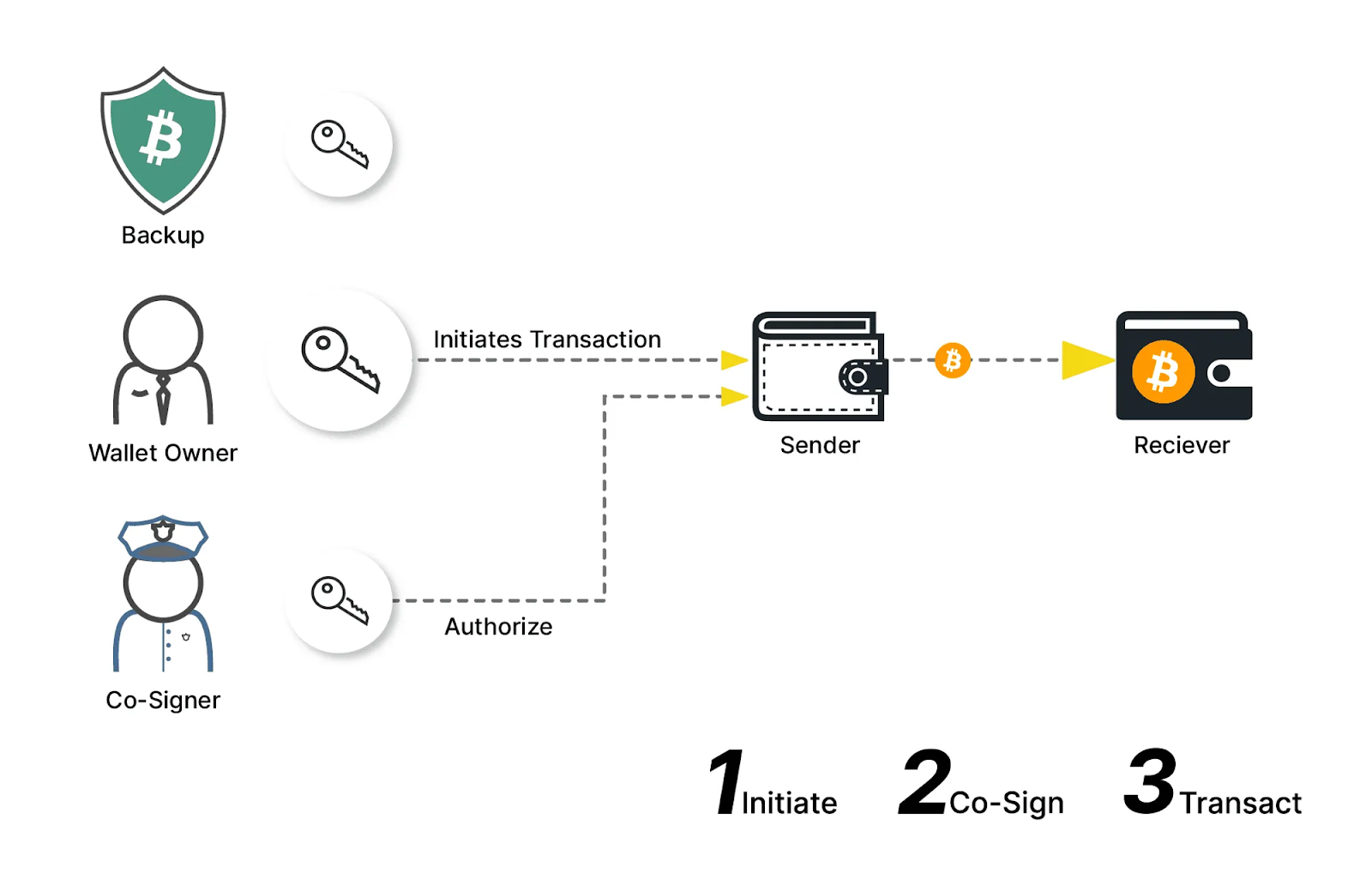
Multi-signature wallets require multiple private keys to authorize transactions, distributing risk across several devices or parties. This approach protects against both theft and loss while maintaining self-custody benefits.
Multisignature Wallets Require More than 1 Signature to Move Funds
Understand Lightning Network Liquidity
Lightning Network channels allow instant bitcoin transactions, but the funds remain under your control in the underlying Bitcoin payment channel. For guidance on Lightning Network implementation, see our Bitcoin Lightning wallet guide.
Diversify Custodial Exposure
If you must use custodial services, spread holdings across multiple reputable platforms rather than concentrating risk. However, self-custody remains the only method that completely eliminates counterparty risk.
Bitcoin Banking Alternative Security Features
Modern Bitcoin banking alternatives implement security features that protect users from both traditional banking risks and cryptocurrency-specific vulnerabilities. These platforms combine the censorship resistance of self-custody with user-friendly interfaces for everyday financial activities.
Understanding the security architecture helps you evaluate different Bitcoin financial services:
Cryptographic Security Layers:
- 256-bit encryption: Military-grade protection for all stored data and communications
- Hierarchical deterministic wallets: Generate unlimited addresses from a single seed phrase for enhanced privacy
- Cold storage: The majority of funds stored offline, immune to online attacks
Access Control Features:
- Biometric authentication: Fingerprint or facial recognition for device access
- Two-factor authentication: Additional verification layer beyond passwords
- Withdrawal whitelists: Restrict transfers to pre-approved addresses only
Rhino Bitcoin implements comprehensive security measures including multi-signature architecture and user-controlled keys, allowing customers to maintain self-custody while accessing Lightning Network features for instant payments.
For detailed guidance on securing your holdings, our Bitcoin security resources cover best practices for both beginners and advanced users.
Regulatory Protection vs. Bitcoin's Built-In Security
Traditional banks rely on government insurance programs like FDIC coverage to provide depositor confidence and prevent bank runs. Bitcoin's architecture provides security through mathematics and cryptography rather than regulatory guarantees.
The FDIC insures bank deposits up to $250,000 per depositor per institution, funded by premiums paid by member banks. This insurance has successfully prevented widespread bank runs since its creation in 1933, though it covers only a small fraction of total deposits in the banking system.
Bitcoin offers different security guarantees that operate without centralized insurance:
Bitcoin Protocol Guarantees:
- Cryptographic proof of ownership cannot be forged or disputed
- Network consensus validates all transactions, preventing double-spending
- Decentralization ensures no single point of failure exists
- Open-source code allows independent security auditing
Regulatory Framework Limitations:
- FDIC insurance does not cover cryptocurrency deposits at any institution
- Government insurance programs depend on the solvency of the insuring entity
- Deposit insurance creates moral hazard by reducing market discipline on risky banks
According to FDIC data as of 2024, the Deposit Insurance Fund holds approximately $125 billion in reserves against $10 trillion in insured deposits, a ratio of roughly 1.25%. A systemic banking crisis could potentially overwhelm these reserves.
Bitcoin users must understand that self-custody eliminates the need for deposit insurance by removing counterparty risk entirely. However, this security comes with the responsibility of proper key management and backup procedures.
Future of Bitcoin Banking and Bank Run Protection
Bitcoin banking alternatives continue evolving to provide comprehensive financial services without reintroducing the vulnerabilities of fractional reserve systems. The Lightning Network, Bitcoin-backed lending, and other innovations demonstrate how Bitcoin can support everyday financial needs while maintaining its bank run protection.
Several trends are shaping the future of Bitcoin financial services:
Lightning Network Adoption: Instant payment channels enable bitcoin use for everyday transactions without sacrificing self-custody. Major platforms including Strike, Cash App, and Rhino Bitcoin have integrated Lightning Network support, making instant transfers accessible to mainstream users. Our guide on cross-border Lightning payments explores this technology in detail.
Non-Custodial Lending: Bitcoin-backed loans allow users to access liquidity without selling their holdings or surrendering custody. These arrangements use smart contracts and multi-signature security to protect both borrowers and lenders.
Federated Custody Models: Emerging solutions like Fedimint create community-based custody arrangements that balance convenience with decentralization, reducing single points of failure while maintaining user-friendly interfaces.
Regulatory Clarity: Evolving regulations in multiple jurisdictions are establishing frameworks for Bitcoin financial services. The European Union's Markets in Crypto-Assets regulation and similar efforts provide legal certainty for compliant Bitcoin banking alternatives.
These developments suggest Bitcoin will increasingly serve as infrastructure for a parallel financial system that retains the censorship resistance and bank run immunity of the base protocol while offering competitive features compared to traditional banking.
Frequently Asked Questions
Can Bitcoin experience a bank run like traditional banks?
The Bitcoin protocol itself cannot experience a traditional bank run because it operates on full reserves with cryptographic proof of ownership. However, centralized exchanges and custodial services holding bitcoin can face bank runs if they operate fractional reserves.
What happened during past Bitcoin exchange collapses?
Major exchange failures including Mt. Gox (2014), QuadrigaCX (2019), and FTX (2022) resulted from exchanges lacking sufficient bitcoin to cover customer withdrawals. These collapses demonstrated that custodial services reintroduce counterparty risk that the Bitcoin protocol eliminates.
How do I verify an exchange has my bitcoin in reserves?
Look for exchanges that publish proof-of-reserves audits using cryptographic attestation, allowing independent verification of holdings. Exchanges like Kraken and River provide regular transparency reports showing they hold sufficient bitcoin to cover all customer balances.
Is self-custody safer than keeping bitcoin on exchanges?
Self-custody eliminates counterparty risk entirely, making it immune to exchange insolvency or bank runs. However, self-custody requires responsible key management, and losing your private keys means permanently losing access to your bitcoin.
What are the risks of Bitcoin-backed loans?
Bitcoin-backed loans typically require collateral exceeding the loan value to protect lenders from price volatility. Borrowers risk liquidation if bitcoin's price falls significantly, though non-custodial lending arrangements eliminate counterparty risk by keeping your bitcoin in your control through smart contracts.
How does Lightning Network protect against bank runs?
Lightning Network channels maintain user control of funds through cryptographically secured payment channels. Users can close channels and settle funds on-chain at any time, eliminating the custodial risk that creates bank run vulnerabilities.
Can governments seize self-custodied bitcoin?
Self-custodied bitcoin cannot be seized without obtaining the private keys, making confiscation significantly more difficult than seizing bank account funds. However, governments can apply legal pressure or penalties, and physical security of backup seeds remains important.
What happens to bitcoin during a traditional banking crisis?
Bitcoin operates independently of the traditional banking system, so banking crises do not directly affect the Bitcoin network. However, liquidity challenges in traditional finance can impact bitcoin's price, and users may face difficulty converting bitcoin to fiat currency during severe banking disruptions.
Conclusion
Bitcoin's architecture provides inherent protection from bank runs through cryptographic proof of ownership and full-reserve design. Unlike fractional reserve banking systems that face systemic vulnerability during financial crises, the Bitcoin protocol eliminates counterparty risk entirely for users practicing self-custody.
Key considerations for bank run protection:
- Self-custody eliminates counterparty risk but requires responsible key management
- Custodial services reintroduce bank run vulnerabilities despite holding bitcoin
- Proof-of-reserves verification helps identify trustworthy exchanges
- Lightning Network enables everyday transactions while maintaining self-custody security
For those ready to experience Bitcoin banking without traditional bank run risks, explore Rhino Bitcoin's comprehensive platform combining self-custody options with Lightning Network payments, Bitcoin-backed loans, and everyday financial services.
References
- Federal Deposit Insurance Corporation. "Bank Failures in Brief." FDIC.gov
- Bitcoin.org. "Secure Your Wallet." Bitcoin.org
- Nakamoto, Satoshi. "Bitcoin: A Peer-to-Peer Electronic Cash System." Bitcoin.org
- Lightning Network. "Lightning Network Documentation." lightning.network
- U.S. Securities and Exchange Commission. "Investor Bulletin: Cryptocurrency and Digital Asset Securities." SEC.gov
Important Disclaimers
Disclaimer: Educational information only. Not financial, legal, medical, or tax advice.
Risk Warnings: All investments carry risk, including loss of principal. Past performance is not indicative of future results. Bitcoin is a volatile asset and may not be suitable for all investors.
Conflicts of Interest: Rhino Bitcoin provides Bitcoin financial services. This content is educational and may reference our products.
.png)
.png)